The downside of sealing concrete is that it can trap moisture, create a slippery surface when wet, peel or flake over time, and require ongoing maintenance. If applied incorrectly or too early, it can also lead to surface damage and reduce the concrete’s long-term durability.
While sealing can improve appearance and provide protection, it is not always necessary. In places like Colorado Springs, CO, where weather and temperature changes can vary, it can sometimes cause more problems than it solves especially if the concrete cannot properly breathe or if the sealer begins to break down, leading to discoloration, cracking, or surface failure.
Why People Seal Concrete
Sealing concrete is a common step because the material is naturally porous. This means it can absorb water, oil, and other substances that may cause staining, surface wear, or damage over time. A sealer works by creating a protective barrier either on the surface or within the concrete that helps reduce this absorption.
Most property owners choose to seal concrete to improve durability, prevent stains, enhance appearance, and make cleaning easier. In the right conditions, sealers can deliver these benefits. However, the results depend heavily on proper application, timing, and environment. If done incorrectly, sealing can lead to problems that are costly and difficult to fix.
The Real Downsides of Sealing Concrete
While sealing concrete can improve appearance and provide surface protection, it is not always a risk-free solution. Many of the issues only become visible after application, especially if the product is chosen or applied incorrectly.
Moisture Gets Trapped Inside the Surface
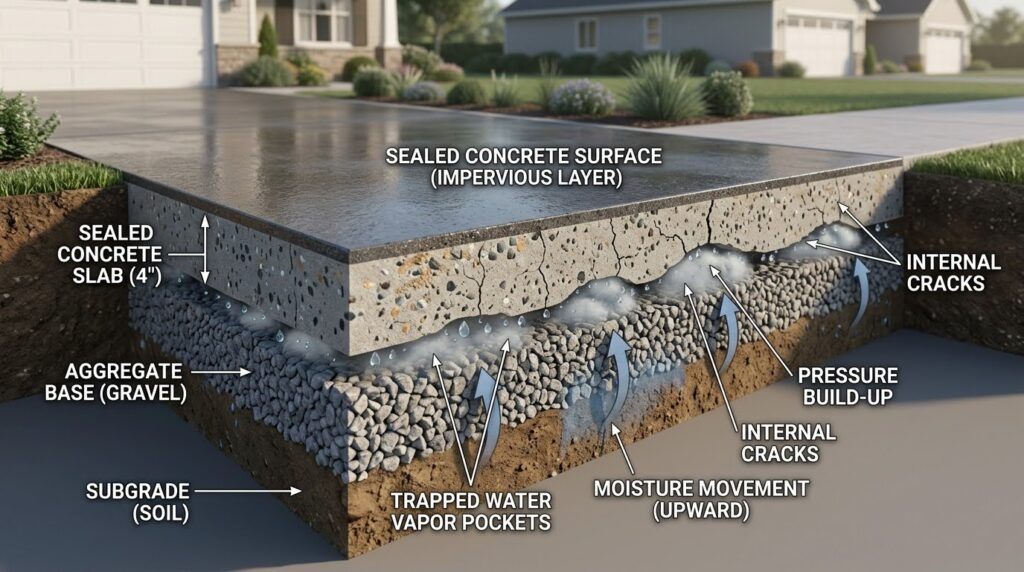
This is one of the most serious risks of sealing concrete. Because concrete naturally holds moisture, applying a sealer too early or over a damp surface can trap that moisture inside. With nowhere to escape, pressure builds beneath the sealed layer, leading to bubbling, blistering, and eventual coating failure.
In colder conditions, trapped moisture can freeze and expand, accelerating cracks and surface damage. What was meant to protect the concrete can actually leave it in worse condition than before sealing.
Slippery Finish After Rain or Snow
Many sealers, especially glossy or film-forming types, reduce surface grip. While this may not be noticeable indoors, it becomes a safety concern on outdoor surfaces like driveways, patios, and walkways. When exposed to rain, snow, or even morning dew, sealed concrete can become dangerously slippery. Anti-slip additives can help, but they must be added intentionally otherwise, the surface may pose a risk in everyday use.
Peeling, Flaking, and Surface Failure Over Time
Concrete sealers do not last forever. Over time, exposure to traffic, weather, and UV rays causes them to break down. This often shows up as peeling or flaking, leaving the surface uneven and partially unprotected. Once this happens, repairs are not simple. Removing a failed sealer usually requires grinding or chemical stripping, which can be time-consuming, costly, and may permanently alter the surface.
Uneven Color, Gloss, or Patchy Appearance
Sealers are highly sensitive to how they are applied. Uneven coverage, overlapping strokes, or differences in surface absorption can lead to a blotchy or inconsistent finish. This is especially noticeable with color-enhancing or glossy sealers, which tend to highlight imperfections rather than hide them. Fixing a patchy appearance often requires complete removal and reapplication.
Higher Long-Term Maintenance Cost
Sealing concrete is not a one-time job. Most sealers need to be reapplied every 1 to 3 years, depending on wear and environmental conditions. Over time, the cost of cleaning, preparing, and resealing can add up significantly. For some property owners, this ongoing expense outweighs the initial benefits of sealing.
Reduced Natural Breathability of Concrete
Concrete naturally allows moisture and vapor to pass through it. This helps regulate internal pressure and maintain structural balance. Film-forming sealers can block this process, limiting the material’s ability to “breathe.”
As a result, the concrete may become more reactive to temperature changes and internal moisture buildup. Over time, this can contribute to cracking, surface stress, and reduced overall durability especially in climates with frequent temperature swings.
When Sealing Concrete Actually Becomes a Problem
Even when the right sealer is chosen and applied correctly, certain conditions can still turn it into a liability instead of a benefit. In many cases, the issue is not the product itself, but the timing, surface condition, or level of use.
Sealing becomes problematic when it is used as a “fix” rather than a finishing step, especially on surfaces that already have underlying issues or heavy stress exposure.
Sealing Over Active Cracks
Applying sealer over concrete with existing cracks is a common mistake. While it may temporarily improve appearance, the sealer does not repair or strengthen the crack itself. As the concrete continues to shift and move, the sealed surface can tear, and the damage underneath often worsens without being noticed until it becomes more serious.
Sealing New Concrete Too Early
New concrete needs proper time to cure before any sealer is applied. In most cases, this takes at least 28 days, and many professionals recommend waiting 60 to 90 days for best results. Applying sealer too early can trap moisture and curing gases inside the slab, preventing proper bonding. This often leads to premature coating failure and reduced surface performance.
High-Traffic or Heavy-Load Surfaces
Sealers used in residential environments may not perform well under heavy or constant use. Areas exposed to forklifts, machinery, or high foot traffic can wear down quickly. Once the sealer begins to break down, it can leave uneven residue that makes future reapplication more difficult and less effective.
Situations Where You Should NOT Seal Concrete
There are certain situations where skipping concrete sealing is actually the better choice. Surfaces exposed to constant moisture or groundwater pressure, such as basements or below-grade slabs, are not suitable for topical sealers because the water pressure from underneath can eventually force the coating to fail or peel off.
Concrete that is not fully cured, has existing cracks, or shows no major staining or wear may also not need sealing at all. In these cases, applying a sealer can trap existing issues or add unnecessary cost without providing meaningful long-term benefits. Sealing under the wrong conditions can also lead to uneven performance and early coating failure, especially in changing weather environments. It’s important to evaluate the surface carefully before deciding, rather than applying sealer by default.
Types of Sealers and Their Hidden Drawbacks
Not all concrete sealers perform the same way, and each type has its own limitations depending on where and how it is used. Choosing the wrong one can lead to performance issues and extra maintenance later on.
Acrylic Sealers Short Life and Frequent Reapplication
Acrylic sealers are popular because they are affordable and easy to apply. However, they don’t last long outdoors and usually need to be reapplied every 1 to 3 years.
Over time, they can also turn cloudy or white in areas where water sits on the surface, which affects the appearance of the concrete. They are best suited for light residential use, not heavy traffic areas.
Epoxy Sealers Moisture Trapping Risk
Epoxy sealers create a very strong and durable surface, which is why they are often used in garages and industrial areas. The main issue is that they completely block moisture.
If the concrete is not fully dry, moisture gets trapped underneath, leading to bubbling or failure. They can also turn yellow when exposed to sunlight, making them unsuitable for outdoor use. Once applied, they are also very difficult to remove.
Polyurethane Sealers Expensive and Application Sensitive
Polyurethane sealers are strong, flexible, and resistant to UV damage, but they are more expensive than most other options. They also require careful application. Wrong mixing, weather conditions, or poor surface prep can cause bubbles, peeling, or uneven results. This makes professional installation highly recommended.
Penetrating Sealers Limited Surface Protection
Penetrating sealers work by soaking into the concrete instead of forming a surface layer. They are long-lasting and protect well against water damage. However, they do not protect against stains, oil marks, or surface wear, and they do not improve the appearance of the concrete. They are more about protection than aesthetics.
Sealed vs. Unsealed Concrete: What Performs Better Long-Term?
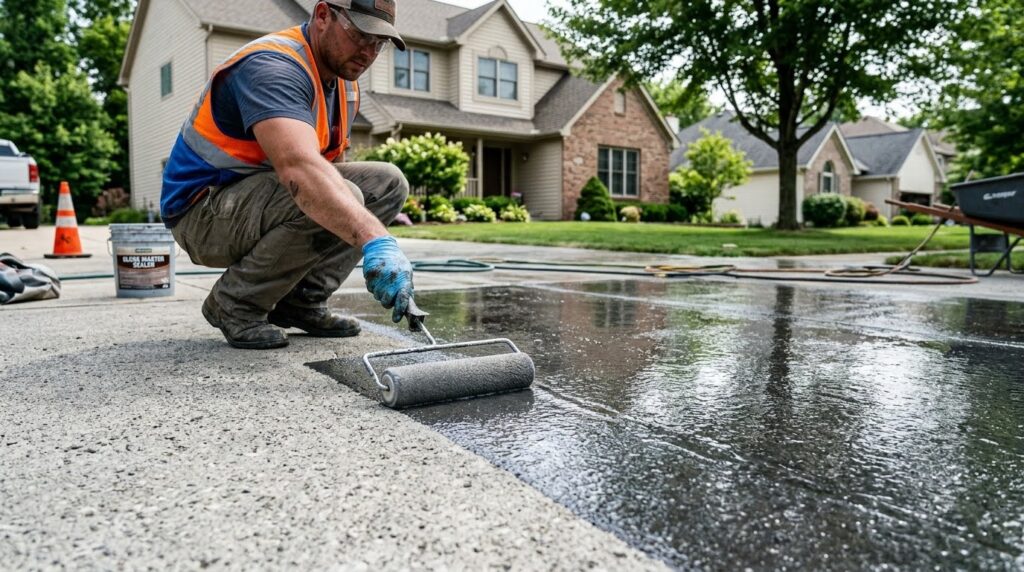
It depends on the environment. In harsh climates with freeze-thaw cycles, sealing concrete can help by preventing water from entering the surface and causing internal damage. In coastal areas, it can also reduce salt penetration, which helps protect the concrete from long-term deterioration.
In milder climates, unsealed concrete can perform well for many years with basic cleaning. Over time, the surface naturally hardens and becomes more resistant to wear, which means sealing is not always necessary for durability in these conditions.
Common Mistakes That Make Sealing Worse
The most damage from concrete sealing comes not from the product itself but from how it’s applied. Sealing over a dirty or contaminated surface is the single most common error any oil, dust, efflorescence, or old sealer residue left on the concrete will prevent proper bonding and cause the new coat to fail prematurely.
Applying too thick a coat in a single pass traps solvents that can’t escape fast enough, leading to bubbling and an uneven cure. Working in direct sun or high heat accelerates drying too quickly for the sealer to level and bond correctly. And perhaps most importantly, skipping a moisture test before application on any exterior slab where drainage is uncertain is a risk that frequently results in the failure scenarios described above.
Signs Your Concrete May Already Be Damaged by Sealer
If your concrete has already been sealed and problems start to appear, it often means the sealer is failing rather than the concrete itself. One common sign is white or milky patches under the surface, which usually indicates trapped moisture trying to escape.
Bubbles or blisters in the coating are another warning sign, showing that pressure is building underneath the sealer. Peeling that comes off in sheets suggests poor bonding, while uneven color or shine points to inconsistent application or product mismatch. In these cases, the surface may need professional evaluation to decide whether the sealer should be repaired or completely removed and reapplied.
Are There Any Real Benefits to Sealing Concrete?
Yes and it would be misleading not to acknowledge them clearly. In the right situation, a properly chosen and applied sealer meaningfully extends the life of concrete, reduces staining, simplifies cleaning, and improves resistance to freeze-thaw damage. Decorative concrete especially benefits from sealing, as unprotected stamped or colored surfaces fade and stain quickly without a protective coating.
The key distinction is that sealing is a tool with specific applications, not a universal best practice. Used correctly and maintained consistently, it adds genuine value. Used incorrectly or in the wrong context, it creates problems that can cost more to fix than the sealer itself ever cost to apply.
Alternatives to Sealing Concrete
If you want to protect concrete without the risks and ongoing maintenance of sealing, there are a few simple alternatives. Regular cleaning and degreasing is one of the easiest options, as it removes dirt, oil, and stains before they can soak in. This helps maintain the surface without adding any coating at all.
Another option is using concrete densifiers, which react with the surface to make it harder and less porous without forming a film. In many cases, improving drainage around the slab or quickly cleaning spills can also provide effective protection, especially in areas where freeze-thaw damage or staining is a concern.
Get Expert Concrete & Asphalt Solutions in Colorado Springs, CO
Looking for professional concrete or asphalt solutions that are done right the first time? At Elite Surface Infrastructure, we help property owners and businesses in Colorado Springs, CO get expert guidance, high-quality services, and long-lasting results they can trust.
If you’re planning to seal, repair, or install concrete or asphalt, our team can help you choose the right approach based on your surface condition, local climate, and long-term goals. Don’t risk costly mistakes and get expert support before starting your next project. Get your free estimate today and discover the right asphalt solution for your property in Colorado Springs, CO.
Conclusion
Sealing concrete can be useful, but it is not a one-size-fits-all solution. When applied in the right conditions, it helps protect against stains, moisture, and surface wear. However, if it is applied too early, in the wrong environment, or with the wrong product, it can lead to problems like trapped moisture, slippery surfaces, peeling, and higher long-term maintenance costs.
In the end, the decision to seal concrete should be based on the condition of the surface, the local climate, and the actual need for protection rather than doing it by default. Proper evaluation and timing make all the difference between long-lasting performance and avoidable damage.
Frequently Asked Questions
Is sealing concrete really necessary?
Not always. In mild climates or low-traffic areas, concrete can perform well without sealing. It depends on exposure, use, and environmental conditions.
What happens if you seal concrete too early?
Sealing too early can trap moisture and curing gases inside the slab, which may lead to bubbling, poor bonding, and early coating failure.
How long should you wait before sealing new concrete?
Most professionals recommend waiting at least 28 days, and in some cases up to 60–90 days for full curing before applying a sealer.
Can sealed concrete become slippery?
Yes. Many sealers, especially glossy or film-forming types, can reduce surface grip when wet unless anti-slip additives are used.
What is the biggest downside of sealing concrete?
The biggest downside is that improper sealing can trap moisture and lead to peeling, cracking, and long-term surface damage.