
Yes, you can drive on fresh asphalt, but usually only after 24 to 48 hours and in places like Colorado, where temperature changes and weather conditions affect curing, it can sometimes take even longer. Driving too soon can leave tire marks, dents, and permanent surface damage because new asphalt stays soft even after it looks dry. The exact waiting time depends on weather, traffic, and how quickly the asphalt cures. In this guide, you’ll learn when fresh asphalt is truly safe to drive on and how to avoid damaging new pavement.
Why Fresh Asphalt Needs Time Before Traffic
Fresh asphalt may look solid within hours, but it is not fully ready for traffic because the material is still in its curing stage beneath the surface. Driving on it too soon can cause permanent damage like tire marks, dents, and surface deformation.
Cooling vs. Curing: Why They Are Not the Same Thing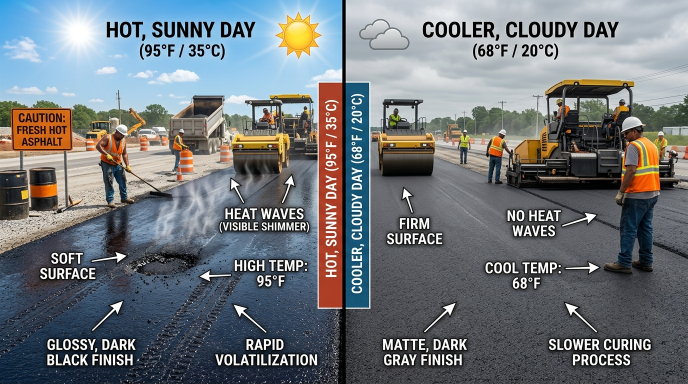
Cooling only means the asphalt has lost surface heat and feels solid, which can happen within a few hours. Curing is a much slower chemical process where the bitumen continues to harden and bind the material together. Even if the surface feels ready, the asphalt underneath is still soft and vulnerable to pressure.
Why Asphalt Still Feels Soft Even After It Looks Dry
Fresh asphalt often changes color from deep black to a lighter gray, which makes it look dry and ready. However, this only reflects surface cooling. Beneath the top layer, the material is still settling and can easily deform under weight or stationary pressure.
How Asphalt Is Different From Concrete and Why That Matters for Drivers
Concrete hardens into a rigid surface that can handle traffic once fully set, while asphalt remains flexible even after paving. This flexibility helps with durability but makes fresh asphalt more sensitive, meaning tires, heavy loads, or sharp turns can leave permanent marks during the curing period.
How Soon Can You Drive on Fresh Asphalt?
Fresh asphalt typically needs 24 to 48 hours before light driving, though in some cases up to 72 hours is recommended depending on weather and conditions.
Residential Driveways
For residential driveways, the general recommendation is to wait 24 to 48 hours before driving on fresh asphalt under normal conditions. Most contractors still suggest 72 hours for extra safety, especially in hot weather. For parking in one spot, waiting about a week helps avoid surface impressions.
Roads and Parking Lots
Public roads and commercial parking lots often reopen within 24 hours because they use stronger asphalt mixes and heavy compaction equipment. These surfaces are built to handle traffic sooner than residential driveways. However, they can still soften in high heat even after opening.
What Changes the Waiting Time?
The drying time is not fixed and depends on several factors like asphalt mix, thickness, and weather conditions. Thicker layers and hot temperatures slow down curing, while thinner layers and mild weather speed it up. Even a difference of a few degrees can change how quickly the surface becomes safe.
Why Highways Open Faster Than Your Driveway
Highways are designed for faster opening because they use specialized asphalt mixes and heavy industrial rollers that compact the surface more tightly. They are also laid in controlled layers that cure more efficiently.
What Happens If You Drive on It Too Early?
Driving on fresh asphalt too soon can cause permanent surface damage, structural weakness, and even vehicle issues because the material is still soft and unstable beneath the surface.
Tire Marks and Surface Damage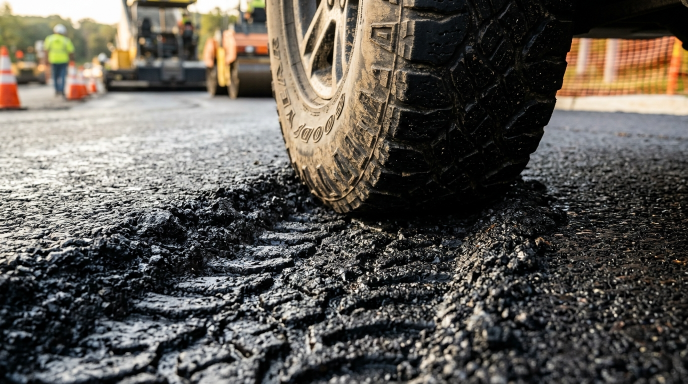
When a tire rolls over or stops on fresh asphalt, it pushes the still-pliable material downward and outward, creating grooves or depressions that match the tire shape. Stationary vehicles are even more damaging because the full weight sits in one place, causing deeper impressions in the surface.
Weak Spots and Cracking
Early traffic can disturb the internal bonding of asphalt, creating weak zones that are not always visible right away. Over time, these areas become prone to cracking, especially under weather changes like rain, heat, or freeze-thaw cycles.
Damage to Vehicle Tires and Undercarriage
Hot, uncured asphalt can stick to tires and harden as it cools, leading to uneven buildup on the tread. This can cause vibration while driving and, in some cases, fling tar-like material onto wheel wells and the undercarriage.
Will Those Tire Marks Ever Go Away on Their Own?
Light surface impressions may fade slightly as asphalt continues to cure, but true depressions do not repair themselves. Once the material hardens, the deformed shape is locked in permanently. In most cases, the only real fix is cutting out the damaged section and repaving it.
Signs Fresh Asphalt Is Ready for Vehicles
Fresh asphalt gives a few visual and physical clues when it is close to being ready for traffic, but these signs should always be confirmed with proper timing and contractor guidance.
Surface Appearance: Color Change and Loss of Sheen
Fresh asphalt has a glossy, wet-looking finish due to oils in the bitumen rising to the surface. As it cures, this shine fades and the color becomes a more uniform dull black or dark gray. This change usually indicates surface cooling, but deeper layers may still be soft.
Temperature and Hardness: The Thumb-Press Test
A simple way to check is by gently pressing your thumb into the surface in a sunny area. If it leaves an impression, the asphalt is still too soft for vehicles. If it feels firm with no indentation, it is closer to being ready for light traffic.
Always Follow Your Contractor’s Written Timeline
The most reliable indicator is the timeline provided by the paving contractor based on the exact mix, thickness, and local weather conditions. Even if the surface appears ready, internal curing may still be ongoing.
Mistakes That Ruin New Asphalt Fast
Most early damage to new asphalt happens not from traffic itself, but from simple mistakes made during the first few days and weeks after paving.
Parking in One Spot Too Long
Even after the initial 72-hour waiting period, leaving a vehicle parked in the same position for long hours can still cause surface impressions while the asphalt continues curing. It is best to rotate parking spots and avoid overnight parking during the first couple of weeks.
Sharp Turns While the Vehicle Is Stationary
Turning the steering wheel while the car is not moving creates a twisting force that can scuff or shear the soft surface layer of fresh asphalt. This often leaves circular marks that are difficult to remove once cured.
Driving Too Close to the Edges
Asphalt edges are the weakest part of any new paving job because they lack full support from surrounding material. Driving too close can cause cracking, crumbling, or edge sinking under weight.
Heavy Vehicles: Trailers, RVs, and Delivery Trucks
Heavy vehicles place significantly more pressure on asphalt compared to standard cars, which can lead to deep impressions even after the initial curing period. Residential driveways are especially vulnerable during the first couple of weeks.
How Weather Changes Fresh Asphalt Cure Time
Weather plays one of the biggest roles in how quickly asphalt cools and becomes safe for traffic, often making the same pavement behave very differently depending on the season.
Heat: Why Summer Asphalt Stays Softer Longer Than You Expect
In hot weather, asphalt retains heat for longer because the surrounding temperature slows down cooling, which means the surface can stay soft well beyond the normal waiting period. On very hot days, even cured asphalt can temporarily soften enough to show tire impressions from parked vehicles.
Rain and Humidity: The Real Risk Window After Paving
Light rain after asphalt has started cooling usually does not cause serious damage, but heavy rain shortly after paving can wash away fine particles and weaken the surface bond. High humidity also slows down the release of heat, extending the overall curing time.
Cold Weather Paving: Does Asphalt Cure Faster or Slower in Winter?
Cold temperatures make asphalt cool faster on the surface, but the internal curing process slows down because the binder becomes less flexible and harder to compact properly. If the ground is too cold, the asphalt may not bond correctly, leading to long-term weakness.
Fresh Asphalt vs. Sealcoating: Don’t Confuse Them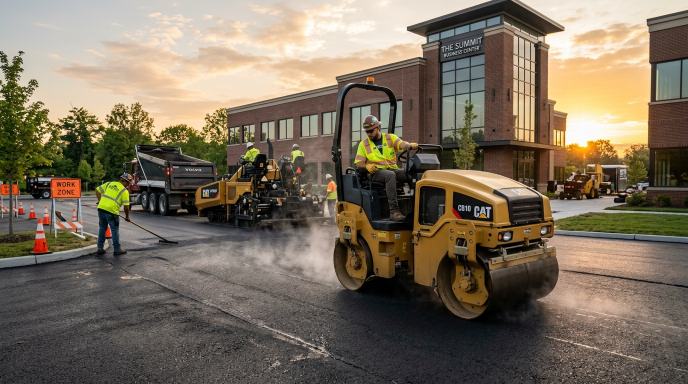
Fresh asphalt and sealcoating may look similar at a glance, but they are completely different processes with different purposes and curing behavior.
What Sealcoating Actually Does to the Surface
Sealcoating is a thin protective layer applied over already-cured asphalt to protect it from UV rays, water, and oil damage. It does not add structure like paving does, but instead preserves the existing surface and improves its appearance.
Different Cure Times: Paving vs. Sealing Side by Side
Fresh asphalt typically needs 24 to 72 hours before light traffic and can take 6 to 12 months to fully cure internally. Sealcoating, on the other hand, usually allows vehicle traffic within 24 to 48 hours and fully hardens in a couple of days depending on conditions.
Different Driving Precautions for Each
Fresh asphalt must be protected from weight and turning forces, while fresh sealcoat must be protected from tire tracking that can smear the coating. Both require restricted access, but for different types of damage risk.
When to Apply the First Sealcoat on Brand-New Asphalt
New asphalt should not be sealed immediately because it needs time to release oils and complete its natural curing process. Applying sealcoat too early can trap those oils and soften the surface instead of protecting it.
What to Do If You Already Drove on Fresh Asphalt by Accident
Accidentally driving on fresh asphalt is common, but what you do next can determine whether the damage stays minor or becomes permanent.
Assess the Damage: What to Look for Right Away
Park the vehicle away from the area and inspect the surface closely for tire tracks, dents, or any displaced material. Lightly run your hand over the marks if you feel a raised edge with a dip in the center, the asphalt has been physically moved rather than just marked.
Can Surface Marks Be Fixed, and How?
Light scuff marks may fade as the asphalt continues to cure and harden over time, especially if they are only surface-level impressions. However, deeper depressions do not correct themselves once the material sets.
When to Call Your Contractor vs. When to Leave It Alone
Contact your contractor immediately if you notice deep impressions, crumbling edges, or soft, unstable areas underfoot. Minor surface marks with no structural damage can often be monitored as they may become less noticeable during curing.
Get Professional Asphalt Services with a Free Estimate
If you’re planning a new driveway, parking lot, or roadway, Elite Surface Infrastructure can provide professional asphalt services along with a free estimate to help you get started the right way. Most people think asphalt is ready to use as soon as it looks dry, but in reality that’s when it can still be most vulnerable. Fresh asphalt can remain soft for 24 to 72 hours or longer depending on weather and conditions, and using it too soon can lead to permanent surface damage and reduced lifespan. Understanding proper timing is key to protecting any asphalt surface.
Frequently Asked Questions
Can You Drive on Asphalt After 24 Hours?
Yes, in ideal conditions light driving may be possible after 24 hours, but 48–72 hours is safer depending on weather and surface conditions. It is still important to avoid parking or sharp turns during this early period.
Can You Walk on Fresh Asphalt?
Yes, foot traffic is usually safe after 6–8 hours once the surface has cooled, depending on weather and mix type. Flat shoes are recommended to avoid leaving small impressions.
Will Tire Marks Disappear?
Light scuff marks may fade as the asphalt continues curing and hardening over time, especially from rolling traffic. However, deep impressions from parked vehicles are permanent once the surface sets.
How Long Does Asphalt Fully Cure?
It is safe for normal traffic within 24–72 hours, but full curing can take 6–12 months depending on conditions. During this time, the asphalt continues to harden and gain strength.
Does Rain Ruin Freshly Laid Asphalt?
Light rain after the surface has cooled usually does not cause major damage and may have minimal impact. Heavy rain too soon after paving, however, can weaken the surface if compaction is incomplete.
Are Asphalt Fumes Dangerous After Paving?
Fresh asphalt can release fumes that create a strong smell, but short-term exposure in open air is generally not harmful for most people. The odor typically fades within 24–72 hours as the surface cools and stabilizes.