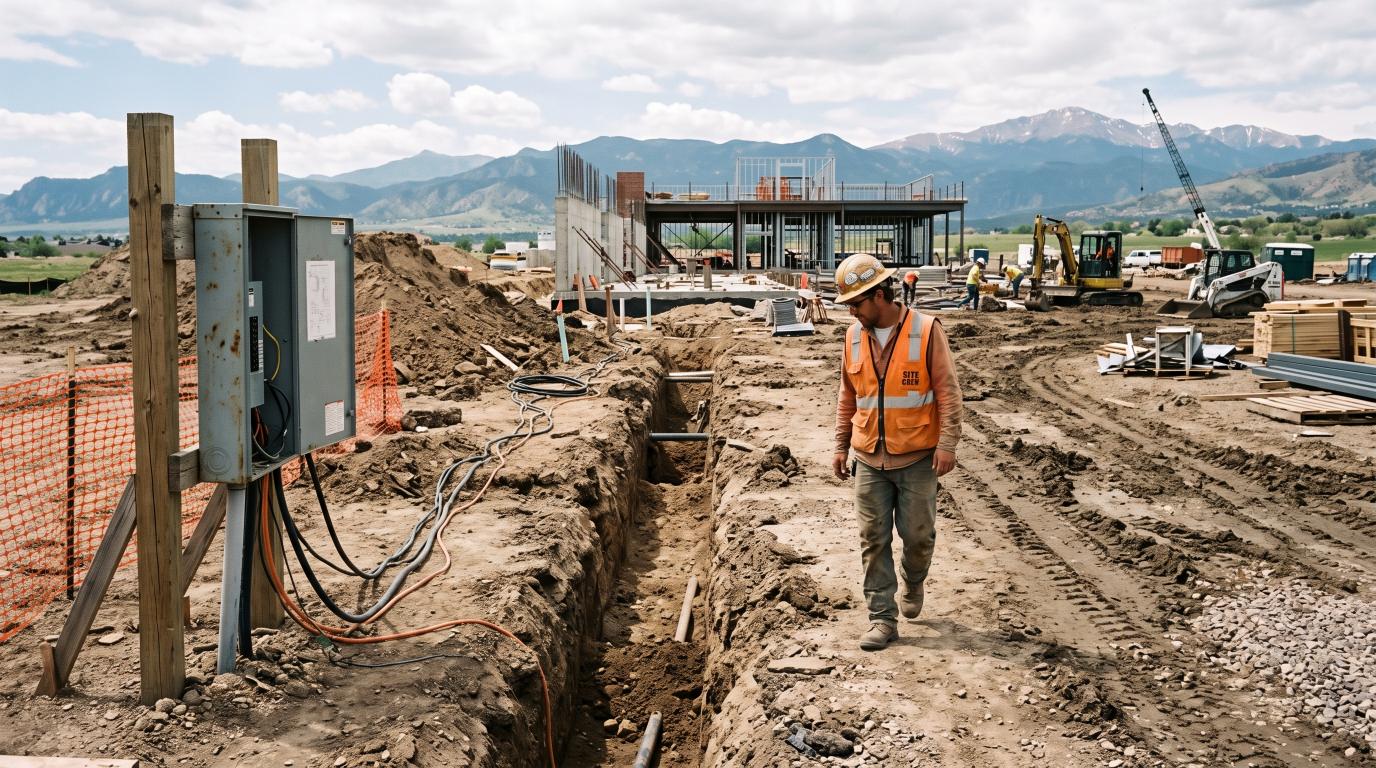
Construction site utilities provide the power, water, sanitation, drainage, lighting, and communication systems needed to keep a jobsite operating. Planning construction site utilities early helps crews work safely, keeps equipment running, and reduces delays caused by missing or poorly placed connections.
For projects in Colorado Springs, CO, utility planning also needs to consider local service requirements, underground utility locations, changing weather, and the order of sitework. Elite Surface Infrastructure works on civil construction, earthwork, grading, and underground utility projects throughout Colorado, including Colorado Springs.
To set up utilities on a construction site, first assess the project needs, locate existing underground utilities, identify available service connections, obtain required permits, and decide which utilities will be temporary or permanent. Then install power, water, sanitation, drainage, lighting, and communication systems in an order that supports the construction schedule.
What Are Construction Site Utilities?
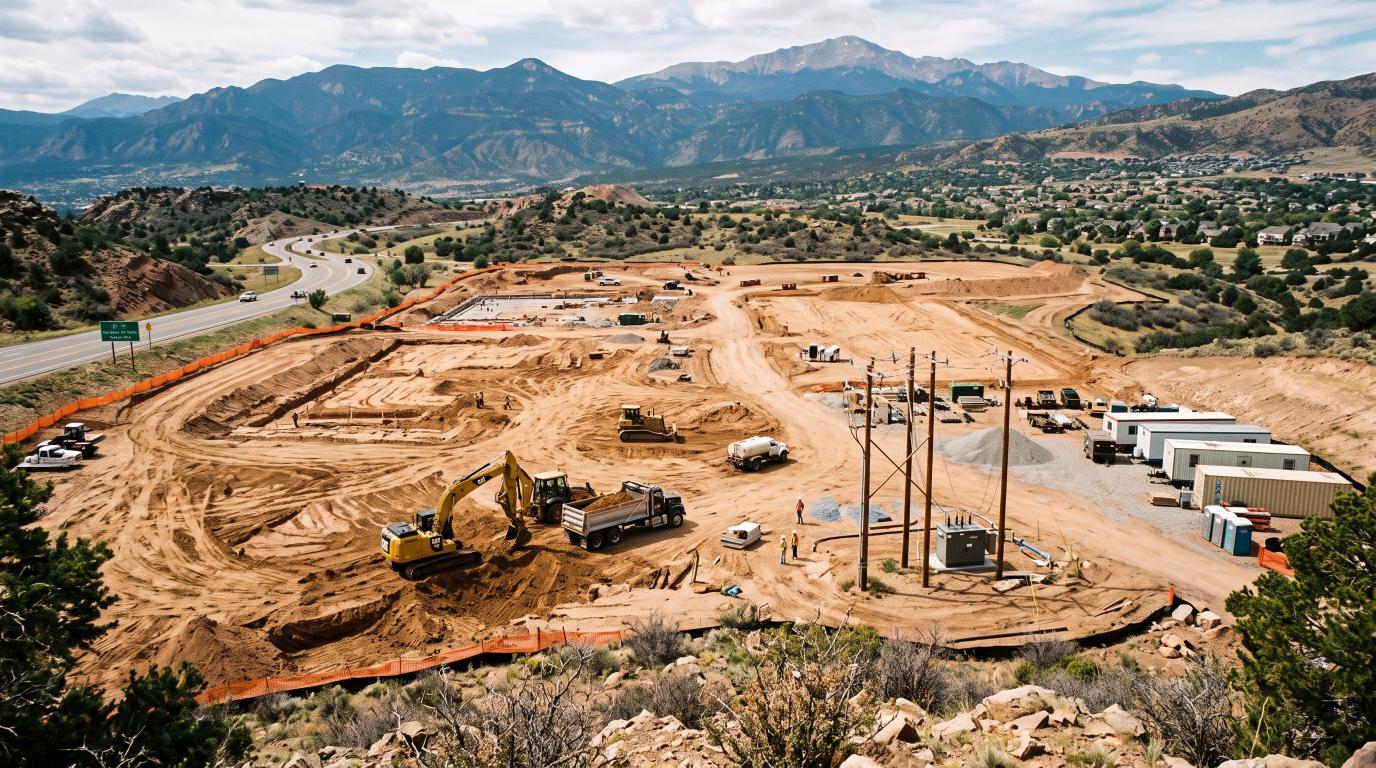
Construction site utilities are the temporary or permanent services needed to support work on a building, road, commercial development, or other construction project. They may include electricity, potable water, sanitation, wastewater management, drainage, internet access, lighting, and permanent underground utility lines.
Temporary utilities keep the site operating during construction. Permanent utilities become part of the finished property or infrastructure. Without proper planning, crews may not have enough power for tools, enough water for work activities, safe restroom facilities, or proper drainage. Utility conflicts can also delay grading, excavation, paving, concrete work, and building construction.
Temporary vs. Permanent Construction Utilities
Temporary and permanent utilities serve different purposes during a construction project. Understanding when each type is needed helps crews plan connections, reduce conflicts, and keep the site operating efficiently.
|
Factor |
Temporary Utilities | Permanent Utilities |
| Purpose | Support construction work while the project is active |
Serve the completed building or property |
|
Examples |
Temporary power, water, lighting, toilets, and internet | Permanent electric, water, sewer, gas, and communication lines |
|
Installation Time |
Usually installed early in the construction process | Installed according to the final site and building plans |
| Duration | Used only during construction |
Remain in place after construction is complete |
|
Location |
Can be relocated as work progresses |
Installed in fixed, approved locations |
|
Planning Needs |
Must avoid interfering with equipment and future work | Must match final engineering plans and utility requirements |
|
Removal |
Removed once permanent services are ready | Remain as part of the finished property |
|
Main Goal |
Keep crews and equipment working safely | Provide long-term utility service to the completed project |
Plan Your Construction Site Utilities Before Work Begins
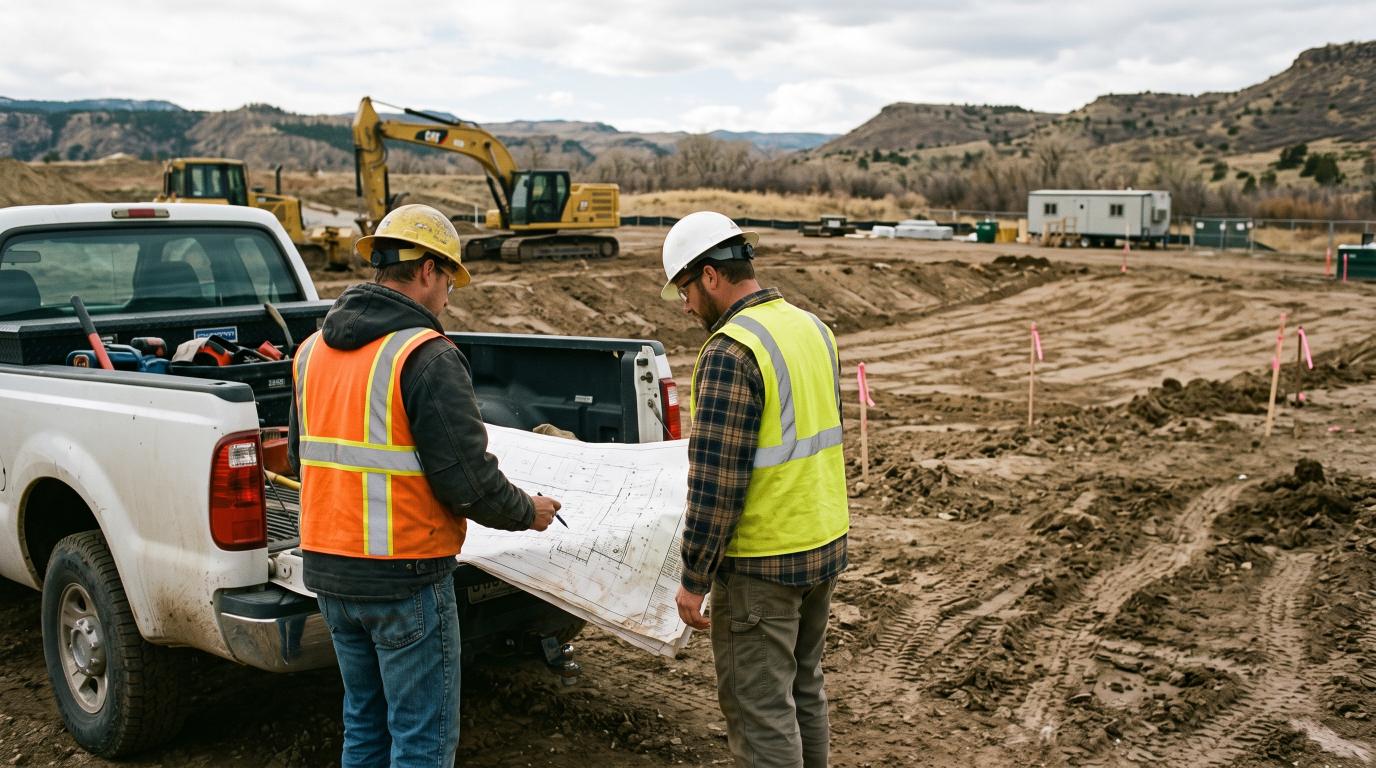
Utility planning should begin before major sitework starts. The location and capacity of each utility can affect grading, excavation routes, equipment access, and later construction phases.
Assess the Site and Project Requirements
Start by reviewing the size and type of project. A small commercial site may need less temporary power and water than a large industrial or municipal project. Consider the number of workers, equipment needs, work hours, building size, construction phases, and expected project length. You should also identify areas that will need power, water, lighting, and sanitation throughout the job.
Identify Available Utility Connections
Determine what services already exist near the property. Look for nearby electric, water, sewer, gas, and communication connections. Existing service does not always mean it has enough capacity for the project. Utility providers may need to review plans before approving a connection.
Determine Temporary vs. Permanent Utilities
Some services are only needed during construction. Temporary power may operate job trailers, tools, pumps, lighting, and equipment. Temporary water may serve dust control, cleaning, concrete work, or worker needs. Permanent utilities should be coordinated with the final development plans so temporary systems do not interfere with future installations.
Check Local Codes, Permits, and Utility Requirements
Permit and inspection requirements vary by project and location. Colorado Springs Utilities states that temporary construction electrical service may be provided before permanent service is installed.
Its 2026 standards also require temporary service installations to follow applicable electrical and safety requirements, including GFCI protection. Verify current requirements with the appropriate utility provider, municipality, engineer, and permitting authority before installation.
Coordinate With Utility Providers and Contractors
Communication between the general contractor, utility contractors, engineers, and utility companies is important. Everyone should know where utilities will enter the property, where temporary facilities will be placed, and when each connection must be ready. Good coordination helps prevent one crew from installing something that later needs to be removed for another trade.
What Utilities Does a Construction Site Need?
The exact needs depend on the project, but most active jobsites require several basic services.
Temporary Electrical Power
Electricity may be needed for:
- Power tools and equipment
- Construction trailers
- Temporary lighting
- Pumps
- Chargers
- Heating or ventilation equipment
- Security equipment
The system should have enough capacity for expected loads without creating unsafe conditions.
Temporary Water Supply
Water may be needed for drinking, cleaning, dust control, concrete activities, soil work, equipment washing, or other approved construction uses.
Potable and nonpotable water systems must be clearly managed so they are not accidentally connected. OSHA requires an adequate supply of potable water at places of employment and prohibits cross-connections between potable and nonpotable water systems.
Sanitation and Portable Toilets
Workers need access to proper toilet facilities during construction. Portable toilets are often used when permanent sewer-connected restrooms are not available. OSHA requires toilet facilities on construction jobsites and establishes minimum quantities based on the number of workers.
Temporary Drainage and Wastewater
A construction site should have a plan for runoff and temporary wastewater. Water should not be allowed to collect around excavations, temporary roads, foundations, work zones, or stored materials. Drainage planning may include swales, pumps, sediment controls, temporary channels, inlet protection, or other methods required by the project stormwater plan.
Communication and Internet Services
Larger projects often need reliable phone and internet access for project management, digital plans, inspections, scheduling, and communication between contractors. Wireless connections may work for some projects, while others may need temporary wired service.
Lighting and Site Safety Systems
Temporary lighting helps workers see work areas, access routes, stairs, storage areas, and equipment during low-light conditions. Lighting should be positioned so it supports safe work without creating damaged cords or electrical hazards.
How to Set Up Temporary Power on a Construction Site
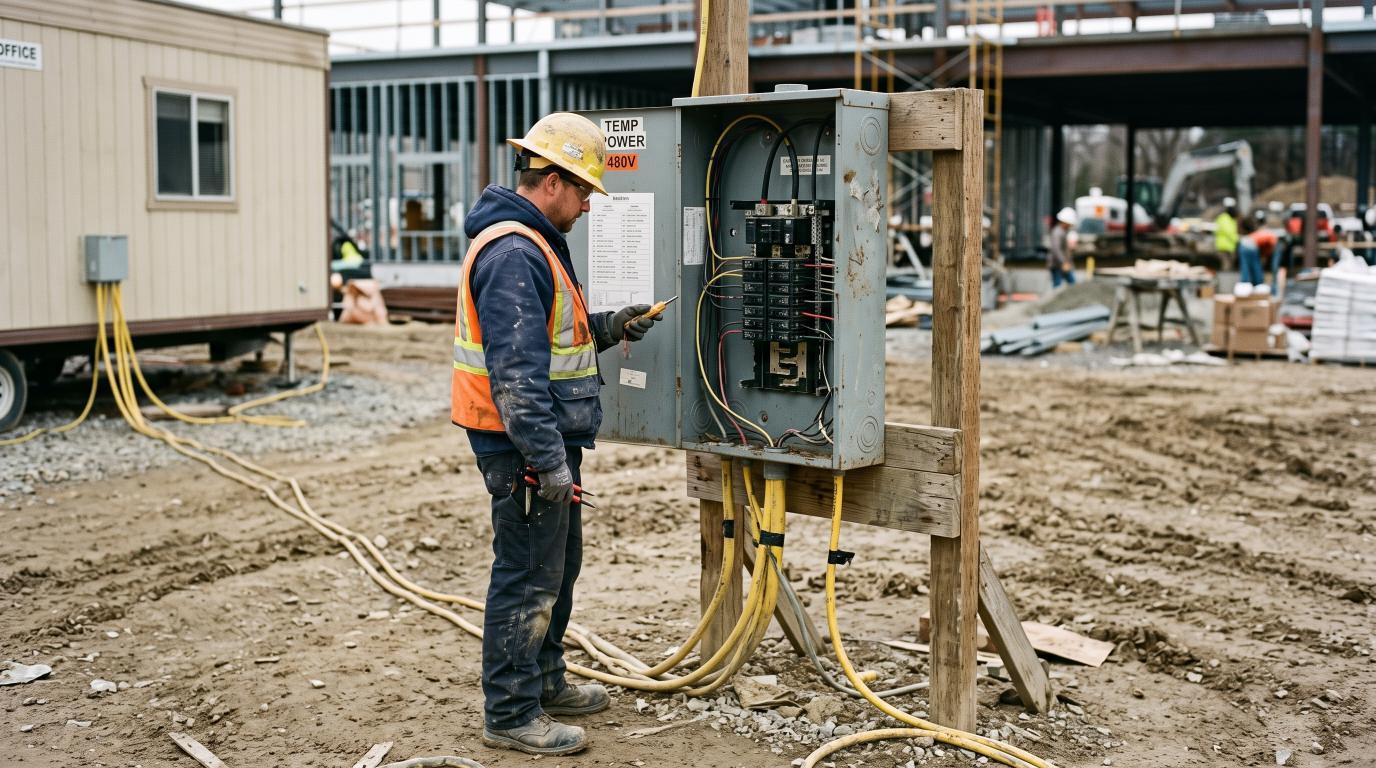
Temporary electrical systems should be planned around both current and future power demand.
Choose Between a Utility Connection and Generator
A temporary utility connection is often useful for longer projects when electrical service is available nearby. Generators may be used where utility service is unavailable, delayed, or needed only in certain parts of the site. Some projects use both.
Determine Electrical Load Requirements
List the equipment that may operate at the same time. Include tools, office trailers, lighting, pumps, heating systems, chargers, and other powered equipment.
Undersizing the temporary system can lead to interruptions and unsafe attempts to add extra loads later.
Install Temporary Panels and Distribution Equipment
Temporary panels should be located where they are accessible but protected from traffic, excavation, water, and construction damage. OSHA requires temporary construction wiring to follow specific rules for distribution, grounding, receptacles, overcurrent protection, and physical protection.
Plan Power Distribution Across the Site
Think beyond the first phase of work. As construction moves across the property, workers may need electricity farther from the original panel. Planning distribution points early can reduce long extension-cord runs and repeated relocation.
Protect Cords, Panels, and Electrical Connections
Cords should not be placed where vehicles, equipment, materials, doors, or sharp surfaces can damage them. OSHA also restricts several improper uses of flexible cords and temporary wiring.
Inspect and Test the Temporary Electrical System
Temporary power should be checked before use and throughout construction. Damaged cords, loose connections, missing covers, overloaded circuits, or exposed components should be corrected before workers continue using them.
How to Set Up Temporary Water on a Construction Site
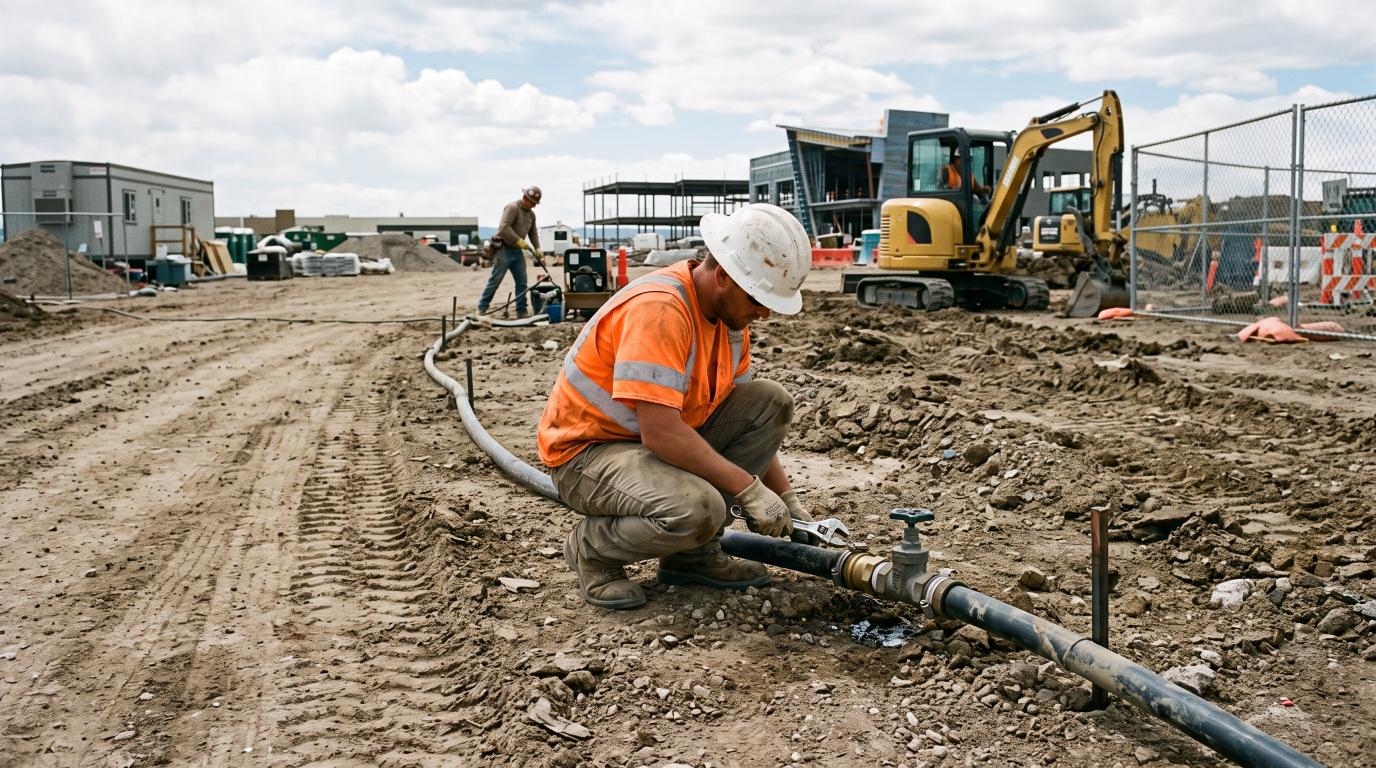
Water planning starts with identifying how much water the project needs and where it will be used.
Choose a Water Source
Possible sources include an approved municipal connection, temporary tank, or another authorized source. The right option depends on site access, demand, project length, and local requirements.
Connect to a Municipal Water Supply or Temporary Tank
Municipal connections usually require approval from the utility provider. Temporary tanks can help when a permanent connection is not available yet, but they also require refilling and proper placement.
Install Temporary Water Lines
Run temporary lines where they are less likely to be damaged by excavation, hauling trucks, graders, or other equipment. Clearly mark exposed lines when needed.
Plan Water Distribution Points
Place water access where crews actually need it. Long hose runs across roads and walkways create inconvenience and may become trip or equipment hazards.
Protect Pipes From Damage and Freezing
Colorado weather is an important consideration. Cold temperatures can freeze exposed water lines. Pipes may need insulation, draining, heating, burial, or other protection depending on the system and season.
Test the Water System Before Use
Check connections, valves, pressure, leaks, and distribution points before regular use. Problems are easier to correct before crews depend on the system every day.
How to Set Up Sanitation and Waste Facilities
Sanitation facilities should be part of the initial site logistics plan. Determine the expected number of workers and arrange enough portable toilets to meet applicable requirements. Place toilets where workers can reach them without crossing dangerous equipment routes. At the same time, service trucks need enough access for cleaning and waste removal.
Handwashing or hygiene facilities may also be needed depending on the work being performed. Waste containers should be placed in accessible areas that do not block emergency access, utility routes, or construction traffic.
Schedule regular servicing so toilets, washing areas, and waste containers remain usable throughout the project.
How to Set Up Temporary Drainage and Wastewater
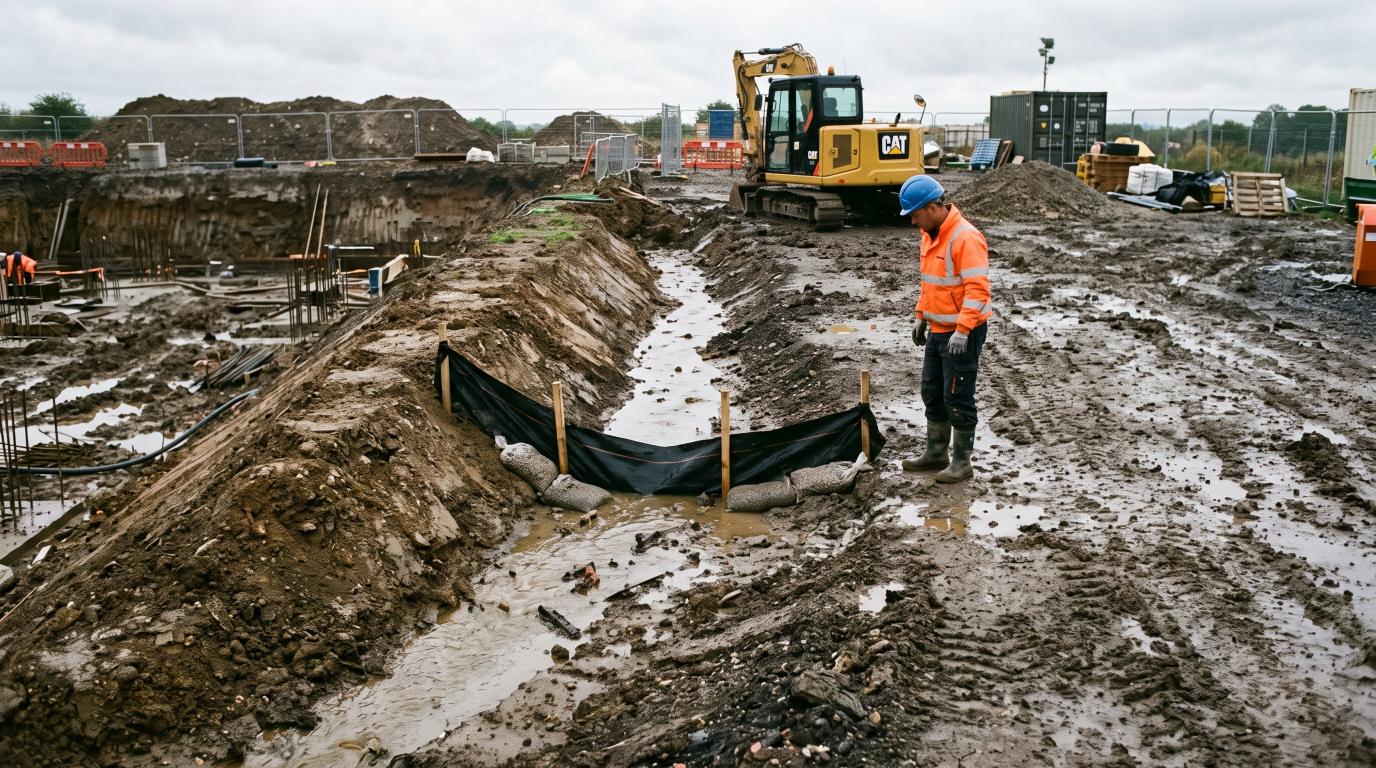
Drainage problems can quickly affect an active construction site. First, identify where water naturally enters and leaves the property. Review slopes, low areas, storm drains, nearby streets, and adjoining properties. Temporary grading and drainage measures should direct water away from active excavations and work areas when possible.
Standing water can soften soils, limit equipment access, damage temporary roads, and increase excavation hazards. Construction runoff may also carry sediment or pollutants away from the site. Projects subject to Colorado construction stormwater requirements may need permit coverage and site-specific controls.
Wastewater should only be discharged through an approved method. Do not assume construction water can simply be pumped into a street, storm drain, ditch, or neighboring property.
Prepare the Site Before Installing Utilities
Utility installation often involves excavation, so site preparation matters.
Survey and Mark Utility Locations
Use current plans, survey information, utility records, and field markings to identify proposed utility routes.
Locate Existing Underground Utilities
Never rely only on old plans. Colorado 811 states that excavators must notify Colorado 811 before excavation. Its guidance includes activities such as grading, trenching, drilling, boring, scraping, and post-hole digging.
Plan Utility Routes and Access
Utility routes should consider buildings, roads, parking areas, drainage systems, foundations, landscaping, and other planned infrastructure. Poor routing can create conflicts later in the project.
Coordinate Utility Work With Site Grading
Utility installation and earthwork are closely connected. Installing lines too early can expose them to equipment damage. Installing them too late can require digging through finished subgrade or completed improvements. The grading and utility schedules should support each other.
Use Safe Excavation and Trenching Practices
Trench safety must be planned before workers enter an excavation. OSHA generally requires cave-in protection for excavations 5 feet deep or more unless the excavation is entirely in stable rock.
Shallower excavations may also need protection when a competent person identifies a cave-in hazard. For trenches 4 feet deep or more, OSHA requires a safe way to enter and exit so workers do not have to travel more than 25 lateral feet to reach it.
Follow the Correct Utility Installation Sequence
A simple utility setup sequence may look like this:
- Complete the site assessment and utility plan.
- Identify existing underground utilities.
- Confirm utility-provider requirements.
- Obtain required permits and approvals.
- Establish temporary power when needed.
- Establish temporary water.
- Place sanitation and site facilities.
- Complete grading needed for utility installation.
- Install planned underground utilities.
- Test connections and systems.
- Protect completed utility work.
- Adjust temporary services as construction progresses.
The exact sequence may change depending on project design and site conditions.
Construction Site Utility Safety Requirements
Utility safety should remain part of daily construction management. Electrical systems must stay protected, grounded, and maintained. Temporary equipment should not be exposed to unnecessary traffic or water.
Maintain required clearances around utilities and keep workers away from energized or damaged equipment. Excavations should be inspected by a competent person as required, especially when soil, weather, water, or site conditions change. OSHA guidance stresses inspections and proper protective systems for trench work.
Cables, hoses, and temporary lines should also stay organized. Avoid placing them across major travel paths whenever another route is practical. Regular inspections help identify problems before they become larger safety or scheduling issues.
Common Mistakes When Setting Up Construction Site Utilities
Many utility problems begin during planning rather than installation.
Starting too late: Utility providers, permits, and inspections may require more coordination than expected.
Undersizing temporary power: Additional equipment can overload a system that was designed only for early construction.
Choosing poor utility locations: Temporary facilities may later interfere with excavation, paving, buildings, or permanent infrastructure.
Failing to locate underground utilities: Excavating without proper utility locating can damage existing infrastructure and create serious hazards.
Poor cord and cable management: Long, exposed runs are more likely to be damaged.
Inadequate water distribution: One distant connection can slow work when crews need water in several areas.
Ignoring drainage: Rain, snowmelt, or construction water can collect in low areas and affect soil conditions.
Skipping inspections: Temporary systems often move and change as the project advances.
Forgetting relocation: A utility location that works during early grading may block building, paving, or landscaping work later.
How Much Does It Cost to Set Up Construction Site Utilities?
There is no single price for construction site utility setup. Costs depend on the project size, location, utility availability, length of service, equipment demand, connection distance, and permit requirements. Temporary power costs may include panels, poles, utility connection charges, wiring, distribution equipment, inspections, and monthly use.
Temporary water costs can include connection fees, meters, piping, tanks, delivery, and consumption. Sanitation costs depend on the number of toilets, service frequency, project duration, and additional hygiene facilities. Generators add rental or purchase costs, fuel, maintenance, and distribution equipment. Underground installation can also involve excavation, pipe, conduit, bedding, backfill, testing, restoration, and inspection.
Because every project is different, estimates should be based on an actual site and utility plan rather than a general price per project.
How to Maintain Construction Site Utilities
Temporary utilities require regular attention. Perform routine inspections of electrical panels, cords, hoses, pipes, toilets, tanks, drainage systems, and lighting. Repair damaged equipment promptly instead of continuing to use a temporary fix.
Keep access routes clear around panels, valves, sanitation facilities, and other service points. Monitor utility use as the project grows. Power and water demand often increase after additional trades arrive. The utility plan should also change with the construction schedule.
Temporary lines or facilities may need to move as buildings, roads, concrete, and landscaping are completed. When construction ends, remove temporary systems safely and close temporary connections according to utility-provider and project requirements.
Construction Site Utility Setup Checklist
A construction site utility checklist helps contractors organize each stage of utility setup, from early planning to final removal. Use the checklist below to make sure important power, water, sanitation, drainage, and underground utility tasks are not missed.
|
Project Stage |
Utility Setup Checklist | Why It Matters |
| Before Construction Begins | Review civil and utility plans |
Confirms where temporary and permanent utilities should be located |
|
Before Construction Begins |
Identify power, water, sanitation, drainage, and communication needs | Helps determine what services the site will require |
| Before Construction Begins | Locate existing underground utilities |
Reduces the risk of damaging existing lines during excavation |
|
Before Construction Begins |
Contact utility providers | Confirms connection options and service requirements |
|
Before Construction Begins |
Check permits and inspection requirements |
Helps prevent approval and scheduling delays |
|
Before Construction Begins |
Plan temporary and permanent utility routes | Reduces conflicts with buildings, roads, grading, and other sitework |
| During Utility Installation | Mark planned utility routes |
Helps crews identify work areas and avoid conflicts |
|
During Utility Installation |
Coordinate utility installation with grading | Prevents finished areas from needing unnecessary excavation later |
| During Utility Installation | Follow safe excavation and trenching procedures |
Protects workers during underground utility installation |
|
During Utility Installation |
Install temporary power and water systems | Provides essential services for active construction |
|
During Utility Installation |
Test electrical and water connections |
Confirms systems are working properly before regular use |
|
During Utility Installation |
Protect installed utility lines | Reduces damage from construction equipment and site traffic |
| During Active Construction | Inspect temporary utilities regularly |
Helps identify damaged cords, pipes, panels, hoses, or connections |
|
During Active Construction |
Keep utility access areas clear | Allows workers and service crews to reach panels, valves, and facilities |
| During Active Construction | Monitor power and water demand |
Helps determine whether additional capacity is needed |
|
During Active Construction |
Maintain drainage and sanitation facilities | Keeps the jobsite functional as conditions change |
| During Active Construction | Relocate temporary utilities when necessary |
Prevents temporary systems from interfering with later construction phases |
|
Before Removing Temporary Utilities |
Confirm permanent utilities are operating | Prevents interruptions when temporary systems are disconnected |
| Before Removing Temporary Utilities | Disconnect temporary services safely |
Reduces electrical, water, and equipment hazards |
|
Before Removing Temporary Utilities |
Remove temporary equipment and lines |
Clears the site for final construction and turnover |
|
Before Removing Temporary Utilities |
Restore disturbed areas | Leaves excavation and temporary utility areas properly finished |
| Before Removing Temporary Utilities | Complete required final inspections |
Confirms the utility work meets applicable project requirements |
Plan Your Underground Utility and Sitework With ESI
Utility installation is only one part of preparing a construction site for successful development. Proper grading, excavation, drainage, and underground utility coordination all need to work together from the beginning. If you are planning a civil construction project in Colorado Springs, CO, contact Elite Surface Infrastructure to discuss your sitework and underground utility needs.
Our team can help coordinate the work required to prepare the site for the next phase of construction. Contact us today to discuss your Colorado Springs construction project.
Conclusion
Setting up construction site utilities takes careful planning long before crews begin major sitework. Temporary power, water, sanitation, drainage, lighting, and permanent utility connections all need to work with the project schedule, grading plan, and site layout.
The most effective approach is to identify utility needs early, locate existing underground lines, coordinate with providers and contractors, and inspect temporary systems as construction progresses. A well-planned utility setup can reduce conflicts, protect completed work, and help each stage of construction move forward without unnecessary interruptions.
Frequently Asked Questions
What utilities are needed on a construction site?
Most construction sites need electricity, water, sanitation, drainage, lighting, and communication services. Larger projects may also need temporary wastewater systems, security systems, and permanent underground utility installation.
How do you get temporary power to a construction site?
Temporary power may come from an approved utility connection, generator, or combination of both. The system should be sized for expected electrical loads and installed according to applicable electrical and safety requirements.
How do you get water to a construction site?
Water may come from an approved municipal connection, temporary meter, storage tank, or other approved source. Distribution lines or hoses then move water to the areas where crews need it.
Do construction sites need portable toilets?
Yes, workers need access to toilet facilities. Portable toilets are commonly used when permanent restroom or sewer facilities are not available. OSHA sets minimum sanitation requirements for construction jobsites.
Who is responsible for setting up construction site utilities?
Responsibility depends on the contract and project structure. The owner, general contractor, civil contractor, utility contractor, electrician, plumber, or utility provider may each handle different parts of the process.
How early should construction utilities be arranged?
Utility planning should begin during preconstruction. Connections, permits, inspections, utility locating, and equipment installation can take time, so waiting until crews arrive may delay the project.
Do temporary construction utilities require permits?
Many temporary utility installations require permits, inspections, utility approval, or all three. Requirements depend on the type of utility and project location.
How are construction site utilities kept safe?
Utilities are kept safe through proper installation, grounding, utility locating, trench protection, equipment barriers, organized cables and hoses, routine inspections, and regular maintenance.