
Asphalt Milling Contractors in Colorado
Colorado pavement is constantly exposed to harsh conditions, including freeze–thaw cycles, intense high-altitude UV exposure, heavy traffic loads, and shifting soil conditions. Over time, these factors cause asphalt surfaces to crack, weaken, and deteriorate making professional restoration essential.
Asphalt milling in Colorado is one of the most efficient and cost-effective ways to restore damaged pavement. Instead of removing and replacing the entire structure, milling removes only the damaged surface layer while preserving the strong base underneath. This process creates a smooth, stable foundation for a new asphalt overlay and helps extend the life of the pavement while reducing overall project costs.
REQUEST AN ESTIMATE
What Is Asphalt Milling?
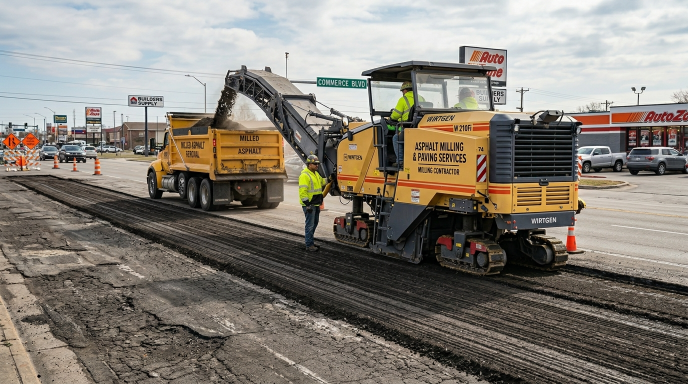
Asphalt milling is the process of removing the top layer of damaged or worn asphalt using specialized milling equipment. The underlying base remains intact, which makes it a cost-effective alternative to full pavement replacement.
This process restores a clean, level surface that is ready for resurfacing or new asphalt installation, improving both performance and appearance.
Signs Your Pavement Needs Asphalt Milling
Identifying early surface damage helps prevent costly repairs and ensures timely asphalt restoration before deeper structural issues develop.
Surface Cracking & Raveling
When the asphalt surface begins to crack, break apart, or lose aggregate, it is a clear sign of surface deterioration. Milling removes the damaged layer and prepares the pavement for a fresh, smooth overlay.
Uneven Pavement & Drainage Problems
Poor grading, settlement, or surface wear can cause water to pool on the pavement, leading to faster deterioration, freeze–thaw damage, and safety hazards.
Oxidized or Worn Asphalt Surfaces
A gray, faded, or brittle surface indicates oxidation from UV exposure and aging, meaning the top layer has lost flexibility and strength.
Minor Rutting & Surface Deformation
Depressions in wheel paths and uneven surfaces caused by traffic loads reduce safety and require milling to restore a smooth, even finish.
Failing Parking Lots & Traffic Areas
High-traffic areas such as parking lots, loading zones, and access roads often show early surface failure and need milling before deeper damage occurs.
Aging Asphalt Nearing End of Surface Life
When asphalt is still structurally stable but visually and functionally worn, milling is the most cost-effective way to extend its service life without full replacement.
- Our Process
Our Asphalt Milling Process in Colorado
01
Site Inspection & Pavement Evaluation
We evaluate existing pavement conditions, surface damage, drainage concerns, and structural issues to determine the correct milling depth and project approach.
02
Traffic Control & Site Preparation
Proper traffic control measures are established and the work area is prepared to ensure safe, efficient milling operations throughout the project.
03
Precision Asphalt Milling
Using advanced milling equipment, we remove damaged asphalt layers to the required depth while maintaining accurate grading and surface consistency.
04
Surface Cleaning & Base Inspection
All milled debris is removed, and the exposed base layer is inspected for weak or damaged areas that may require repair before resurfacing.
05
Preparation for Asphalt Overlay or Repaving
The surface is carefully leveled and prepared to create a stable foundation for new asphalt installation or overlay application.
06
Final Quality Inspection
We perform a thorough final inspection to verify proper grading, smoothness, milling depth, and overall structural readiness before project completion.
Milling Equipment That Makes Precision Possible
Our milling equipment fleet covers the range of project sizes and configurations common in Colorado civil construction work.
Large drum mills handle open pavement areas efficiently on road rehabilitation and large parking lot projects. These machines produce consistent cutting depth across wide passes, which is what you need on high-volume municipal and commercial work. The drum configuration determines the texture of the milled surface, which affects how well the overlay bonds to the prepared base.
Smaller mills handle confined areas, access-restricted spaces, and precision work around utilities and drainage structures. These machines offer tighter operator control in situations where a large drum mill would create clearance problems or risk damaging adjacent structures.
Beyond the equipment itself, the operators matter enormously. Milling machines are sophisticated pieces of equipment with grade controls that can maintain cutting depth to close tolerances. An experienced operator understands how to manage those controls to hit design grades consistently across a project, not just in the open middle sections but at edges, transitions, and around obstacles. That consistency is what the overlay contractor depends on when they show up.
We also maintain our equipment in working condition. This isn’t exciting to talk about, but unplanned equipment downtime on a commercial or municipal project is a real schedule and cost risk. We manage that risk through regular maintenance rather than hoping machines hold together.
Why Asphalt Milling Is Ideal for Colorado Pavement
Asphalt milling is especially effective in Colorado because it restores damaged pavement without full reconstruction while handling harsh local climate conditions.
Removes Freeze–Thaw Surface Damage
Milling eliminates cracked and weakened surface layers caused by repeated freezing and thawing cycles, helping prevent further deterioration.
Restores Proper Drainage & Slope
By correcting surface levels, milling improves water flow and reduces pooling, which helps prevent moisture-related damage.
Corrects Surface Irregularities
Uneven areas, bumps, and surface deformation are removed to create a smooth, safe, and uniform driving surface.
Extends Pavement Lifespan
Milling prepares the pavement for a fresh overlay, significantly improving long-term performance and durability.
Reduces Long-Term Repair Costs
By targeting only the damaged surface layer, milling avoids unnecessary full reconstruction and lowers overall maintenance costs.
Minimizes Downtime for Businesses & Roads
The process is efficient and quick, reducing disruption for commercial properties, roadways, and high-traffic areas.
Benefits of Asphalt Milling Over Full Replacement
Asphalt milling is a cost-effective and efficient solution that restores pavement performance without the need for full reconstruction.
More Cost-Effective Than Reconstruction
Only the damaged surface layer is removed, which significantly reduces material, labor, and overall project costs.
Faster Project Completion
Milling projects are completed quickly, minimizing disruption to traffic, businesses, and daily operations.
Environmentally Friendly Recycling Process
Milled asphalt can be recycled and reused in new paving projects, reducing environmental impact.
Preserves Structurally Sound Base Layers
Since the existing base remains intact, there is no need for unnecessary excavation or rebuilding.
Improves Surface Smoothness & Safety
Milling creates a more even and stable surface, improving driving safety and overall pavement quality.
Reduces Material Waste
By reusing existing asphalt materials, milling helps minimize waste and supports sustainable construction practices.
Asphalt Milling vs Asphalt Resurfacing
Understanding the difference between milling and resurfacing helps determine the most effective solution for your pavement condition.
When Milling Alone Is Enough
Milling alone is ideal when damage is limited to the surface layer and the underlying base is still strong and stable.
When Milling & Overlay Are Recommended
This approach is best for moderate surface damage where milling removes the worn layer and a new asphalt overlay restores performance.
When Resurfacing Will Not Solve Structural Problems
If there is deep base failure, widespread sinking, or structural instability, resurfacing will not be enough and full reconstruction is required.
Comparing Costs & Long-Term Performance
Milling combined with overlay offers the best balance of affordability, durability, and long-term pavement performance compared to full replacement.
Common Causes of Asphalt Surface Failure in Colorado
Asphalt in Colorado deteriorates faster due to a combination of harsh environmental conditions and structural stress factors that impact pavement performance over time.
Freeze–Thaw Cycles
Water entering small cracks expands and contracts with temperature changes, causing the asphalt to break down and weaken.
Heavy Traffic & Load Stress
Constant vehicle loads, especially from trucks and commercial traffic, create rutting, cracks, and surface deformation.
UV Oxidation at High Altitudes
Strong sunlight at higher elevations accelerates asphalt aging, making it brittle and more prone to surface damage.
Poor Drainage & Water Intrusion
Standing water penetrates the surface and weakens both the asphalt layers and the underlying base.
Weak Base Construction
An improperly built or compacted base leads to instability, causing premature cracking and surface failure.
Deferred Pavement Maintenance
Delaying repairs allows minor issues to grow into major structural problems, increasing long-term damage and repair costs.
Why Choose Our Colorado Asphalt Milling Company
We provide reliable asphalt milling services in Colorado built for precision, durability, and long-term performance, with solutions tailored to withstand freeze–thaw cycles, UV exposure, and soil movement. Every project is completed with a focus on quality and consistency to ensure lasting results.
Using advanced milling equipment and a fully licensed and insured team, we deliver accurate surface removal, smooth finishes, and efficient project execution. We maintain strict control over milling depth and provide transparent pricing with on-time completion and minimal disruption.
Ready to Get Started?
Contact our team today for a free consultation and estimate on your asphalt paving project.
All Services
Colorado: Why Statewide Experience Shapes Better Milling Decisions
Phoenix is one of the fastest-growing metropolitan areas in the country, and its construction environment reflects that. New commercial, industrial, and residential development is happening across the Valley, from the outer edges of the metro in areas like Surprise, Peoria, and Queen Creek, to infill development and redevelopment in Midtown Phoenix, Tempe, and Chandler.
The soil conditions vary meaningfully across this geography. Central Phoenix and Scottsdale areas often encounter caliche at relatively shallow depths. West Phoenix and Avondale areas can have higher concentrations of alkali soils, particularly in historically irrigated agricultural land. Areas near the Salt River and other alluvial corridors involve different fill conditions and flood management requirements. South Mountain and Ahwatukee areas deal with gravelly desert soils that drain well but require specific compaction approaches.
None of this is theoretical. These are real conditions that affect real project budgets and timelines. A contractor who’s worked across these areas has encountered these variables and developed strategies for them. A contractor importing generic earthwork methods from another region hasn’t.
Beyond soil, Phoenix earthwork contractors must operate within Maricopa County’s air quality framework. The Phoenix metro is designated as a PM-10 nonattainment area, meaning the region exceeds federal standards for fine particulate matter. Earthwork generates fugitive dust. Maricopa County Rule 310 establishes the dust control requirements every earthwork project must follow. We operate in full compliance with these requirements because it’s the law, because it’s the right thing to do for air quality, and because non-compliance is a project stoppage risk you don’t need.
Areas We Serve in Colorado
We provide asphalt paving services across Northern, Central, and Southern Colorado, including:
- Fort Collins
- Loveland
- Greeley
- Longmont
- Boulder
- Broomfield
- Westminster
- Arvada
- Thornton
- Northglenn
- Aurora
- Denver
- Lakewood
- Golden
- Littleton
- Englewood
- Centennial
- Parker
- Castle Rock
- Highlands Ranch
- Lone Tree
- Commerce City
- Brighton
- Colorado Springs
- Fountain
- Monument
- Pueblo
Driving Directions to Our Colorado Springs Office
Visiting Elite Surface Infrastructure to discuss asphalt milling services? Our Colorado Springs office is at 640 Aviation Way, Colorado Springs, CO 80916. From S Powers Boulevard, turn west onto E Fountain Boulevard/US-24, then turn onto Aviation Way and continue to 640 Aviation Way.
Frequently Asked Questions
What is asphalt milling and how does it work?
Asphalt milling, also called cold planing, is the controlled removal of the top layer of existing asphalt using a machine equipped with a rotating drum of carbide cutting teeth. The machine grinds away the damaged surface to a specified depth, typically one to four inches, while the removed material is collected for recycling. What remains is a textured, stable base ready for a new asphalt overlay. It’s a more cost-efficient approach than full removal when the base structure beneath the surface is still sound.
How long does asphalt milling take?
The timeline depends on the size and condition of the project. Small driveways may take a few hours, while large commercial parking lots can take one to several days. Milling is generally faster than full reconstruction.
Can new asphalt be installed immediately after milling?
Yes, in most cases new asphalt overlay can be installed shortly after milling and surface preparation. This helps reduce downtime for businesses, roads, and parking areas.
Is asphalt milling cost-effective?
Yes. Asphalt milling is significantly more affordable than full pavement replacement because it reuses the existing base structure and only removes the damaged surface layer.
How long does a milled and resurfaced asphalt surface last?
A properly milled and resurfaced asphalt surface can last 15–25 years depending on traffic levels, weather exposure, and maintenance practices.
Does asphalt milling improve drainage problems?
Yes. Milling can correct surface-level grading issues that cause water pooling. Proper re-grading during the milling process helps improve drainage and reduce future freeze–thaw damage.
What happens to the milled material after it's removed?
The reclaimed asphalt pavement, or RAP, is transported to a recycling facility where it’s processed and blended back into new asphalt mix. According to the National Asphalt Pavement Association, asphalt is the most recycled material in the United States. RAP reduces the demand for virgin aggregate and asphalt binder in new mixes, which lowers material costs and reduces the environmental footprint of the paving project. ESI recycles milled asphalt from our Colorado projects in support of sustainable construction practices.