
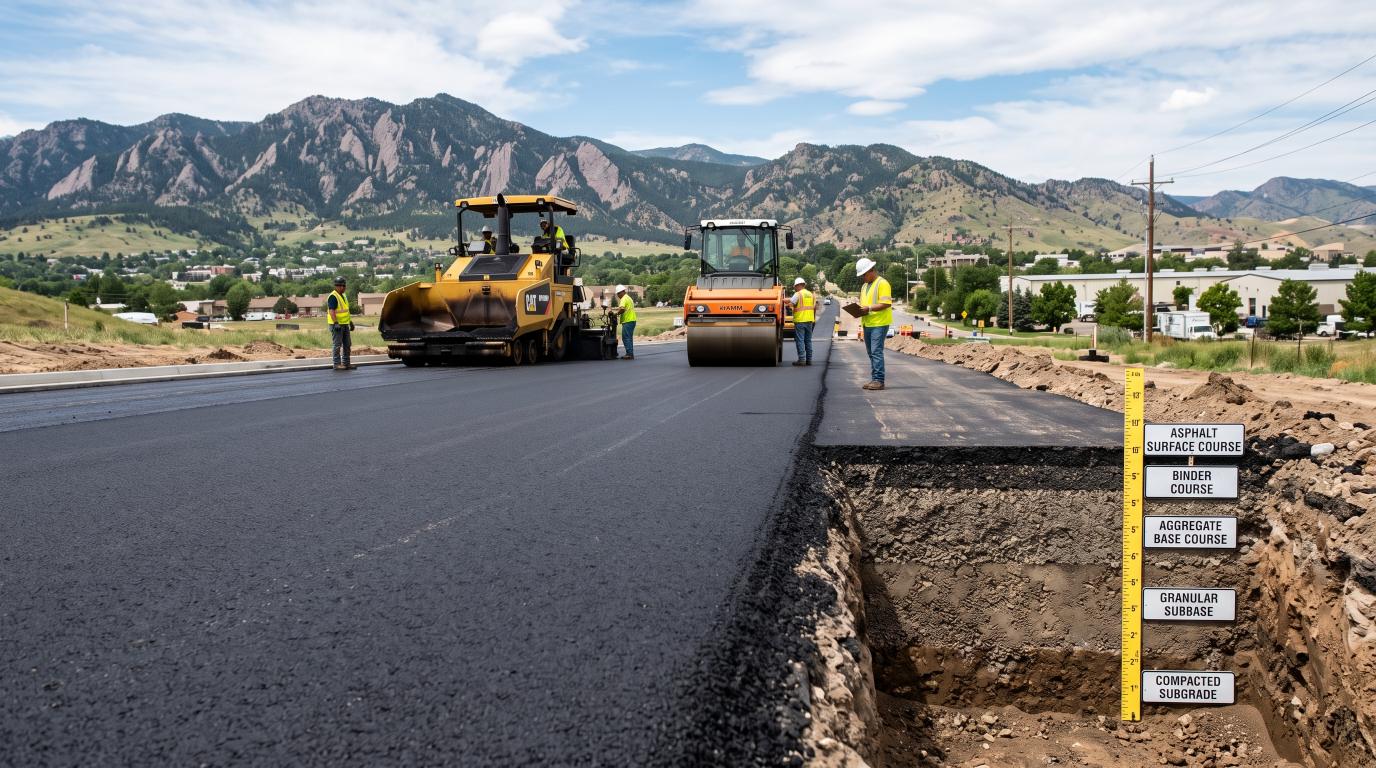
What is pavement? Pavement is an engineered surface system built to carry traffic safely and spread loads into the ground below. It is more than the layer you see on top. A complete pavement structure may include prepared soil, a subbase, a base course, and an asphalt or concrete surface.
In Colorado, proper pavement construction matters for roads, parking lots, commercial sites, and public infrastructure. ESI serves projects across Colorado, including Colorado Springs and communities along the Front Range, with asphalt paving, concrete, earthwork, and related civil construction services.
A pavement can look simple from the surface, but its performance depends on what is underneath. Good material selection, compaction, drainage, and maintenance all help pavement handle traffic and weather over time.
What Is the Purpose of Pavement?
A well-designed pavement does several jobs at the same time. It supports traffic, protects the soil below, provides a safe surface, and helps control water.
Support Traffic Loads
Cars, buses, delivery vehicles, construction equipment, and trucks place repeated loads on pavement. The pavement layers spread these loads so the ground below is not overloaded. Heavier traffic usually requires a stronger pavement section.
Provide a Smooth and Safe Surface
The surface course should provide a stable path with enough traction for safe travel. Smooth pavement improves ride quality, while proper surface texture helps reduce slipping in wet conditions.
Protect the Underlying Soil
Natural soil can weaken when it becomes wet, loose, frozen, or poorly compacted. Pavement protects the subgrade from direct traffic. Base and subbase layers can also add support and help control soil movement.
Improve Durability and Drainage
Water can damage a pavement system when it reaches weak materials below the surface. Proper slopes, drainage features, compacted layers, and surface maintenance help control moisture and reduce damage. FHWA guidance also identifies drainage as an important part of pavement performance.
What Are the Main Types of Pavement?
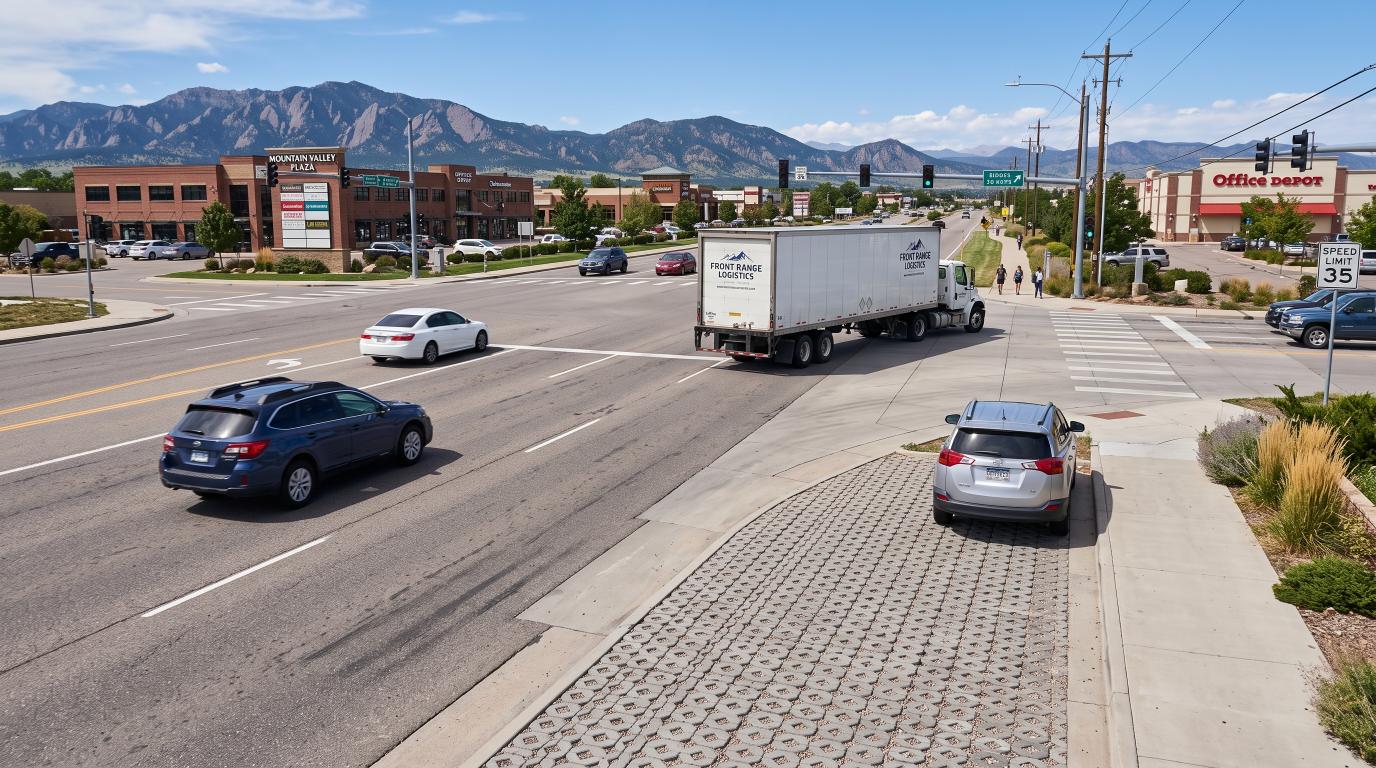
Pavement is commonly grouped by how the structure carries and spreads loads. The main types are flexible, rigid, composite, and some forms of block or permeable pavement.
Flexible Pavement
Flexible pavement normally uses an asphalt surface over supporting layers. It is called flexible because the pavement can bend slightly under traffic rather than acting like one rigid slab. The asphalt surface and lower layers work together to spread wheel loads.
Strong base materials and a stable subgrade are important because flexible pavement depends heavily on support from below. Flexible pavement is widely used for streets, highways, parking lots, driveways, and commercial access roads. It can also be patched, milled, resurfaced, or overlaid when repairs are needed.
Rigid Pavement
Rigid pavement uses Portland cement concrete as the main surface and load-carrying layer. Concrete has high bending resistance, so much of the traffic load is carried through the slab.
It is often used in intersections, industrial areas, loading zones, highways, bus lanes, and other places with demanding loads. Joints may be added to control cracking and allow movement as concrete expands and contracts.
Composite Pavement
Composite pavement combines asphalt and concrete in one system. A common example is an asphalt layer placed over an existing concrete pavement. This approach may be used during rehabilitation when a project can use the strength of the existing rigid pavement while gaining a new asphalt riding surface.
Block or Permeable Pavement
Block pavement uses individual pavers placed over a prepared base. It is common for walkways, plazas, driveways, parking areas, and some low-speed traffic areas.
Permeable pavement allows water to move through the surface into a stone or drainage layer below. Systems may use porous asphalt, previous concrete, or permeable pavers.
What Are the Layers of Pavement?
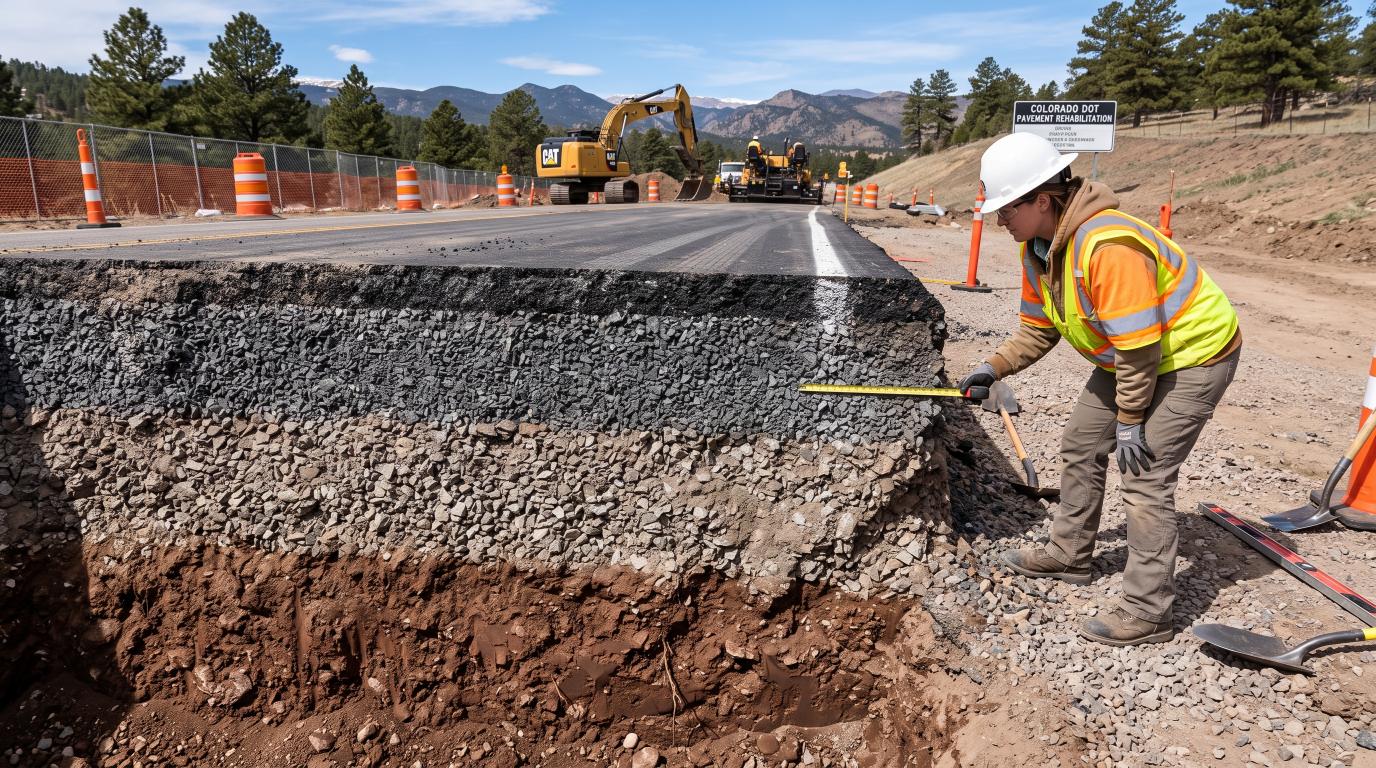
A pavement system may include four main levels: subgrade, subbase, base course, and surface course. Not every pavement uses every layer, but each one has a specific role.
Subgrade
The subgrade is the prepared soil at the bottom of the pavement structure. It acts as the foundation for everything above it. A weak or poorly prepared subgrade can lead to settlement, cracking, rutting, or uneven pavement. Contractors may grade, compact, moisture-condition, or stabilize the soil before upper layers are installed.
Subbase Course
The subbase is placed above the subgrade when the design calls for it. It is often made from selected granular material. This layer can add support, improve drainage, reduce movement of fine soil, and provide a better working platform during construction.
Base Course
The base course sits above the subbase or directly on the subgrade. It is normally made from strong aggregate or a stabilized material. The base adds structural strength and helps spread loads. In flexible pavement, it can provide a major part of the support for the surface above.
Surface Course
The surface course is the top layer that traffic touches. It may be asphalt, concrete, pavers, or another approved pavement material. This layer must handle wear from tires, weather, braking, turning, and repeated traffic. It should also provide a smooth, skid-resistant surface and help limit water entry.
What Materials Are Used in Pavement?
The materials used in pavement depend on the design, traffic level, soil conditions, climate, and project needs.
Asphalt
Asphalt pavement is made from aggregates combined with asphalt binder. The mixture is placed and compacted to create a smooth, durable surface. Mix design, temperature, thickness, and compaction can all affect how well asphalt performs.
Concrete
Concrete is made from cement, water, aggregates, and other materials or admixtures as needed. After placement, it hardens into a strong slab. Proper joints, curing, base support, and finishing are important for long-term performance.
Aggregates
Aggregates include crushed stone, gravel, sand, and similar mineral materials. They are used in asphalt and concrete mixtures and in base or subbase layers. Aggregate size, shape, strength, cleanliness, and grading can affect drainage, compaction, and stability.
Bitumen and Other Binding Materials
Bitumen is another term often used for asphalt binder. It coats and binds aggregate particles together in asphalt pavement. Cement, lime, and other stabilizing materials may also be used to strengthen weak soils or improve base materials when the design requires it.
How Is Pavement Constructed?
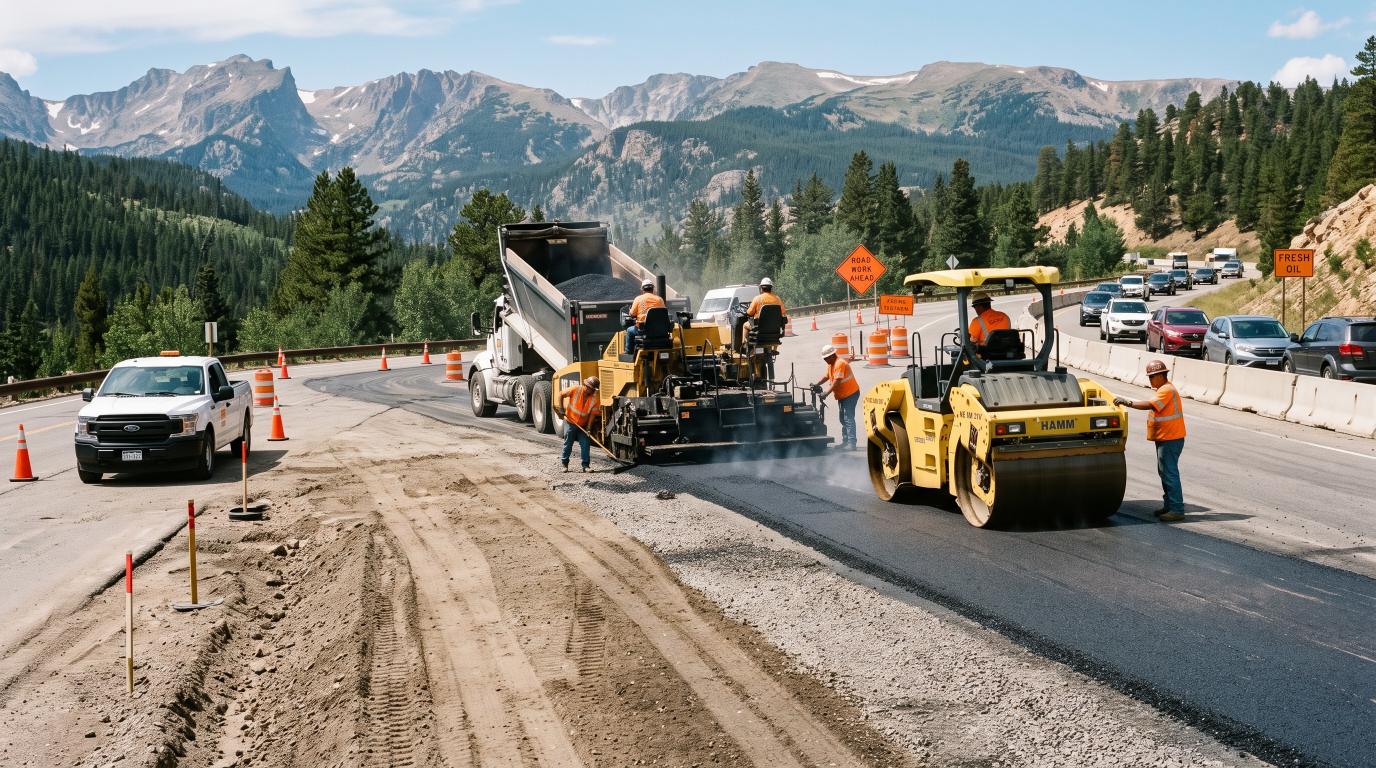
Pavement construction follows a planned sequence. The exact process changes by project, but the main steps are similar.
Site Preparation and Earthwork
Work begins by clearing, excavating, grading, and shaping the site. Contractors establish elevations, slopes, and drainage paths before pavement layers are installed.
Subgrade Preparation
The subgrade is graded and compacted to create a stable foundation. Soil moisture may be adjusted so the material can compact properly. Weak soil may require stabilization, undercutting, or replacement.
Installing the Base and Subbase
Approved base and subbase materials are placed in controlled lifts. Each lift is spread evenly and compacted before the next layer is added.
Thickness and density must meet project requirements because weak or uneven support can affect the finished pavement.
Applying the Surface Layer
For asphalt pavement, the mix is placed with paving equipment and compacted at the proper temperature. For concrete pavement, the concrete is placed, shaped, finished, jointed, and cured.
Compaction and Finishing
Compaction helps materials reach the density needed for strength and stability. Final work may also include joints, edges, striping, drainage connections, smoothness checks, and cleanup before the pavement opens to traffic.
What Makes a Good Pavement?
Good pavement is not defined by appearance alone. It must perform well under real traffic and weather conditions.
Adequate Strength: The pavement must be strong enough for the vehicles and loads expected on the site. A neighborhood street and a heavy industrial yard may need very different designs.
Proper Drainage: Surface and subsurface drainage move water away from the pavement. Standing water and trapped moisture can weaken materials and speed up damage.
Smooth Surface: A smooth surface improves comfort, safety, and drainage. Good grading and careful paving help reduce bumps, depressions, and uneven transitions.
Resistance to Weather and Traffic: Pavement faces sunlight, water, temperature changes, tire wear, turning forces, and repeated loading. Materials should be selected and installed for the conditions at the site.
Long-Term Durability: Durable pavement starts with good design and construction, then depends on maintenance. Early repairs can help prevent small problems from becoming larger failures.
Asphalt vs. Concrete Pavement What’s the Difference?
Both asphalt and concrete can provide dependable pavement. The better choice depends on traffic, site conditions, budget, maintenance plans, climate, and project goals.
|
Feature |
Asphalt Pavement |
Concrete Pavement |
|
Main material |
Asphalt binder and aggregates |
Cement concrete |
|
Structural behavior |
More flexible |
More rigid |
|
Common uses |
Roads, parking lots, highways, driveways |
Roads, intersections, industrial areas, heavy-load areas |
|
Installation |
Placed and compacted in lifts |
Placed, finished, jointed, and cured |
|
Maintenance |
Often patched, milled, overlaid, or resurfaced |
Repairs may involve joints, cracks, or slab sections |
|
Surface |
Smooth and dark |
Hard, light-colored slab surface |
Asphalt often allows faster resurfacing and staged repairs. Concrete can provide strong slab action for demanding loads. Neither material is always the best choice. The design should match the site and expected use.
Where Is Pavement Used?
Pavement is used wherever a strong, stable surface is needed for vehicles or people. Roads and highways use pavement to support daily traffic, while parking lots need durable surfaces for parked cars, turning vehicles, and delivery trucks. Airports also use heavy-duty pavement on runways and taxiways to handle aircraft loads and braking forces.
Pavement is also common on driveways, walkways, and commercial properties. Industrial sites, warehouses, loading areas, and distribution centers may need stronger pavement because they handle trucks, trailers, and heavy equipment on a regular basis.
Pavement Maintenance and Common Problems
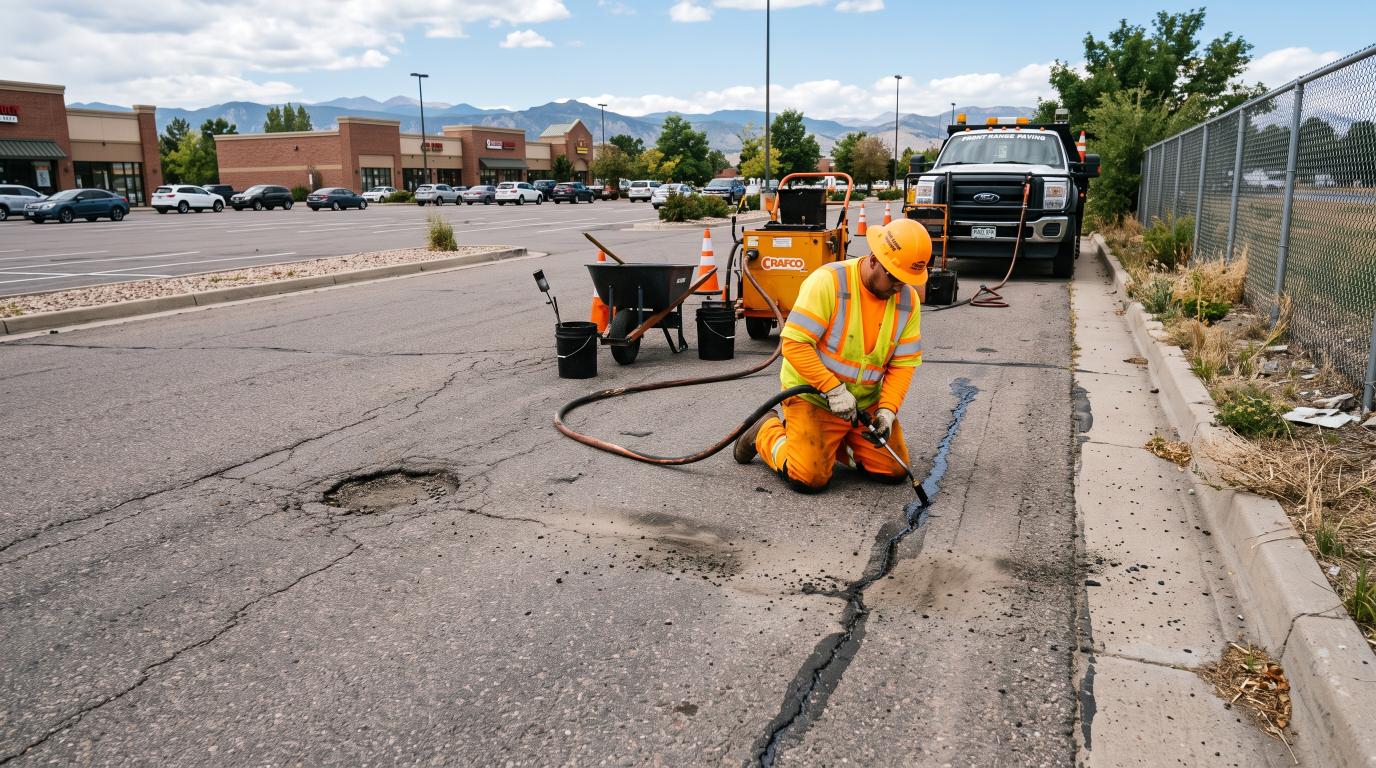
Even well-built pavement needs maintenance because traffic, water, temperature changes, and aging can cause damage. Common problems include cracks, potholes, rutting, and surface deformation. If cracks are left untreated, water can enter the pavement and weaken the layers below.
Poor drainage can also cause pavement to settle, crack, or lose strength over time. Preventive maintenance such as crack sealing, patching, drainage repairs, milling, and overlays can help extend pavement life and reduce the need for larger repairs.
Need Pavement Construction in Colorado?
Planning a road, parking lot, commercial site, or infrastructure project in Colorado? Elite Surface Infrastructure provides asphalt paving, concrete, earthwork, site grading, and related civil construction services for commercial, municipal, and government projects. Contact us to discuss your pavement needs in Colorado Springs or elsewhere along the Front Range.
Conclusion
Pavement is more than the surface under a vehicle or pedestrian. It is an engineered structure designed to carry traffic, spread loads, protect the soil below, manage water, and provide a smooth travel surface.
Flexible asphalt pavement, rigid concrete pavement, composite systems, and permeable or block pavement each serve different needs. Their performance depends on the subgrade, supporting layers, surface material, drainage, compaction, and construction quality.
Understanding how pavement works makes it easier to plan new construction and recognize maintenance needs. When the pavement type, materials, layers, and drainage match the site, the finished surface can provide safe and dependable service for years.
Frequently Asked Questions
What is pavement in simple terms?
Pavement is a built surface that supports vehicles or people and spreads their weight into the ground below. It usually includes more than the visible top layer. Soil preparation, base materials, and the surface all help it perform.
What is the difference between pavement and a road?
Pavement is the structural surface and supporting layers that carry traffic. A road is the larger transportation facility and may include pavement, shoulders, drainage, signs, markings, slopes, and other features.
What are the two main types of pavement?
The two main structural types are flexible pavement and rigid pavement. Flexible pavement usually has an asphalt surface. Rigid pavement normally uses a Portland cement concrete slab as the main load-carrying layer.
Is asphalt considered pavement?
Yes. Asphalt is one of the most common pavement surface materials. When asphalt is placed over properly designed supporting layers, the complete structure is usually called flexible pavement.
Which type of pavement is best?
There is no single best pavement for every project. The right choice depends on traffic, soil, drainage, climate, construction schedule, expected use, and long-term maintenance plans.
How long does pavement last?
Pavement life varies widely. Material quality, design thickness, traffic loads, climate, drainage, construction quality, and maintenance all affect how long it performs before major rehabilitation or replacement is needed.