
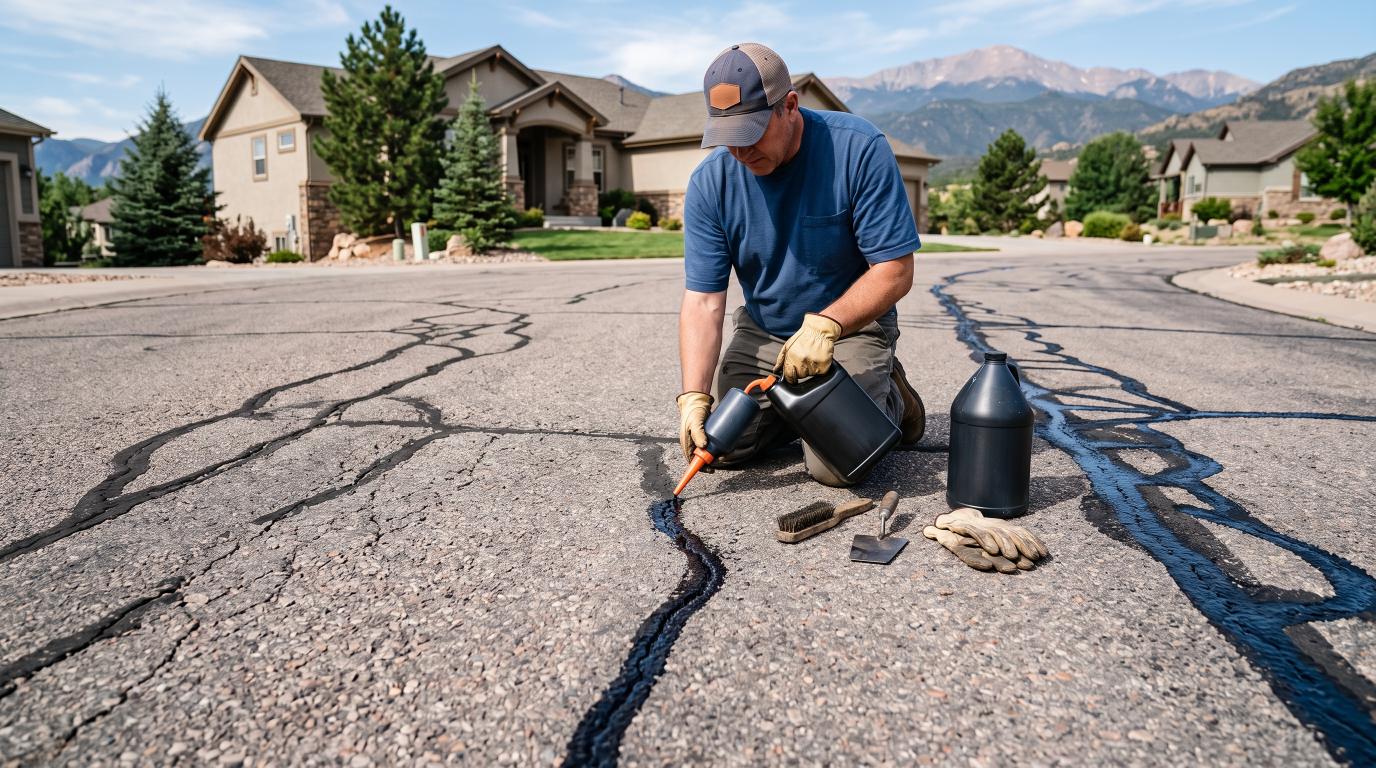
Asphalt driveway crack filler helps seal openings in pavement and reduce water intrusion that can lead to further damage. Choosing the right product depends on the crack’s width, depth, movement, and surrounding asphalt condition. Narrow cracks may need liquid filler, while wider or deeper openings may require flexible rubberized materials.
Weather conditions, pavement age, and regular vehicle traffic can affect how cracks develop. Temperature changes are especially important because asphalt expands and contracts throughout the year. This guide explains the different types of asphalt crack filler, how to fill deep cracks in an asphalt driveway, proper preparation and application, drying times, and when damage requires more than a surface repair.
What Is Asphalt Driveway Crack Filler?
Asphalt crack filler flows or presses into an opening and closes it. Once cured, it helps keep out water and debris. Flexibility matters because asphalt moves when temperatures change. A rigid repair may separate from the crack edges or break as the pavement expands and contracts. Crack filling is maintenance, not structural repair. It cannot rebuild a weak base, lift a sunken area, or replace broken asphalt.
Why Do Cracks Form in Asphalt Driveways?
Cracks form in asphalt driveways because the pavement expands in hot weather and contracts when temperatures drop. Over time, this repeated movement can weaken the surface and create small openings. Sunlight also dries out the asphalt binder, making the pavement harder, more brittle, and easier to crack.
Water can then enter these openings and weaken the base beneath the driveway. Poor drainage, heavy vehicles, weak soil, and repeated loads can make the damage worse. As the base shifts or sinks, cracks may grow wider and connect, which can lead to potholes or larger areas of pavement failure.
What Type of Asphalt Driveway Crack Filler Should You Use?
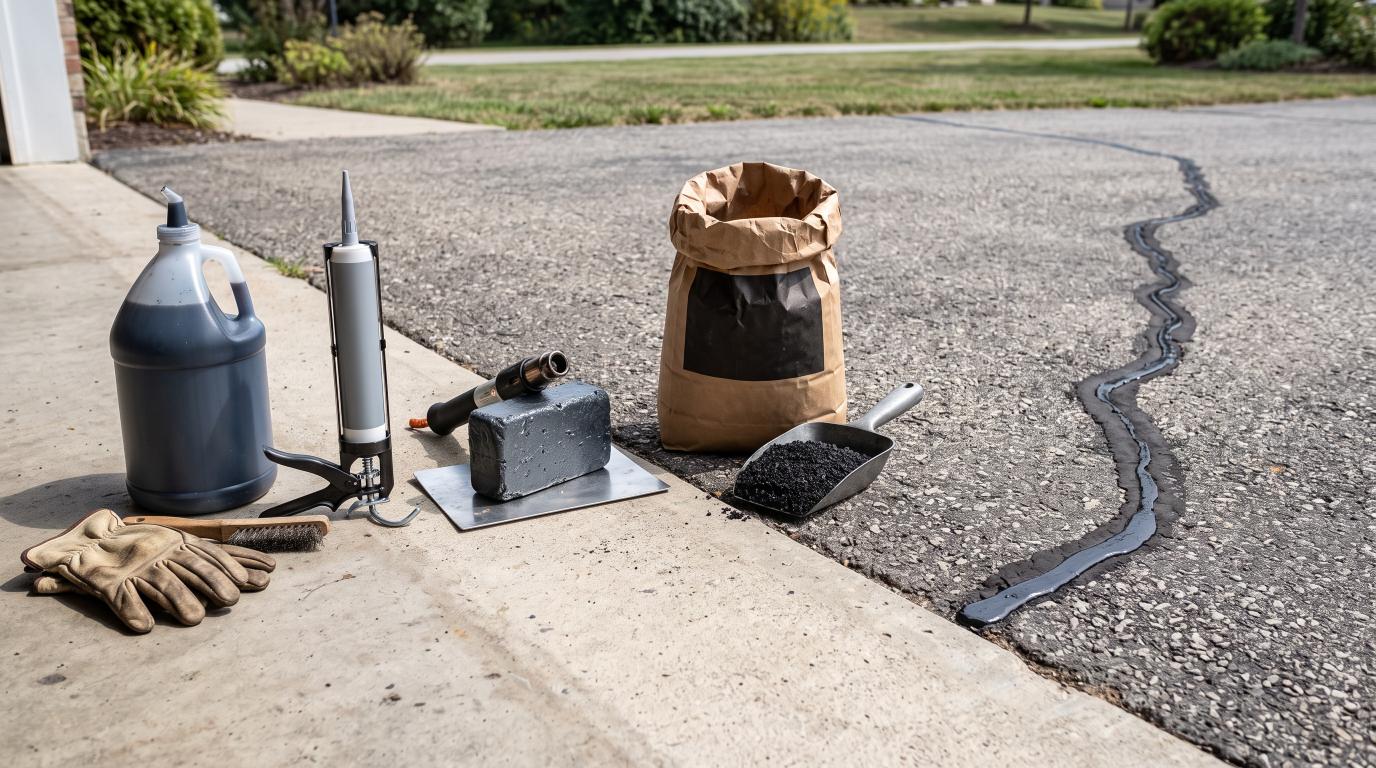
Match the filler to the crack, weather, and application method. Review the label because limits and curing times vary.
|
Crack-Filler Type |
Best Used For |
Main Consideration |
|
Liquid crack filler |
Small, narrow cracks |
Easy to apply but may shrink |
|
Rubberized crack filler |
Moving cracks |
Flexible and often more durable |
|
Hot-pour crack filler |
Deeper or active cracks |
Usually needs special equipment |
|
Cold-pour crack filler |
Home driveway repairs |
Ready to use and convenient |
|
Rope or cord filler |
Deeper, wider cracks |
May require careful heating |
|
Asphalt patch material |
Potholes and broken areas |
Not intended for simple cracks |
How to Choose the Best Asphalt Driveway Crack Filler
Start by checking the width, depth, and condition of the crack. Thin liquid fillers are usually better for small surface cracks, while rubberized or hot-pour products may work better for wider or moving cracks. Deep cracks may also need backer material or more than one layer of filler.
You should also consider the weather, curing time, and application method. Choose a product made specifically for asphalt and make sure it can be applied in the current temperature and moisture conditions. Always review the coverage details and follow the manufacturer’s instructions for the best result.
What Size Cracks Can Asphalt Crack Filler Repair?
Asphalt crack filler works best on small and medium cracks where the surrounding pavement is still firm and stable. Thin liquid fillers can flow into hairline cracks, while rubberized or cold-pour products are often better for wider openings. The product label should always be checked because each filler has its own width and depth limits.
Wide or deep cracks may need backer material, several layers of filler, or professional hot-pour treatment. Crack filler is not a lasting solution for potholes, sinking pavement, or alligator cracking. These problems often point to damage below the surface and may require patching, base repair, resurfacing, or replacement.
How to Prepare an Asphalt Driveway Crack for Filling
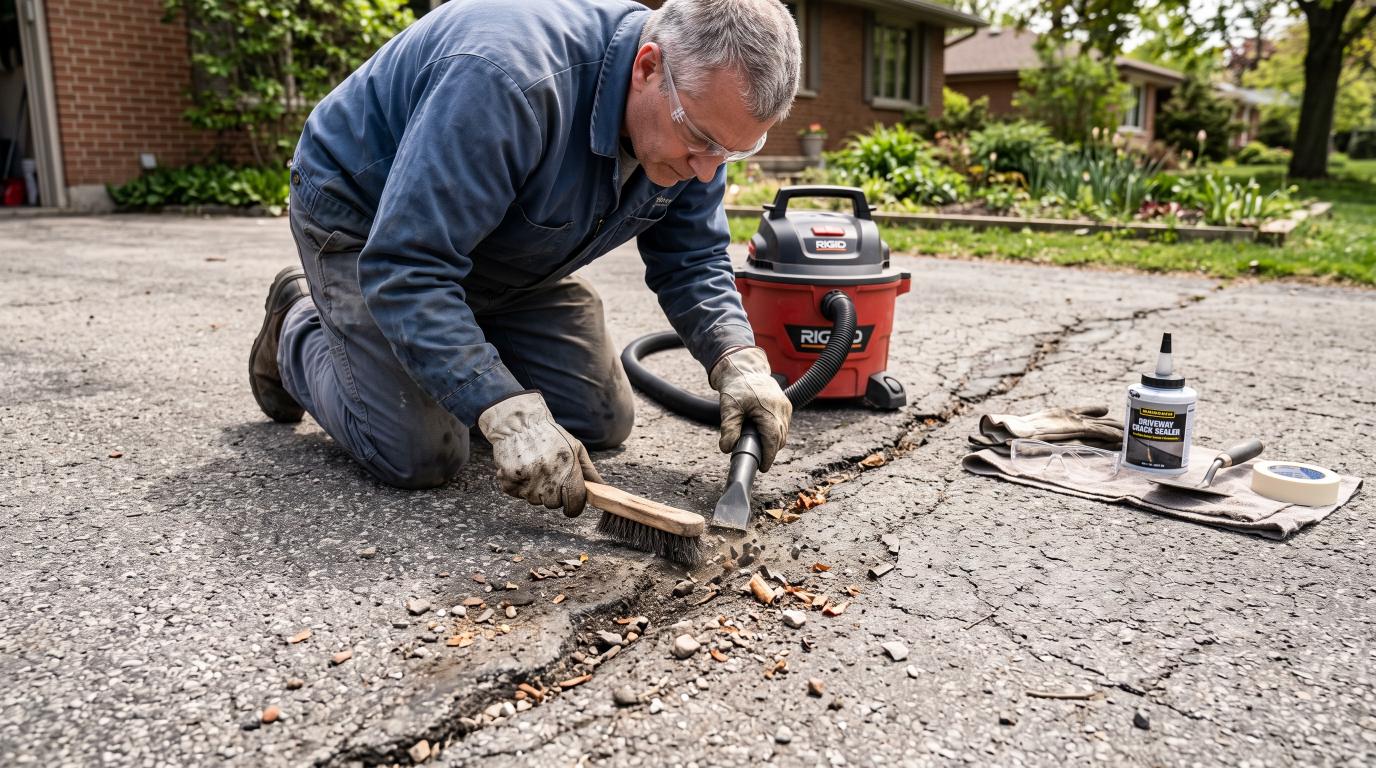
Proper preparation helps the crack filler bond firmly to the asphalt and creates a cleaner, longer-lasting repair.
Inspect the Driveway: Walk over the surface and mark cracks, potholes, loose edges, low spots, and sinking areas.
Remove Weeds and Loose Material: Pull weeds and scrape out soil, stones, and broken asphalt. Filler placed over loose material will have weak contact with the crack.
Clean the Crack: Use a stiff brush, crack-cleaning tool, shop vacuum, or compressed air. Remove dust from the sides and bottom. Pressure washing may help, but the crack must dry fully.
Allow the Crack to Dry: Most products bond best to dry asphalt. Moisture can weaken the bond or become trapped under the repair. Follow the label if a product allows damp conditions.
Open or Shape the Crack When Needed: Professional routing widens and shapes some moving cracks to create a clean space for sealant. It is not needed for every driveway and can damage weak asphalt when done poorly.
How to Apply Asphalt Driveway Crack Filler
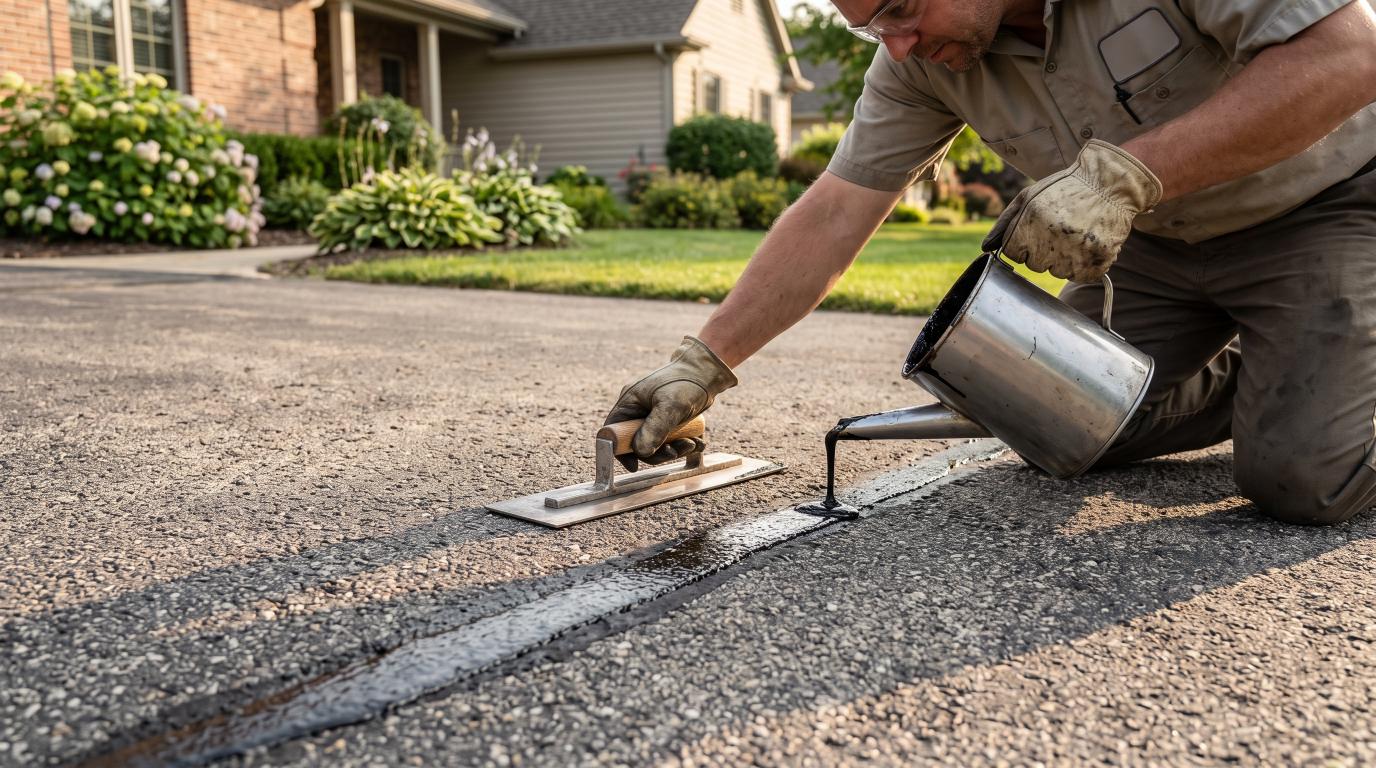
Applying asphalt crack filler correctly helps create a stronger seal and keeps water from reaching the base below the driveway. Take your time during cleaning, filling, and curing because each step affects how long the repair will last.
Step 1: Read the Product Instructions
Start by reading the full label before opening the container. Check the recommended air and pavement temperature, required tools, drying time, and safety warnings. Wear gloves and eye protection, especially when using heated or chemical-based products.
Step 2: Prepare the Crack
Remove weeds, dirt, stones, loose asphalt, and old filler from the opening. Use a stiff brush, shop vacuum, or compressed air to clean the sides and bottom. Make sure the crack is dry unless the product is approved for use on damp pavement.
Step 3: Fill Deep Cracks Correctly
Deep cracks should not always be filled with liquid material from top to bottom. Use an approved backer rod or other support material when the product instructions recommend it. You may also apply the filler in thin layers and allow each layer to set before adding the next one.
Step 4: Apply the Crack Filler
Begin at one end of the crack and work slowly toward the other end. Apply the material in a steady line so it reaches the lower part of the opening without trapping air. Avoid pouring too quickly because this may create empty spaces inside the repair.
Step 5: Level the Surface
Use the bottle tip, trowel, squeegee, or application tool listed by the manufacturer. Keep the filler level with the driveway surface or at the height stated on the label. Avoid spreading too much material around the crack because raised areas may stick to tires or collect dirt.
Step 6: Let the Repair Cure
Keep people, pets, vehicles, rainwater, leaves, and debris away while the filler dries. Do not assume the repair is ready just because the surface feels dry. Wait for the full vehicle-ready time listed by the manufacturer before using the driveway again.
How Much Asphalt Crack Filler Do You Need?
Measure the total length of all cracks, then estimate the average width and depth. For example, five cracks that are each 10 feet long equal 50 feet of crack length. Compare that number with the product’s coverage chart. Deep and uneven cracks use more material. Buy a little extra for shrinkage, spills, and second layers.
How Long Does Asphalt Driveway Crack Filler Take to Dry?
Drying time may range from a few hours to more than a day. Full curing can take longer. Warm, dry weather may speed drying. Cool air, high humidity, shade, and deep placement can slow it down. Driving on uncured filler can pull it out, press it down, or spread it across the driveway. Use the vehicle-ready time on the product label.
When Is the Best Time to Fill Asphalt Driveway Cracks?
Choose mild, dry weather with no rain expected during curing. The pavement must also be within the product’s temperature limits. Spring and fall often offer easier working conditions, but Colorado weather can change quickly. Avoid frost, rain, extreme heat, and freezing temperatures.
How Long Does Asphalt Driveway Crack Filler Last?
There is no fixed lifespan for every repair. Results depend on:
- Filler type and quality
- Crack width, depth, and movement
- Cleaning and preparation
- Drainage around the driveway
- Vehicle weight and traffic
- Climate and temperature changes
- Pavement age and condition
- Correct application and curing
A stable crack may hold longer than one that moves or collects water. Check repairs during spring and fall. Refill them when gaps or pulling appear.
Common Asphalt Crack-Filling Mistakes
Small mistakes during crack filling can weaken the repair and allow water to enter the pavement. Proper cleaning, product selection, application, and curing are important for longer-lasting results.
Filling a Dirty or Wet Crack: Dust, weeds, and moisture can prevent a strong bond. The filler may peel, sink, or pull away.
Using the Wrong Product: A rigid filler may fail when asphalt moves. A thin liquid may also fail in a wide or deep opening.
Overfilling the Crack: Too much material can form a raised ridge. Tires, snow tools, and foot traffic may catch on it.
Ignoring Structural Damage: Filler cannot lift a sunken driveway or strengthen a failed base. Cracks that return often point to a deeper issue.
Applying Filler Before Rain: Rain can wash out uncured material or weaken the bond. Give the repair the full dry period listed on the label.
Sealcoating Immediately After Filling: Crack filler may need time to cure before sealcoating. Check both products for waiting time and compatibility.
Asphalt Crack Filler vs. Asphalt Patch
Asphalt crack filler and asphalt patch repair different types of damage, so choosing the right method depends on the pavement condition.
|
Feature |
Asphalt Crack Filler |
Asphalt Patch |
|
Main purpose |
Seals cracks to limit water entry |
Replaces missing, loose, or broken asphalt |
|
Best for |
Small and medium cracks |
Potholes, broken edges, and damaged areas |
|
Type of repair |
Preventive surface repair | More complete pavement repair |
|
Material used |
Liquid, rubberized, cold-pour, or hot-pour filler |
Cold patch or hot-mix asphalt |
|
Application |
Applied directly inside a clean crack |
Damaged asphalt is removed before patching |
|
Repair depth |
Best for narrow openings without major base failure |
Suitable for deeper areas with missing pavement |
|
Alligator cracking |
Not a lasting solution |
May require removal, base repair, and patching |
|
Professional help |
Small cracks may be repaired by homeowners |
Large or deep repairs often need a contractor |
Should You Fill Cracks Before Sealcoating?
Yes. Asphalt driveway cracks should be cleaned and filled before sealcoating. Crack filler helps close suitable openings, while sealcoat provides a protective surface layer. Sealcoating alone cannot repair open cracks or structural pavement damage. Allow the filler to cure according to the manufacturer’s instructions before applying sealcoat. Potholes, sinking areas, loose asphalt, and widespread cracking may require more extensive repairs before the surface can be sealed.
When Should You Call an Asphalt Repair Professional?
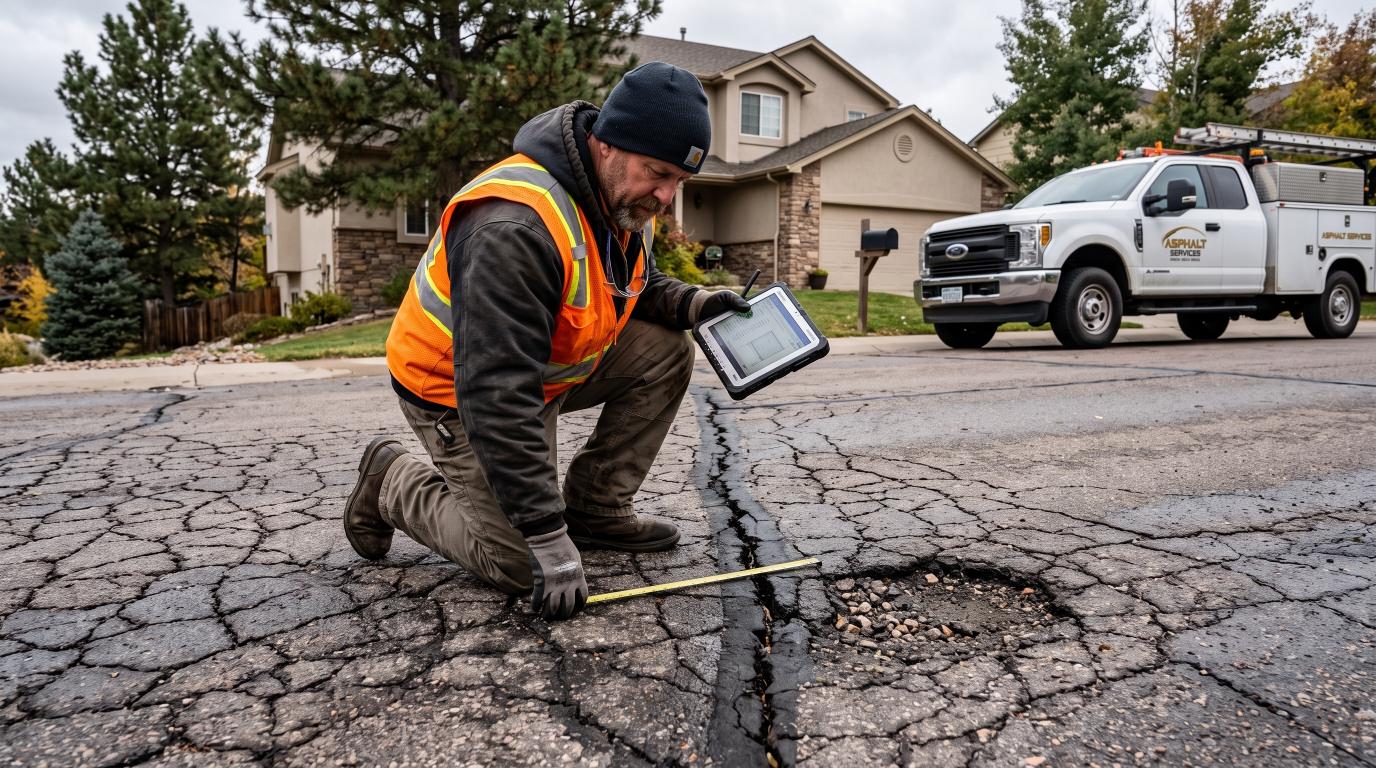
Asphalt driveway crack filler is useful for suitable surface cracks, but it cannot correct structural pavement damage. Recurring cracks, sinking areas, potholes, broken edges, and widespread alligator cracking may indicate problems beneath the asphalt.
Standing water and poor drainage can also contribute to repeated cracking. Before choosing a repair method, check the surrounding pavement for movement, loose material, and other signs of deterioration. Some damaged areas may require patching, resurfacing, or replacement instead of repeated crack filling. The appropriate repair depends on the extent of the damage and the condition of the underlying pavement.
How to Maintain an Asphalt Driveway After Crack Repair
Inspect the driveway at least twice a year and after severe weather. Repair new cracks early and watch for gaps around old repairs. Keep drains and pavement edges clear. Remove leaves and soil that hold moisture. Clean oil or chemical spills before they soften the surface. Avoid leaving very heavy trailers, dumpsters, or equipment in one place for long periods. Sealcoat only when the pavement is a good candidate and all repairs have healed.
Protect Asphalt Driveways From Further Cracking
Cracks in asphalt driveways can become larger when water enters the pavement and temperatures change. Using the appropriate crack filler, cleaning the opening thoroughly, and allowing enough drying time can help reduce further surface deterioration. Before filling a crack, check whether the surrounding pavement is stable.
Deep cracks, recurring damage, potholes, and sinking areas may indicate problems that a surface filler cannot resolve. These conditions may require a more extensive repair approach. Regular inspections, proper drainage, and timely crack maintenance can help preserve asphalt surfaces and reduce avoidable damage over time.
Conclusion
Choosing the right asphalt driveway crack filler starts with understanding the crack’s size, depth, and condition. Liquid fillers may work for narrow surface cracks, while flexible rubberized or other suitable materials may be needed for wider openings.
Proper cleaning, product selection, application, and curing are essential for a lasting repair. Follow the manufacturer’s instructions and avoid using crack filler to cover serious pavement damage. Regular inspections and early attention to new cracks can help reduce water intrusion and protect the asphalt surface from further deterioration.
Frequently Asked Questions
What is the best asphalt driveway crack filler?
The best asphalt driveway crack filler depends on the width, depth, and movement of the crack. Thin liquid fillers may work well for narrow surface cracks. Rubberized or hot-pour fillers are often better for deeper cracks that expand and contract with temperature changes.
Can I fill asphalt driveway cracks myself?
Yes, many small and medium driveway cracks can be repaired without professional equipment. The crack must be stable, clean, and completely dry before the filler is applied. Always choose a product designed for the crack size and follow the curing instructions carefully.
What should I use for deep cracks in an asphalt driveway?
Deep cracks may need a backer rod, rope-style filler, or several thin layers of a suitable crack-filling product. Larger or active cracks may require professional hot-pour material. Avoid filling the entire depth with liquid filler because it may sink, shrink, or take too long to cure.
Can I use concrete crack filler on asphalt?
Concrete crack filler should not normally be used on an asphalt driveway. Concrete products are often rigid, while asphalt expands and contracts as temperatures change. A rigid filler may crack, separate from the edges, or fail to protect the opening from water.
Can asphalt crack filler be applied to a wet driveway?
Most asphalt crack fillers should only be applied to clean and dry pavement. Water inside the crack can weaken adhesion and cause the repair to peel or separate. Only use a product on damp asphalt when its instructions clearly state that wet application is allowed.
How long before I can drive over asphalt crack filler?
The waiting period depends on the product, crack depth, temperature, and humidity. Some fillers may be ready for light traffic within several hours, while others need a full day or longer. Follow the vehicle-ready time listed on the packaging rather than relying only on surface dryness.
Will crack filler repair alligator cracking?
No, crack filler is not a lasting repair for alligator cracking. This web-like pattern often means the asphalt or the base below it has started to fail. The damaged pavement may need to be removed, the base repaired, and new asphalt installed.