
An asphalt driveway usually lasts 15 to 30 years, with most lasting around 20 years. However, its lifespan depends on several factors, including installation quality, climate, traffic, and ongoing maintenance. A well-built driveway that receives proper care can often last 25 years or more. Since a new driveway is a significant investment that can improve both your home’s appearance and value, it’s important to understand what affects its longevity.
In this guide, you’ll learn how long asphalt driveways last, the factors that impact their lifespan, and the best ways to keep them in good condition for years to come. If you are in Colorado Springs and need expert advice or a free inspection, our team is ready to help.
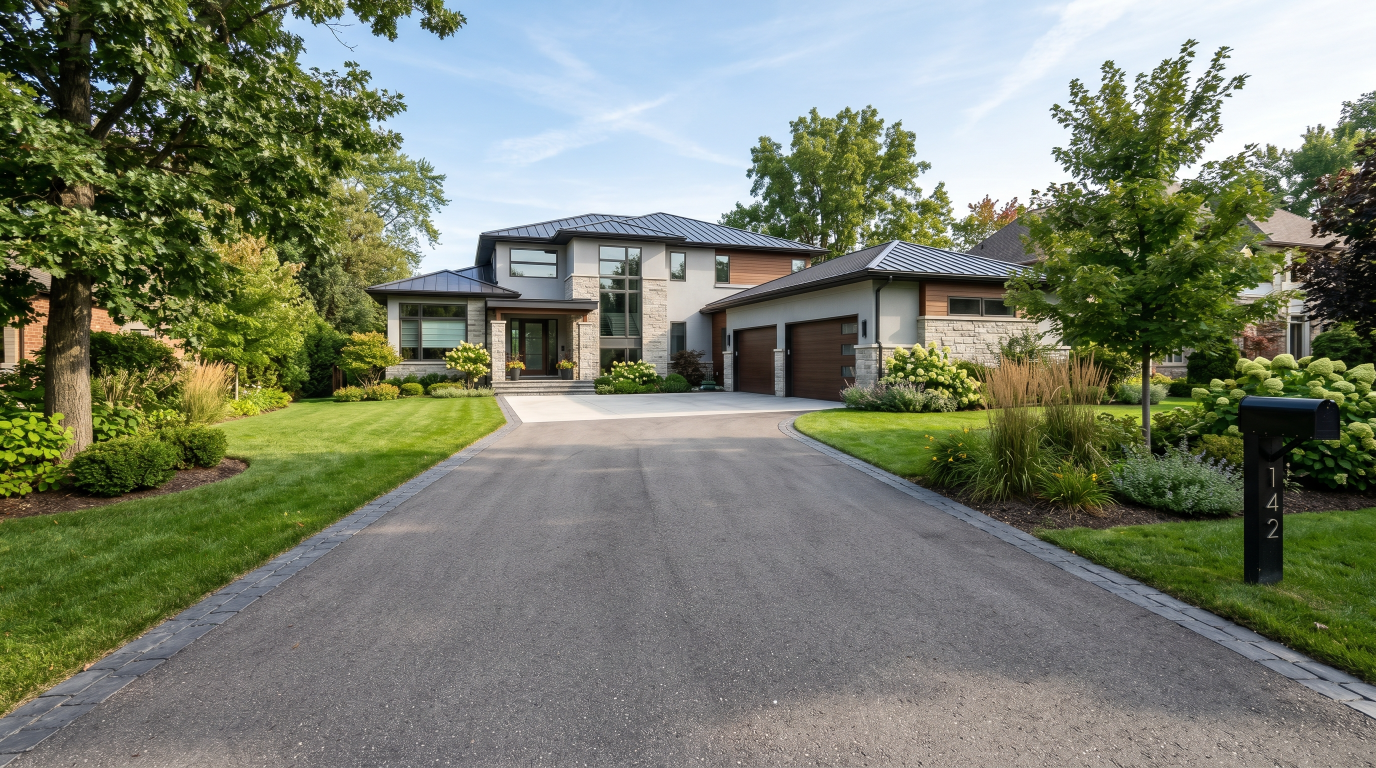
What Is the Average Lifespan of an Asphalt Driveway?
Most residential asphalt driveways last 15 to 30 years, with about 20 years being a realistic expectation for a properly installed driveway with moderate upkeep. With professional installation and consistent maintenance like sealcoating every two to three years, prompt crack repair, and a driveway can push past 25 years and sometimes reach 30.
Neglect cuts that short. With little to no maintenance, an asphalt driveway can start failing in as few as 8 to 12 years, as unfilled cracks let water into the base and freeze-thaw cycles speed up the damage.
Key Factors That Affect Asphalt Driveway Lifespan
Several factors can affect how long an asphalt driveway lasts, from the quality of installation to weather conditions and ongoing maintenance.
Installation Quality
Installation is the single biggest factor in driveway lifespan, and it starts below the surface. The subgrade must be compacted and graded so water doesn’t pool, and the stone base should be at least six to eight inches for a stable foundation. The asphalt itself needs at least three inches of compacted thickness, more if you park heavy trucks, RVs, or trailers. Thin asphalt over a weak base fails early.
Climate and Weather Conditions
Where you live matters. In harsh winters, freeze-thaw cycles widen cracks as water seeps in, freezes, and expands. Hot climates soften asphalt at surface temps topping 160 degrees, making it prone to rutting. UV exposure slowly breaks down the binder until the surface oxidizes and turns brittle.
Traffic Load and Usage Patterns
Residential asphalt is built for passenger vehicles, so regular use by a heavy truck or RV adds much more stress, compressing the surface and causing permanent deformation, especially in hot weather. How often you use it matters too, but far less than load weight.
Soil and Drainage Conditions
What’s beneath the driveway is as important as the surface. Shifting or eroding soil creates an unstable base, and clay-heavy soils are especially troublesome since they swell when wet and shrink when dry. Poor drainage is a leading cause of early failure, so a driveway should slope at least one to two percent to move water away from the surface and foundation.
Quality of Asphalt Materials
Not all asphalt is equal. Mix design, aggregate quality, and binder performance all affect durability. Hot-mix asphalt is standard for driveways, and higher-quality binders resist cracking, UV damage, and temperature swings better than cheap ones. When comparing quotes, price alone isn’t a reliable signal, so ask about the mix specification and binder grade.
Asphalt vs Concrete Driveway Lifespan
|
Feature |
Asphalt |
Concrete |
|
Average Lifespan |
15 to 30 years |
25 to 50 years |
|
Maintenance Needs |
High (sealing, crack repair) |
Low to moderate |
| Repair Cost | Lower |
Higher |
|
Climate Performance |
Better in cold climates |
Better in hot climates |
|
Upfront Cost |
Lower |
Higher |
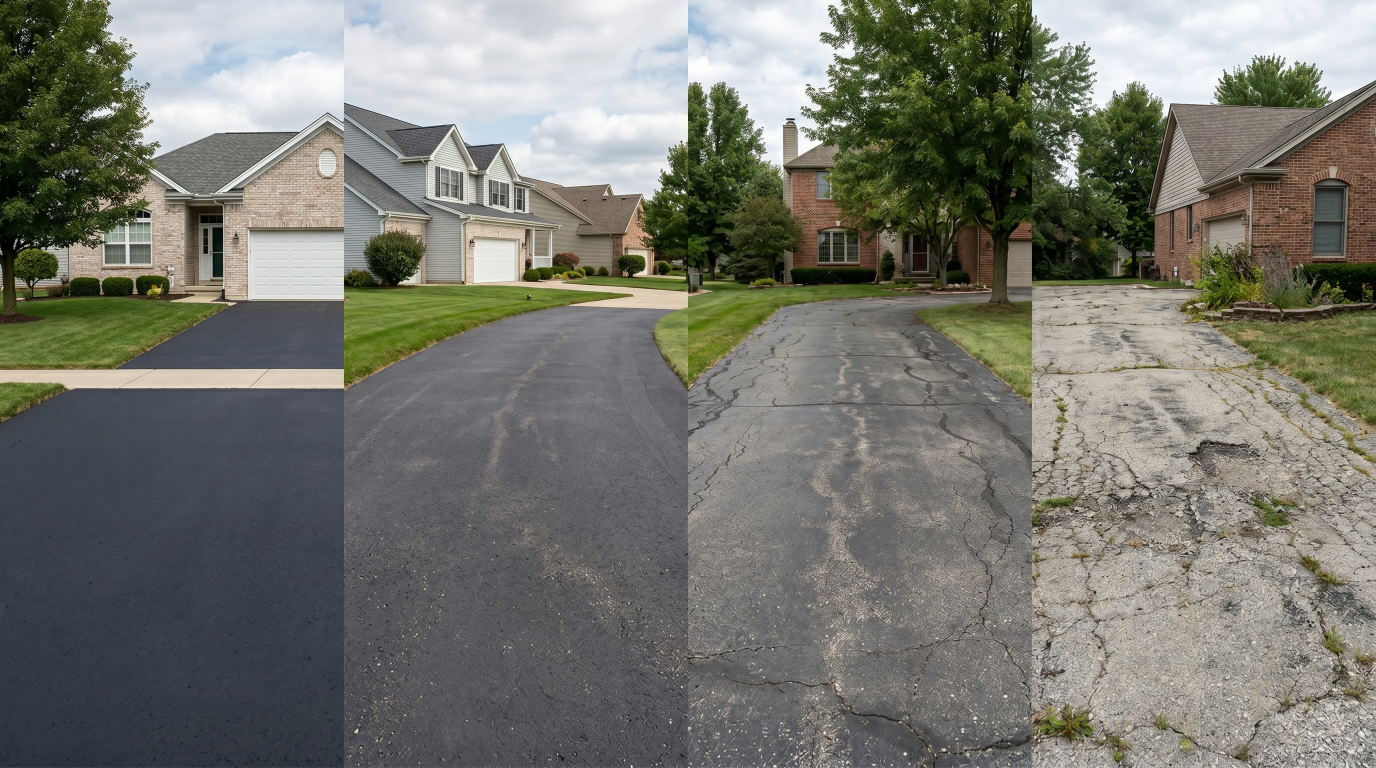
The Asphalt Driveway Lifecycle: What to Expect
Asphalt driveways go through several stages as they age, and understanding each stage can help you plan maintenance and avoid costly repairs.
Years 0 to 5
A freshly installed asphalt driveway looks and performs well. It is dark, smooth, and flexible. During this stage, the main task is allowing the surface to cure properly. New asphalt needs at least 72 hours before you drive on it, and it takes up to a year to fully harden. Avoid parking heavy vehicles on it during hot summer days in the first few months.
Years 5 to 10
Minor surface wear begins to show. Small hairline cracks may appear, especially in areas with heavy traffic or temperature extremes. This is the stage where staying on top of maintenance pays off the most. Schedule your second sealcoating cycle. A driveway that is well cared for at this stage will age gracefully through the next decade.
Years 10 to 15
Visible aging becomes more noticeable. The surface may have started to gray and show oxidation. Cracks appear more frequently, and the edges of the driveway can begin to crumble. This stage requires more active maintenance, including crack sealing, edge repair, and continued sealcoating. The driveway is still structurally sound, but it needs consistent attention.
Years 15 to 20
Surface deterioration is more pronounced at this stage. Larger cracks, minor potholes, and areas of roughness become harder to ignore. Sealcoating at this point mostly slows the aging rather than reversing it. You may want to consider resurfacing as an option if the base is still stable. A resurfaced driveway can add another 8 to 12 years of usable life at a fraction of the replacement cost.
Years 20 to 30
This is the end-of-life phase for most driveways. The surface has been through decades of weather, traffic, and thermal cycling. Widespread cracking, sinking sections, and recurring potholes are common. At this point, the decision between continued repairs, resurfacing, and full replacement becomes the central question.
How Maintenance Extends Asphalt Driveway Life
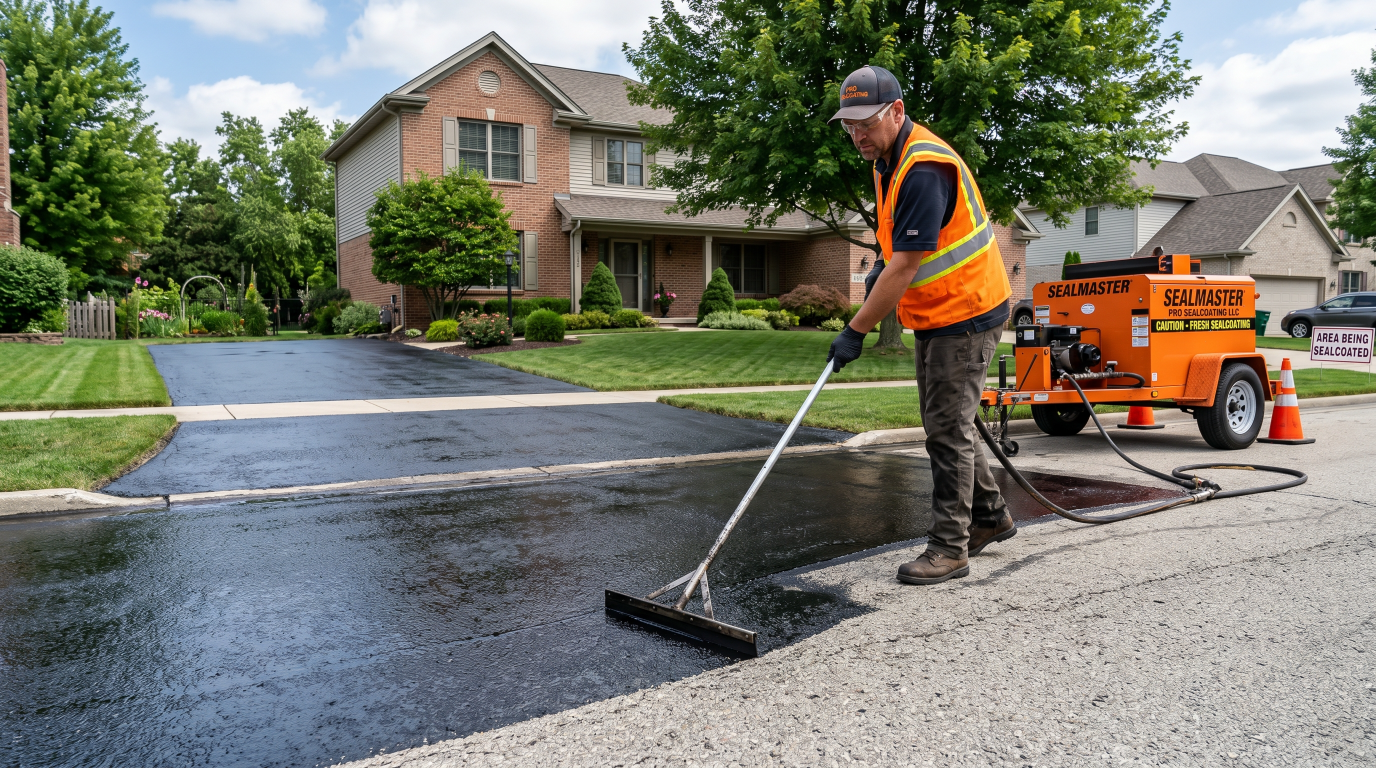
Sealcoating is your best move. It blocks UV, repels water and oil, and slows aging. First coat at six to twelve months, then reseal every two to three years. Fill cracks early. A small crack is cheap to seal but grows fast once water gets in. Keep the surface clear of debris and standing water, and clean up oil spills quickly. Check drainage, and water should run off, not pool at the edges. Once a year, look for new cracks, soft spots, and edge damage. Early fixes are far cheaper.
Proven Tips to Make Your Asphalt Driveway Last Longer
Keep heavy vehicles off the surface, especially during the first year and on hot summer days when the asphalt is softer. Even a single visit from a heavy delivery truck can leave ruts in recently installed or heat-softened pavement. Maintain proper drainage around the entire driveway perimeter. If water has nowhere to go, it will find its way into your base layer.
Protect the asphalt during the initial curing period by avoiding heavy loads and turning your steering wheel sharply while the vehicle is stopped. Sealcoating every two to three years and crack filling annually will keep your driveway in good condition well past the average lifespan.
Common Causes of Premature Asphalt Failure
Premature asphalt failure usually happens due to poor installation, water damage, heavy loads, and lack of regular maintenance.
Water Damage and Poor Drainage
Water is the number one enemy of asphalt. When it penetrates the surface through unsealed cracks and sits in the base layer, it softens the foundation and causes the surface above to collapse. Poor drainage accelerates this process dramatically.
Alligator Cracking
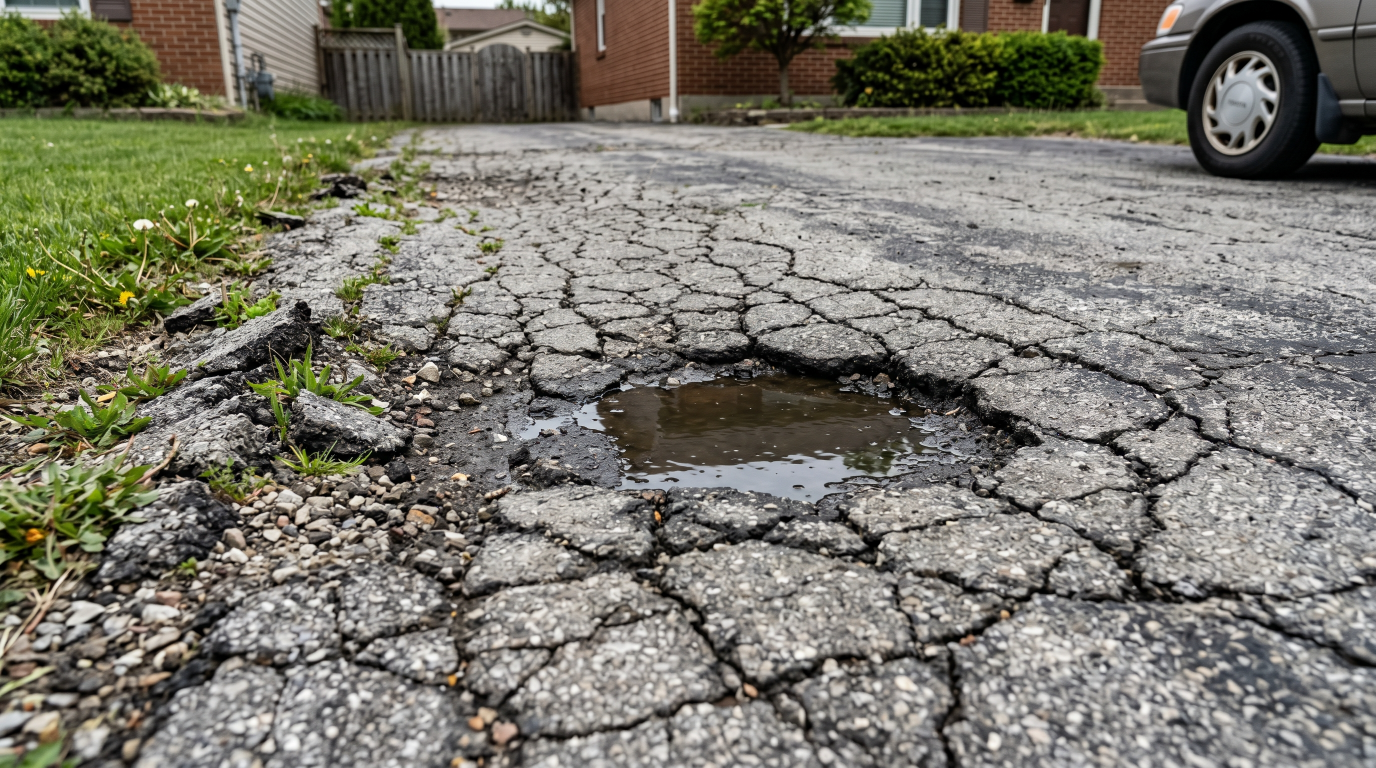
This pattern of interconnected cracks resembles alligator skin and signals base failure. It does not happen overnight. It develops when the foundation below the asphalt is too weak or too soft to support the surface load. Alligator cracking cannot be fixed with surface patching alone. It requires addressing the underlying base.
Potholes
Potholes start as small cracks that allow water in. When that water freezes and thaws repeatedly, it loosens the asphalt and the base material beneath it. Traffic then breaks out chunks of the weakened surface, creating a hole. Potholes grow fast if left unaddressed.
Surface Oxidation
UV rays slowly break down the asphalt binder. The surface fades from black to gray and becomes brittle over time. Regular sealcoating is the most effective way to slow this process.
Tree Root Damage
Tree roots growing beneath an asphalt driveway can lift and crack the surface from below. If you have large trees near your driveway, their root systems are worth monitoring.
Heavy Vehicle Stress
Parking heavy vehicles like moving trucks, RVs, or construction equipment on a standard residential driveway puts far more stress on the surface than it was designed to handle, especially in hot weather when asphalt is at its softest.
Signs Your Asphalt Driveway Needs Replacement
Extensive cracking (especially alligator cracking), recurring potholes, drainage issues, sinking spots, or repeated repairs are all signs of deeper base or subgrade failure that surface fixes can’t solve. When these problems keep coming back, it often means the driveway is nearing the point where full replacement is more cost-effective than ongoing repairs.
Persistent drainage problems where water consistently pools in the same areas suggest the driveway has settled unevenly and the grade can no longer direct water away properly. Sinking or soft areas where the surface feels spongy underfoot or visibly dips are signs of subgrade failure.
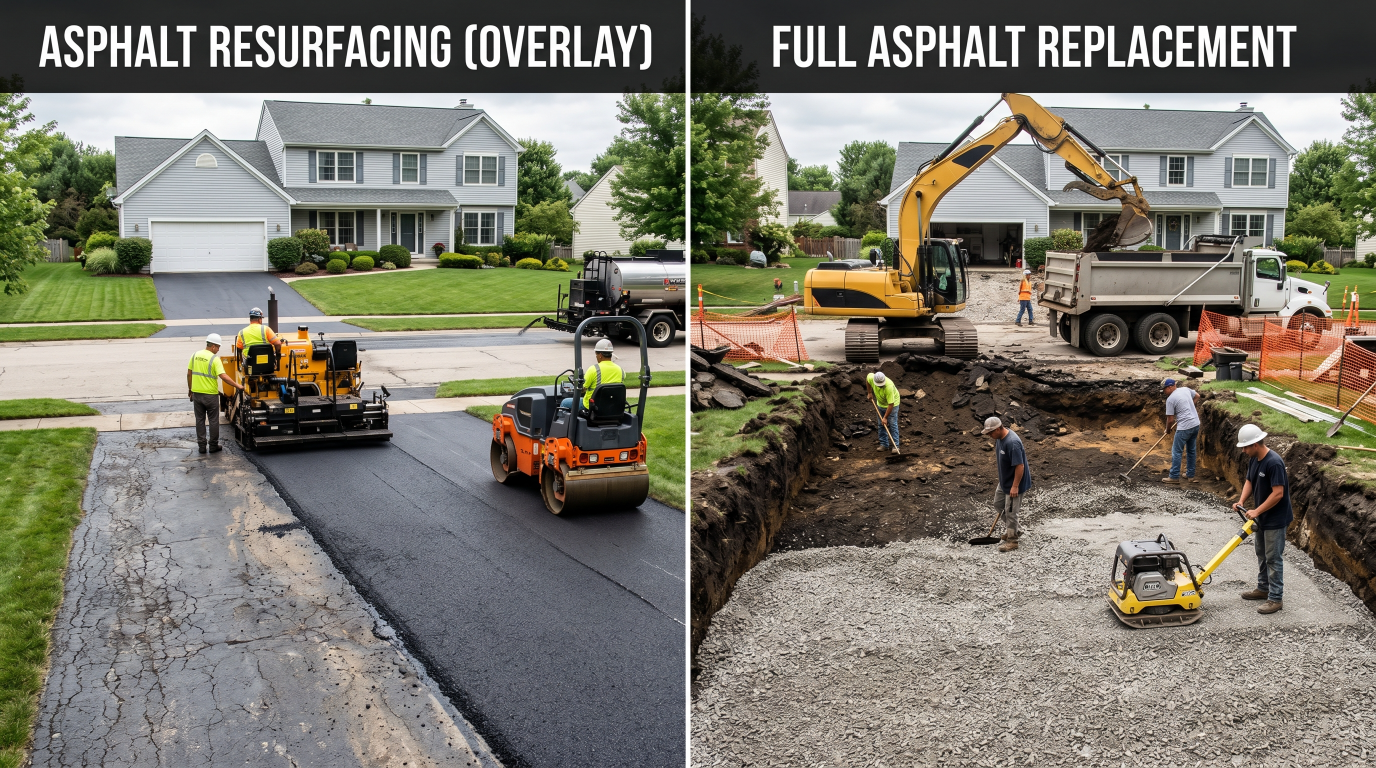
Asphalt Resurfacing vs Full Replacement
Asphalt resurfacing lays a new layer (usually 1.5 to 2 inches) over your existing driveway, which works well when the base is still solid and the damage is mostly surface-level cracks and wear. It’s cheaper and faster. Full replacement tears everything out down to the base and rebuilds it, which you need when the foundation has failed, cracks run deep, or there’s serious drainage and structural damage. Resurfacing buys you years at a lower cost; replacement costs more but is the right call when the underlying base is gone.
How Much Does Asphalt Driveway Replacement Cost?
Replacing an asphalt driveway is not a small expense, but the final cost depends on a few key things: the size of your driveway, the condition of the existing base, your location, and whether any drainage or grading work is needed.
A larger driveway with a failed base will cost significantly more than a small one that just needs the surface swapped out. Resurfacing is always the cheaper option when the foundation is still solid, while full replacement costs roughly double but gives you a brand new driveway that can last another 20 to 30 years.
Ready to Protect Your Asphalt Driveway in Colorado Springs?
Whether your driveway needs a fresh sealcoat, crack repairs, resurfacing, or a full replacement, the team at Elite Surface Installations has you covered. We serve homeowners across Colorado Springs with professional asphalt services built to handle Colorado’s harsh winters and intense summer heat. Do not wait until small cracks turn into costly replacements. Contact us for a free driveway inspection and get an honest assessment of exactly what your driveway needs.
Conclusion
An asphalt driveway can last anywhere from 8 years if neglected to 30 years if well maintained. The difference is not luck. It comes down to installation quality, climate conditions, how the driveway is used, and whether maintenance is treated as a regular habit or an afterthought.
The most important steps are simple: sealcoat on schedule, fill cracks before they grow, keep heavy vehicles off the surface when possible, and make sure water drains away from the driveway rather than sitting on it.
If your driveway is showing signs of surface wear, resurfacing may add a decade of life at a much lower cost than full replacement. If it has structural failure, cracked base layers, or sinking sections, replacement is the smarter long-term investment.
Frequently Asked Questions
Can an asphalt driveway last 30 years?
Yes, but it requires the right conditions. Professional installation with a properly compacted base, quality asphalt mix, consistent sealcoating every two to three years, prompt crack repairs, and good drainage all need to work together. Driveways in mild climates without heavy vehicle loads have the best chance of reaching the 30-year mark.
How often should an asphalt driveway be sealcoated?
The first sealcoat should go on six to twelve months after installation. After that, every two to three years is the standard recommendation. Sealcoating too frequently, more than once per year, can cause buildup and cracking. Waiting too long allows UV damage and oxidation to set in.
Does weather affect asphalt lifespan?
Cold climates with repeated freeze-thaw cycles accelerate cracking. Hot climates with intense sun exposure cause UV oxidation and surface softening. Driveways in moderate climates with mild winters and summers tend to last longer with less maintenance effort.
Can cracks be repaired instead of replacing the driveway?
Cracks that are less than a quarter-inch wide and are isolated to the surface layer can be sealed effectively. Even larger cracks can be patched if the base is still solid. The exception is alligator cracking, which indicates base failure and usually cannot be resolved with surface repairs alone.
What is the biggest cause of asphalt driveway damage?
Water infiltration is the number one culprit behind premature asphalt failure. When water gets into cracks, freezes, and expands repeatedly, it destroys the structural integrity of both the surface and the base layer. Poor drainage compounds the problem by keeping water on and around the driveway longer.