
A few small cracks in your driveway might not seem like a big deal at first, but they rarely stay small for long. The basic fix is simple: clean out any dirt, leaves, or weeds from the crack first. For cracks up to half an inch wide, a pourable asphalt crack filler or a crack sealing rope works well. For wider cracks, place a foam backer rod inside before filling, then cover the surface with a little sand so the filler does not stick to shoes or tires. Left alone, though, water gets in, temperatures shift, and those tiny lines turn into bigger problems that cost a lot more to fix.
If you live in Colorado Springs, CO or anywhere nearby, you already know how much our weather swings can affect asphalt. At Elite Surface Infrastructure, we see the same crack patterns come up again and again, and most of them could have been stopped early with the right repair.
This guide walks you through why sealing cracks matters, how to spot the different types, and exactly how to seal them yourself, step by step.
Why Sealing Cracks in an Asphalt Driveway Is Important
Sealing cracks early protects your driveway in more ways than one, and it is one of the easiest maintenance tasks you can do to avoid much bigger problems down the road.
Prevents Water Damage
Water that seeps into cracks can weaken the base beneath your driveway, leading to bigger problems like potholes. Once water gets underneath the surface, it can freeze during colder months and expand, pushing the asphalt apart from below. This freeze and thaw cycle is one of the fastest ways a small crack turns into a much larger area of damage.
Extends Driveway Lifespan
Sealing cracks early helps your driveway last many more years before it needs full replacement. A well-maintained asphalt driveway can last 20 years or more, but skipping small repairs often shortens that lifespan significantly. Regular crack sealing is a small effort that protects a much larger investment over time.
Improves Safety and Appearance
A smooth, crack-free driveway looks better and reduces trip hazards for anyone walking across it. Cracks that are left unattended tend to widen and become uneven, which can catch shoes, bike tires, or strollers. Beyond safety, a well-kept driveway also boosts curb appeal, which matters if you ever plan to sell your home.
Reduces Future Repair Costs
Fixing small cracks now is far cheaper than dealing with major structural damage later. A simple crack filler might cost very little, while repairing a pothole or a large section of alligator cracking can cost significantly more. Staying ahead of small repairs is one of the most cost effective habits for any driveway owner.
What Causes Cracks in Asphalt Driveways?
Cracks usually form due to a mix of weather, water, and everyday wear. Temperature swings cause asphalt to expand and contract over and over, which slowly weakens the surface. Water that seeps into small gaps can freeze and push the asphalt apart, while heavy vehicles add repeated stress that speeds up the damage.
Aging or poorly installed asphalt is also more likely to crack sooner, since a weak base cannot support the surface as well over time. Tree roots growing underneath the driveway can push up from below, creating cracks even in asphalt that is otherwise in good condition.
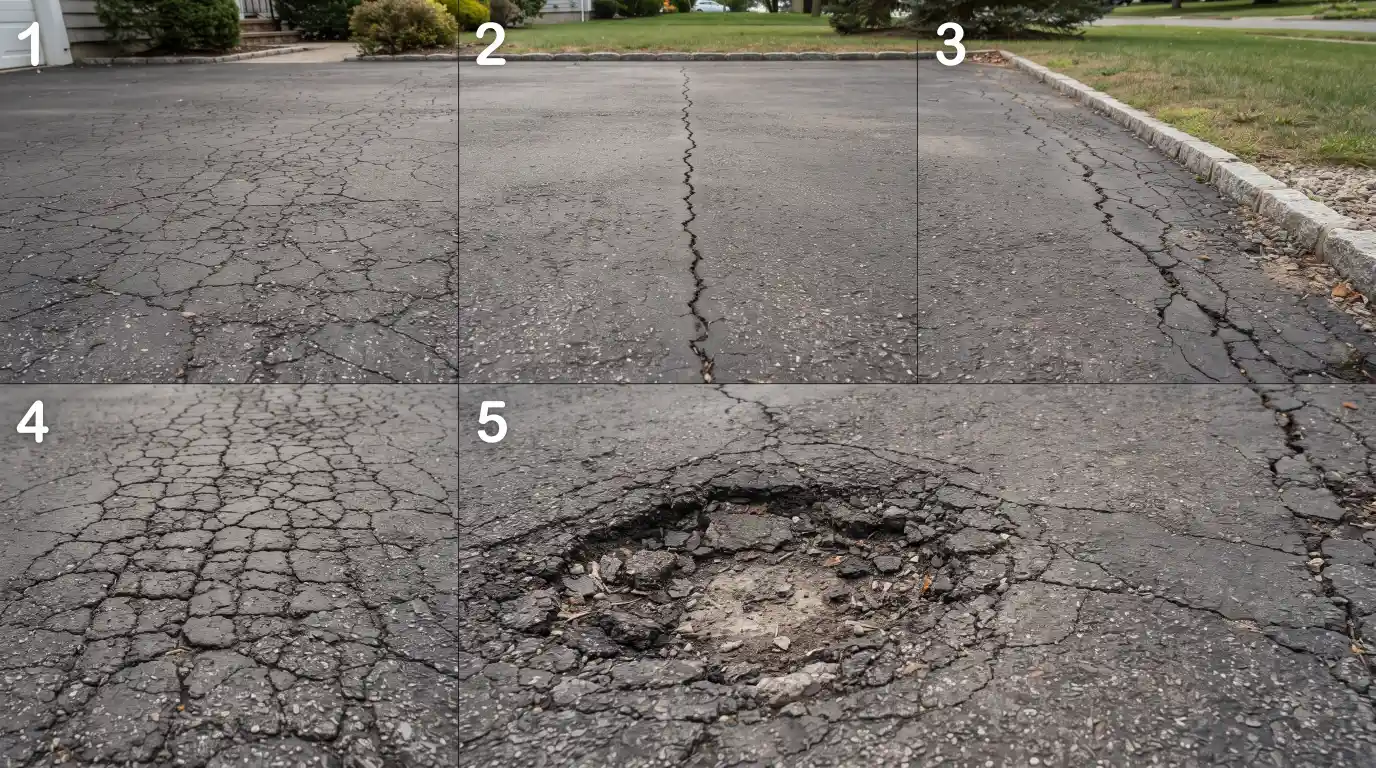
Types of Asphalt Cracks and How to Identify Them
Knowing the type of crack helps you choose the right fix, since not every crack needs the same level of repair.
Hairline Cracks
These are thin, shallow cracks that are usually easy to seal and do not indicate serious damage. They often appear as the asphalt naturally ages and are usually only a few millimeters wide. Sealing them early is a quick, simple fix that keeps them from growing into anything more serious.
Linear Cracks
These run in a straight line and are often caused by temperature changes or aging asphalt. They tend to form as the surface repeatedly expands and contracts through hot and cold seasons. While they may look minor at first, linear cracks can widen over time if water gets in and they are left unsealed.
Edge Cracks
These form along the edges of the driveway, often due to poor drainage or lack of support. Without proper support at the sides, the edges of the driveway are more exposed to shifting soil and water buildup. This type of cracking is common in driveways that do not have a strong border or edge reinforcement.
Alligator Cracks
These cracks form a pattern that looks like alligator skin and usually point to deeper structural damage. This pattern typically means the base layer underneath the asphalt has weakened or failed in that area. Because the damage runs deeper than the surface, this type of cracking usually cannot be fixed with simple crack filler alone.
Potholes and Structural Damage
These are more serious and usually mean the base underneath the asphalt has failed. Potholes often start as small alligator cracks that were never repaired, allowing water to fully break down the base below. At this stage, patching or replacing that section of the driveway is usually the only lasting solution.
Can You Seal Every Asphalt Crack?
Not every crack can be fixed with a simple sealant. Hairline and linear cracks, along with most cracks under half an inch wide, are good candidates for sealing, since the damage is usually limited to the surface.
Wider or more severe damage tells a different story. Alligator cracks, potholes, and wide structural cracks usually need patching or a full section replacement instead, since the problem runs deeper than the surface and a simple filler will not fix the underlying issue.
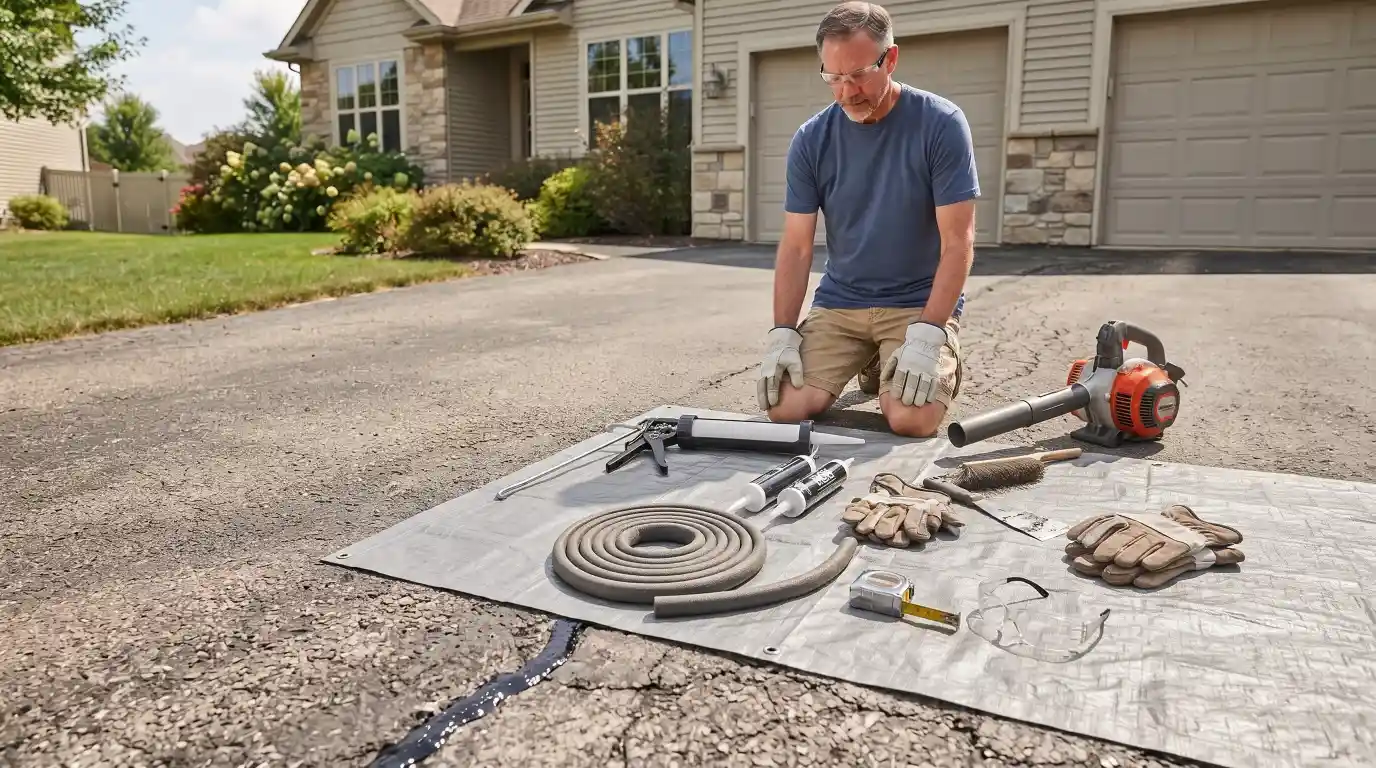
Tools and Materials You Will Need
Having the right supplies makes the job much easier. This is the main material used to fill and seal cracks in the driveway. This helps remove debris and loose material from inside the crack before filling it. Use this to clear out dust and small debris after cleaning the crack.
This helps smooth and level the filler once it is applied. This tool helps apply filler evenly and with more control, especially for narrow cracks. Gloves and eye protection help keep you safe while working with crack filler and cleaning tools.
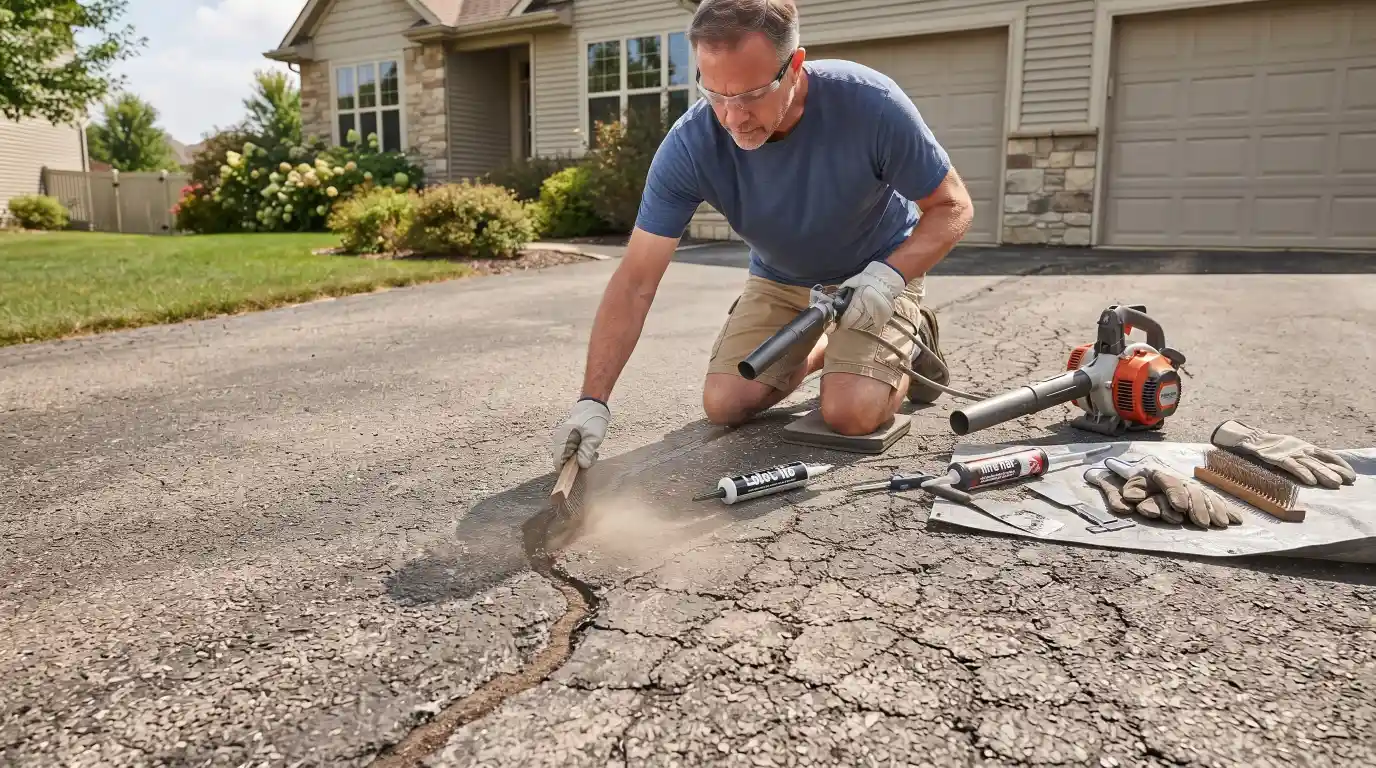
Preparing Your Driveway Before Sealing Cracks
Proper prep work makes a big difference in how long the repair lasts.
Remove Dirt and Loose Debris Clear away dirt, gravel, and loose asphalt from around the crack before starting.
Clean the Crack Thoroughly Use a wire brush to remove debris from inside the crack itself.
Make Sure the Surface Is Completely Dry Filler needs a dry surface to bond properly, so avoid sealing right after rain.
Measure the Width and Depth of the Crack This helps you choose the right filler and repair method for the size of the crack.
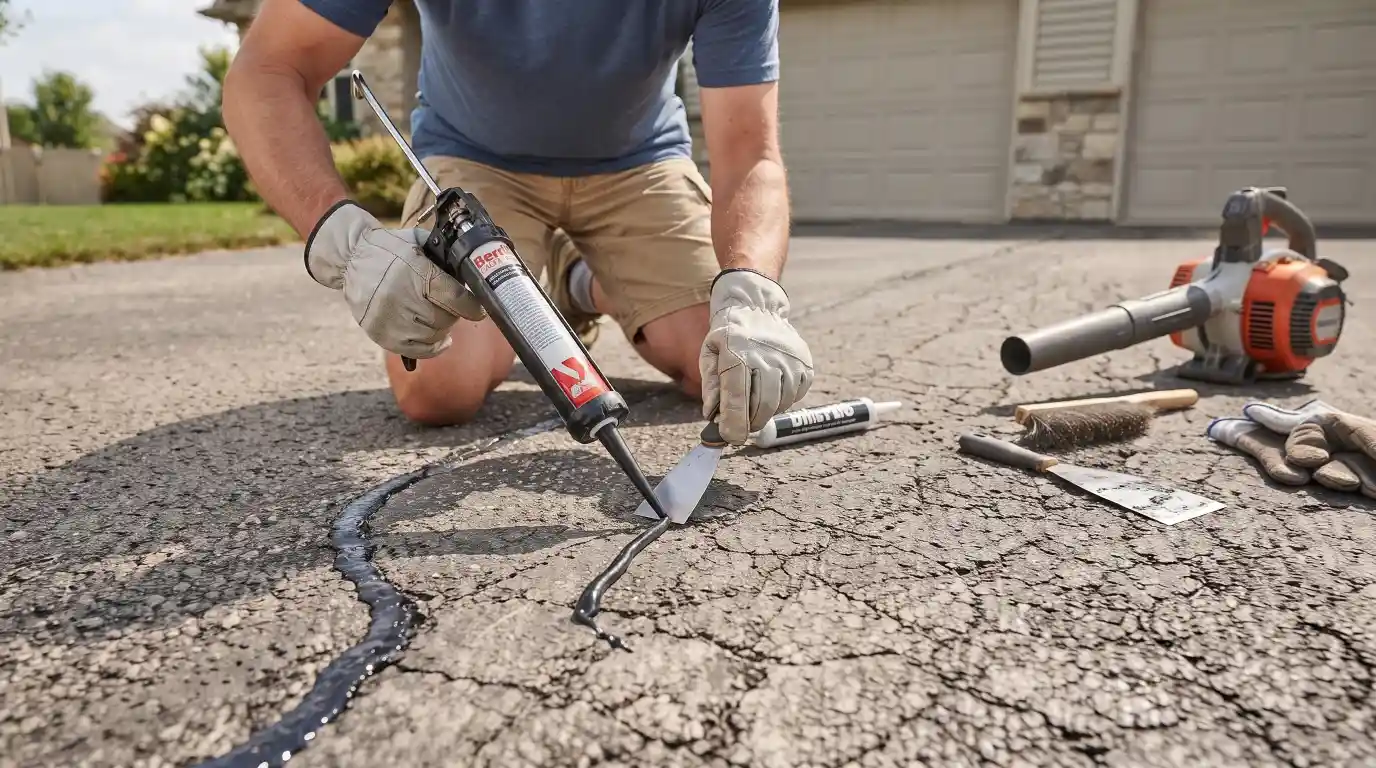
How to Seal Cracks in an Asphalt Driveway
Follow these steps for a clean, lasting repair.
Choose the Right Crack Filler
Pick a filler designed for the size and type of crack you are repairing. Rubberized asphalt fillers work well for most driveway cracks since they stay flexible after curing, which helps them handle temperature changes without cracking again. Reading the product label before buying helps make sure it matches the width and depth of your specific crack.
Fill Small Cracks (Up to 1/2 Inch)
Apply filler directly into the crack using a caulking gun or applicator, filling it slightly above the surface. Filling it a little higher than the surrounding asphalt accounts for natural settling as the filler cures. Moving slowly and steadily along the crack helps avoid air pockets that can weaken the repair later.
Repair Large Cracks (Over 1/2 Inch)
Larger cracks may need multiple layers of filler, allowing each layer to set before adding more. Filling a deep crack all at once can trap air or cause the filler to sink unevenly as it dries. Building it up in layers gives each application time to bond properly before more weight is added on top.
Smooth and Level the Filler
Use a putty knife or squeegee to smooth the filler flush with the surrounding surface. A smooth, even finish not only looks better but also helps prevent water from pooling in low spots along the repair. Working while the filler is still workable makes it much easier to achieve a clean, level result.
Allow the Repair to Cure
Let the filler cure fully before walking or driving on it, following the product’s recommended time. Most fillers need anywhere from a few hours to a full day to cure completely, depending on the product and weather conditions. Rushing this step is one of the most common reasons a fresh repair fails early, so patience here pays off in the long run.
How to Repair Large or Severe Asphalt Damage
Some damage needs more than a simple crack filler. Cold patch works well for small potholes or areas with minor structural damage. Alligator cracking usually requires removing the damaged section and repaving that area properly. If damage covers a large portion of the driveway or keeps returning, full replacement may be more cost effective long term.
Best Weather Conditions for Asphalt Crack Sealing
Weather plays a big role in how well the repair holds up.
Ideal Temperature Range Most crack fillers work best between 50 and 85 degrees Fahrenheit.
When to Avoid Sealing Cracks Avoid sealing cracks in freezing temperatures, extreme heat, or right before rain.
How Long Before You Can Drive on the Repair Most repairs need at least 24 hours to cure before regular driving, though this varies by product.
DIY vs. Hiring a Professional
Deciding between DIY and professional help depends on the size and severity of the damage.
|
Factor |
DIY |
Professional |
|
Best For |
Small cracks, minor surface damage |
Large cracks, structural damage, repeated cracking |
|
Skill Level Needed |
Basic, manageable for most homeowners |
Requires training and specialized equipment |
|
Time Involved |
A few hours, including prep and curing |
Often faster due to experience and proper tools |
|
Upfront Cost |
Lower, just filler and basic tools |
Higher, but includes labor and expertise |
|
Long-Term Value |
Can work well for minor repairs |
Often lasts longer and prevents repeat damage |
|
Best Choice When |
Damage is limited to the surface |
Damage points to a deeper, structural issue |
Common Mistakes to Avoid When Sealing Asphalt Cracks
Avoiding these mistakes helps your repair last much longer. One of the most common issues is skipping surface preparation, since filler applied over dirt or debris rarely bonds well and tends to fail early. Using the wrong crack filler for the size or type of crack is another frequent mistake, since a filler meant for hairline cracks will not hold up in a wider, deeper crack.
Sealing cracks while they are still wet or dirty is another problem that leads to poor bonding and a repair that does not last. Applying too much or too little filler can also cause issues, leaving the surface uneven or prone to wearing down faster than expected. Finally, driving on the repair before it has fully cured is one of the easiest ways to undo all the work that went into fixing it, so waiting the recommended cure time really does make a difference.
Tips to Prevent Future Asphalt Cracks
A few simple habits can go a long way in keeping your driveway crack free for years to come.
- Apply sealcoating regularly to protect the surface from water and sun damage
- Keep the driveway clean by removing debris that can trap moisture over time
- Improve drainage around the driveway to prevent water from pooling and seeping in
- Avoid parking heavy vehicles or equipment in the same spot repeatedly
- Inspect the driveway often and repair small cracks early before they grow bigger
How Long Does Asphalt Crack Sealing Last?
Most crack seals last between one and three years before they need to be checked or touched up, though this can vary quite a bit depending on conditions. Weather plays a big role, since areas with harsh winters or big temperature swings tend to see repairs wear out faster than milder climates. Heavy vehicle traffic and the quality of the filler used also affect how long a repair holds up, with rubberized fillers generally outlasting cheaper alternatives.
Because of this, it helps to check sealed cracks every one to two years, even if they still look fine on the surface. Catching early signs of wear, like small gaps forming again or filler pulling away from the edges, makes it much easier to touch up the repair before water finds its way back in.
Ready to Protect Your Driveway?
Small cracks do not stay small for long, and catching them early is the easiest way to avoid a bigger repair bill down the road. At Elite Surface Infrastructure in Colorado Springs, CO, our team knows exactly how Colorado weather affects asphalt, and we can help you figure out whether a simple seal or a deeper repair is the right move. Contact us today for an estimate and let our team help keep your surface in shape for years to come.
Conclusion
Sealing cracks in your asphalt driveway is one of the simplest ways to protect your investment and avoid costly repairs down the road. Catching small cracks early, using the right filler, and following proper prep steps can make a real difference in how long your driveway lasts.
Not every crack can be fixed with a simple sealant, though. Larger cracks, alligator patterns, or repeated damage are often signs of a bigger issue that needs professional attention. Knowing when to DIY and when to call in help can save you time, money, and frustration in the long run.
Frequently Asked Questions
What Is the Best Crack Filler for Asphalt Driveways?
The best filler depends on the size of the crack, but most hardware stores carry rubberized asphalt filler designed for driveways. This type of filler stays flexible after curing, which helps it hold up better against temperature changes than stiffer alternatives.
Can I Seal Asphalt Cracks Myself?
Yes, small to medium cracks are usually manageable as a DIY project with the right tools and filler. Larger or repeated cracking is often a sign of deeper damage, which is when calling a professional makes more sense.
Should I Seal Cracks Before Sealcoating?
Yes, cracks should always be sealed first, since sealcoating over unsealed cracks does not fix the underlying problem. Sealing first ensures the sealcoat forms a smooth, even protective layer across the whole driveway.
Can You Seal Cracks in Cold Weather?
It is best to avoid sealing cracks in freezing temperatures, since most fillers need warmer conditions to bond and cure properly. Attempting a repair in the cold often leads to a weaker seal that fails much sooner than expected.
How Long Does Asphalt Crack Filler Take to Dry?
Most crack fillers set within a few hours, but full curing can take up to 24 hours depending on the product and weather conditions. Waiting the full cure time before driving on the area helps the repair hold up much longer.
Why Do Asphalt Cracks Keep Coming Back?
Cracks often return when the underlying cause, like poor drainage or a weak base, was never addressed in the first repair. In these cases, sealing the surface crack is only a temporary fix until the root issue is resolved.
How Much Does It Cost to Seal Cracks in an Asphalt Driveway?
DIY crack sealing typically costs a small amount for filler and tools, while professional repairs cost more but often include a more thorough fix. The right choice usually comes down to the size of the damage and how long you want the repair to last.