
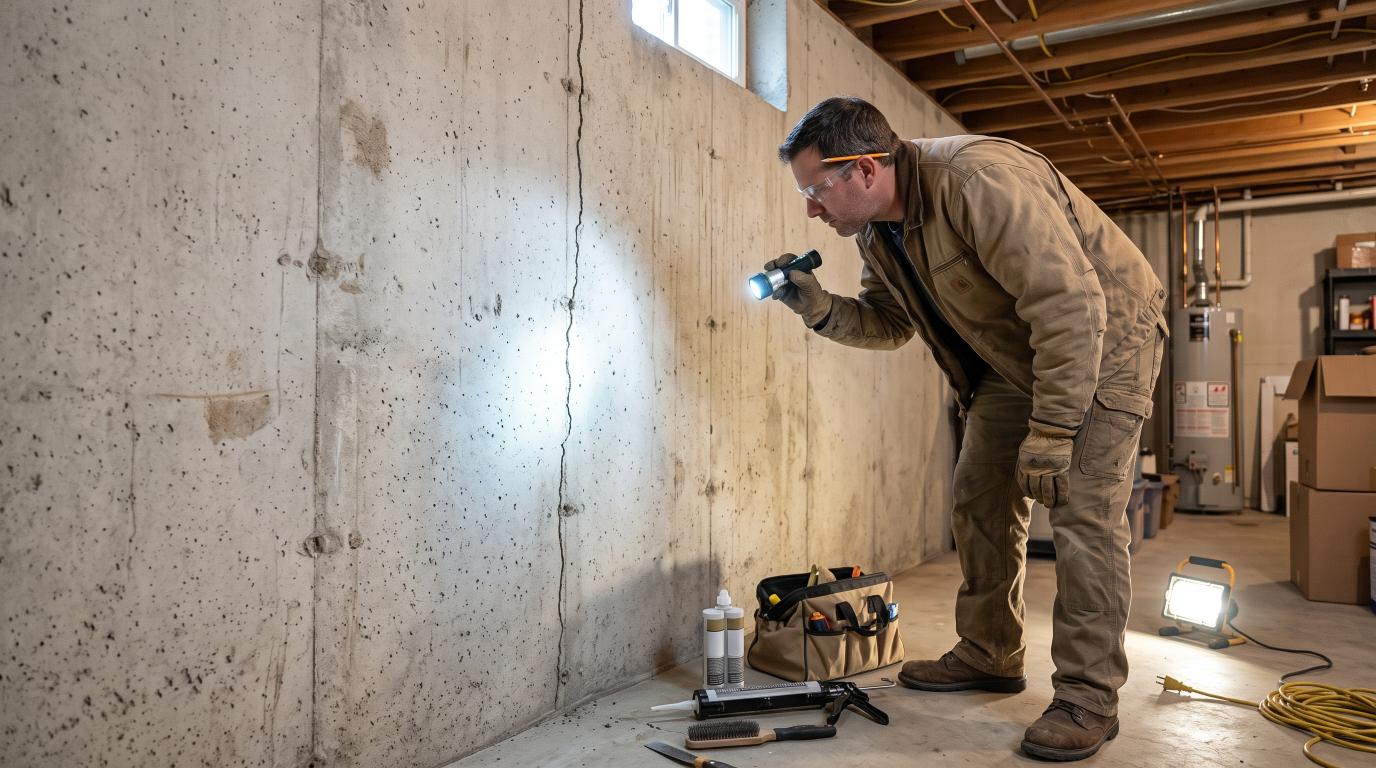
To seal a foundation crack, first identify its type, size, and moisture condition. Small, stable cracks may be sealed with flexible concrete sealant, while epoxy injection is suitable for certain concrete repairs. Polyurethane injection is commonly used for water-leaking cracks. Learning how to seal cracks in foundation walls starts with choosing the right repair method. In Colorado Springs, changing soil moisture, freezing temperatures, and ground movement can affect concrete foundations. ESI (Elite Surface Infrastructure) recognizes the importance of identifying the cause of foundation damage before repairs begin. This guide explains how to prepare the damaged area, apply repair materials, prevent future leaks, and recognize foundation problems that need professional attention.
Can You Seal a Foundation Crack Yourself?
Yes, you can seal a foundation crack yourself if it is small, stable, accessible, and does not indicate structural damage. Minor surface cracks may only require a suitable concrete sealant, while deeper cracks can need specialized injection materials. Before repairing the opening, check whether it has widened, leaked, or affected nearby concrete.
A crack that remains unchanged is generally a better candidate for basic sealing than one caused by continuing settlement. DIY work is most suitable for nonstructural damage where the repair material and application requirements are clearly understood.
Do not attempt basic sealing if the foundation wall is bowing, sections of concrete have shifted, or the crack keeps growing. These conditions need professional assessment because filling the opening will not correct the underlying movement.
How to Identify a Foundation Crack That Needs Repair
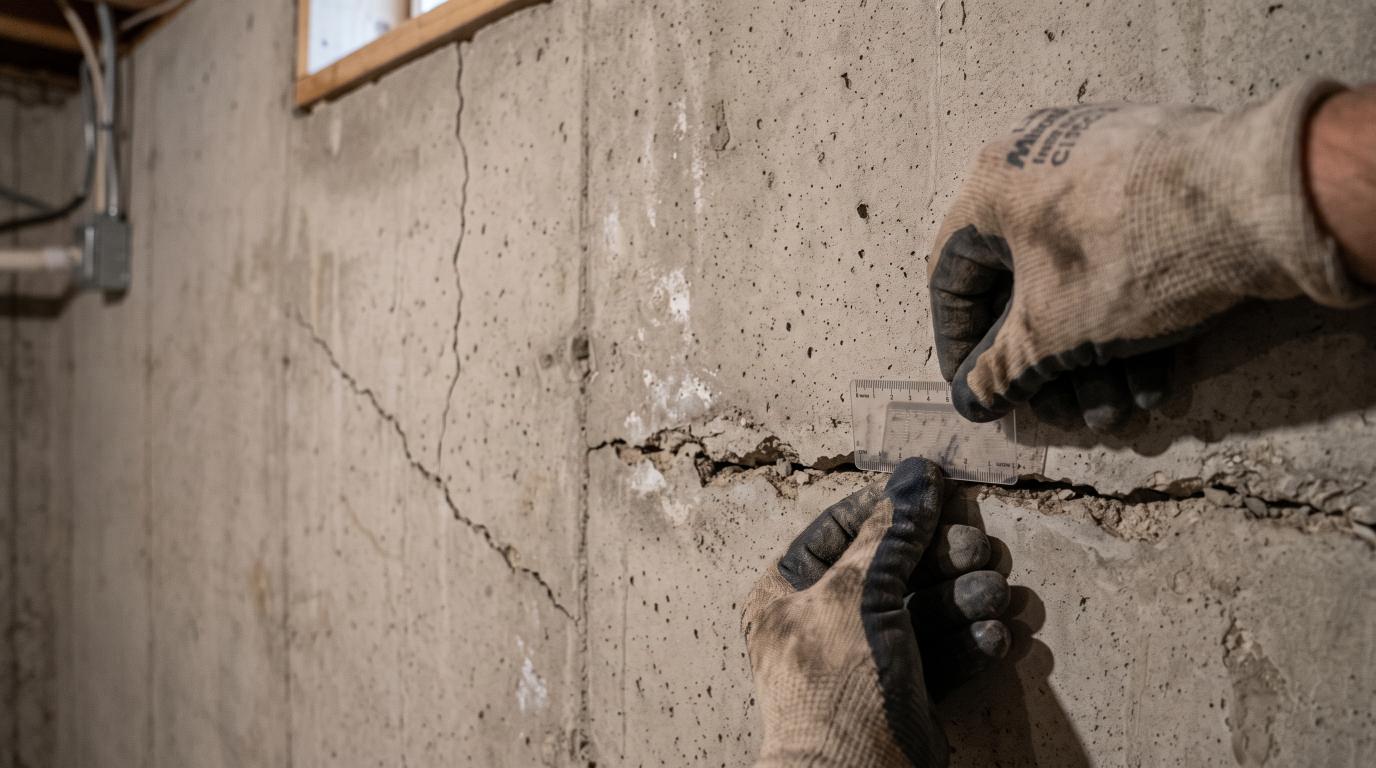
Identify a foundation crack that needs repair by checking its width, direction, moisture, and signs of movement. A narrow, stable crack may need sealing to prevent water entry, while displaced concrete or widening cracks can indicate a more serious problem.
What Causes Foundation Cracks?
Foundation cracks can develop from concrete shrinkage, uneven settlement, soil pressure, or changes in temperature and moisture. As concrete cures, shrinkage may create narrow openings. Differential settlement occurs when parts of the foundation move by different amounts. Expansive clay soils can also swell when wet and shrink during dry conditions, placing stress on foundation walls. Identifying the cause helps determine whether crack sealing alone is appropriate or whether foundation movement must be addressed.
Hairline and Narrow Cracks
Hairline cracks are thin openings that may form as concrete shrinks during curing. Some remain stable without affecting the foundation’s structural performance. Even a narrow crack can allow moisture to enter. Check for damp spots, water stains, and changes in the opening before deciding whether sealing is necessary.
Vertical, Diagonal, and Horizontal Cracks
Crack direction can help identify possible causes, but it cannot confirm structural damage by itself.
- Vertical cracks: May develop from shrinkage, settlement, or other stresses within the concrete.
- Diagonal cracks: Can result from uneven foundation settlement or stress around wall openings.
- Horizontal cracks: May indicate lateral soil pressure pushing against a foundation wall.
Horizontal cracks, especially those accompanied by wall movement, deserve professional inspection.
Signs of Active Movement or Structural Damage
Growing cracks, displaced concrete, bowed walls, and uneven floors can indicate active foundation movement. Other warning signs include doors that suddenly stick, widening gaps around windows, or cracks extending through several building materials. Photograph these changes and record the crack measurements before arranging an inspection. Applying sealant over moving concrete will not stabilize the foundation.
Foundation Cracks vs. Gaps Between the Foundation and Wall
A foundation crack forms within concrete or masonry. A gap between the foundation and an attached wall may instead occur at a construction joint or where different building materials meet. These openings may need a flexible joint sealant that allows limited movement. Rigid crack fillers may fail when the connected materials expand, shrink, or move independently.
How to Seal Cracks in Poured Concrete vs. Block Foundations
Poured concrete cracks can sometimes be sealed using epoxy or polyurethane injection, while concrete block foundations may require mortar joint repairs or waterproofing. The correct method depends on the foundation material, crack condition, and source of water entry.
Poured concrete forms a continuous wall that allows suitable injection resins to travel through cracks. Concrete masonry units (CMUs), commonly called concrete blocks, have mortar joints and may contain hollow cores. Injection resin can flow into these spaces without sealing the actual crack or water path.
For block foundations, inspect damaged blocks, deteriorated mortar joints, and moisture entry points. Repairs may involve repointing mortar joints, replacing damaged blocks, or installing a waterproofing system. A repair method designed for solid poured concrete should not be used on hollow block walls without confirming its suitability.
Choose the Right Foundation Crack Sealant
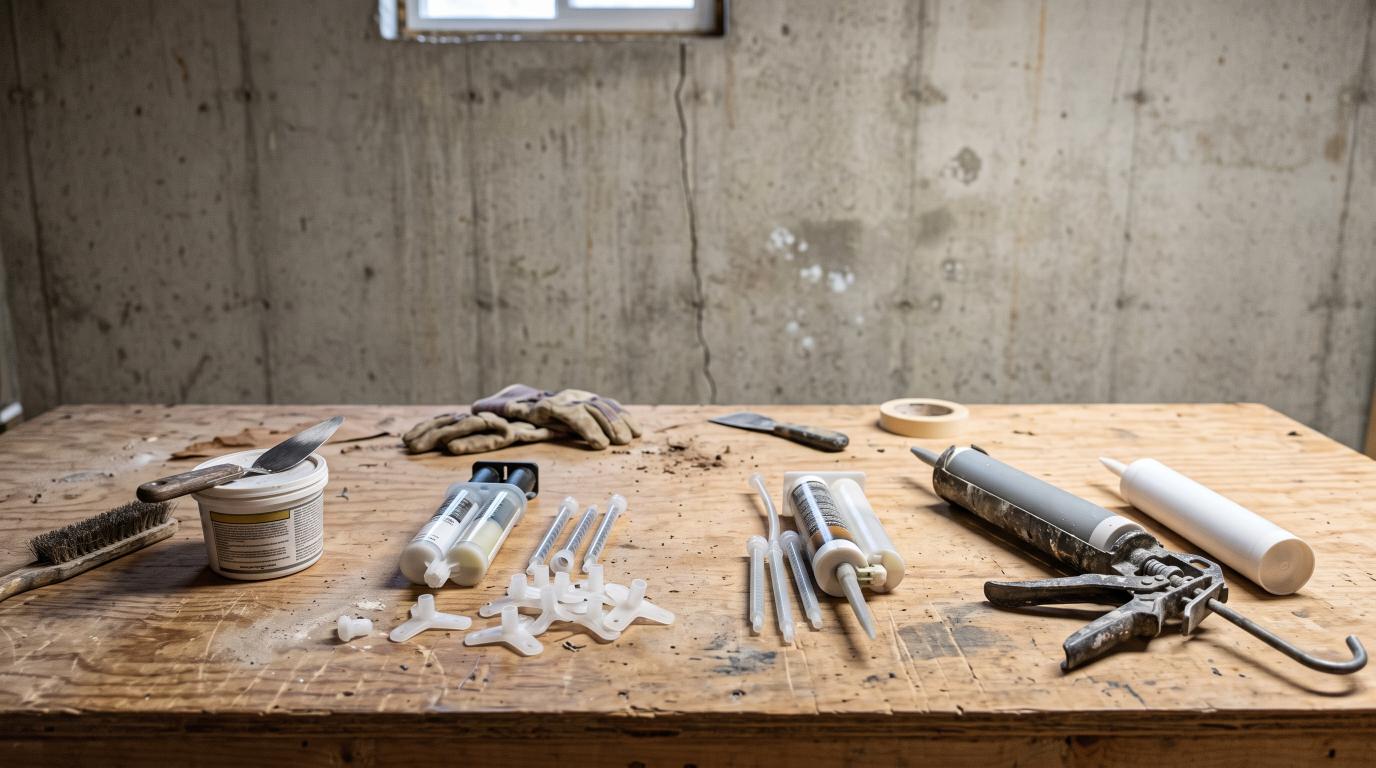
Choose a foundation crack sealant based on whether the crack is stable, leaking, moving, or affecting structural performance. Epoxy injection, polyurethane injection, flexible concrete sealants, and hydraulic cement serve different repair purposes.
Epoxy Injection for Suitable Concrete Cracks
Epoxy injection bonds separated concrete surfaces in suitable stable cracks. Low-viscosity epoxy resin enters the opening through injection ports and hardens inside the concrete. Because cured epoxy is relatively rigid, it may not be appropriate where movement continues. Structural crack repairs require careful material selection. The American Concrete Institute’s epoxy injection guidance covers application methods, suitable crack conditions, and evaluation of completed repairs.
Polyurethane Injection for Water-Leaking Cracks
Polyurethane injection is used to seal suitable concrete cracks that allow water to enter. Some polyurethane resins react with moisture and expand into foam, helping fill water paths. Other formulations create flexible seals that can accommodate limited movement. The product must match the crack’s moisture conditions and repair purpose. Not every polyurethane system restores structural strength, and products designed for active leaks should not automatically be used for every concrete crack.
Flexible Concrete Sealant for Minor Surface Cracks
Flexible concrete sealants are suitable for certain small, nonstructural openings where limited movement is expected. They are commonly applied using a caulking gun and can provide a protective seal when the concrete is correctly prepared. Choose a concrete-rated product and check its permitted crack width, joint depth, and exposure conditions. Some openings also require backing material to control how deeply the sealant is applied.
Hydraulic Cement for Suitable Localized Repairs
Hydraulic cement is a fast-setting, cement-based repair material used for certain openings in concrete and masonry. Some formulations are designed to stop localized water entry. The material must be installed under the conditions stated by its manufacturer. Because hydraulic cement forms a rigid repair, it may crack again if the foundation continues moving. It should not replace structural reinforcement or a complete waterproofing system.
When a Surface Coating Is Not Enough to Repair Concrete Damage
A surface coating can reduce moisture penetration, but it cannot restore the strength of badly damaged concrete or stop structural movement. Protective coatings are generally applied to suitable concrete surfaces after necessary repairs have been completed. Cracking, delamination, or spalling may require treatment before coating. Research by Md. Safiuddin on concrete damage and protective coatings discusses different forms of concrete deterioration and the selection of protective surface treatments. The distinction matters because protecting a concrete surface is different from repairing damage within the material.
Can Concrete Seal Itself After Cracking?
Yes, concrete can naturally close very small cracks through a process called autogenous healing. This happens when moisture supports continued cement hydration or the formation of calcium carbonate deposits inside narrow openings. However, natural healing depends on the concrete’s condition, crack width, and moisture availability. A scientific review of concrete self-healing explains that these reactions are limited and difficult to control. They should not be relied on to repair structural cracks, large openings, or active foundation leaks.
Tools and Materials Needed to Seal Foundation Cracks
Foundation crack sealing requires suitable cleaning tools, protective equipment, and a repair material designed for the crack’s condition. Injection systems may also require specialized applicators and surface-mounted ports.
Essential Tools and Protective Equipment
For a basic nonstructural repair, the following items may be needed:
- Safety glasses and chemical-resistant gloves
- Wire brush for removing loose concrete
- Vacuum for cleaning dust and debris
- Flashlight and measuring tape
- Concrete-rated crack sealant or repair kit
- Caulking gun or compatible applicator
- Mixing tools and backing material when required
Check the product’s safety data sheet for ventilation, respiratory protection, and handling requirements.
How Moisture Affects Sealant Adhesion and Repair Preparation
Moisture can affect how well a repair material bonds to concrete. Some sealants require a dry surface, while certain polyurethane injection products are designed for damp or actively leaking cracks. Applying the wrong material to wet concrete can cause poor adhesion or incomplete sealing. Check the manufacturer’s requirements for surface condition and temperature before starting.
Step-by-Step Foundation Crack Sealing Process
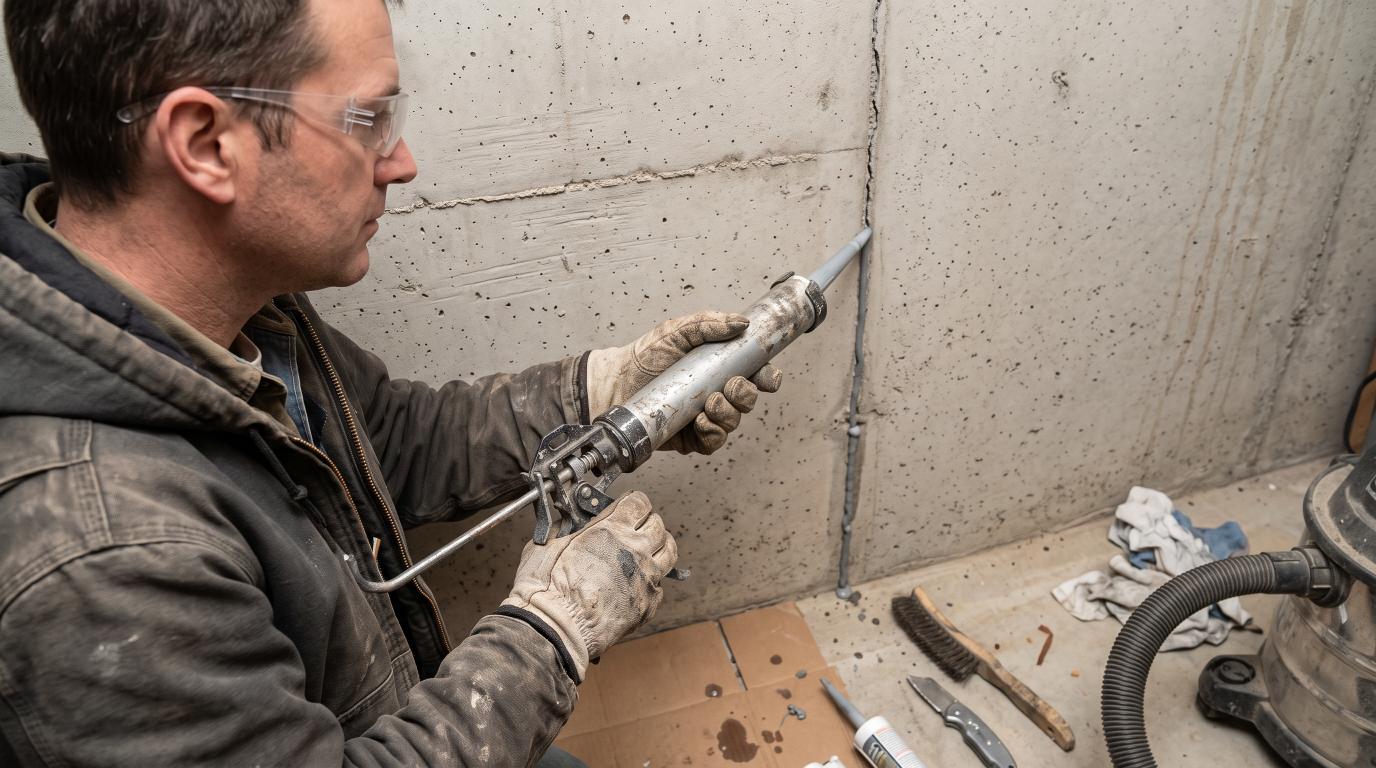
To seal cracks in foundation walls, inspect the opening, clean the concrete, apply a suitable sealant or approved injection system, allow it to cure, and check the repair. These steps are intended for stable, nonstructural cracks that have been confirmed suitable for the chosen method.
Step 1: Inspect the Crack and Check for Water
Examine the full crack before applying any repair product. Check whether it is dry, damp, or actively leaking. Look for loose concrete, mineral deposits, water stains, and changes in width. Measure and photograph the opening. If the wall is displaced or the crack appears to be growing, arrange an inspection rather than attempting routine sealing.
Step 2: Clean the Crack and Prepare the Surface
Remove dust, dirt, old filler, loose concrete, and other materials that could prevent adhesion. Use a wire brush and vacuum to clean accessible areas. Avoid cutting into the crack unless the selected repair method requires it and the work can be completed safely. Prepare the surface according to the repair product’s instructions, including its moisture requirements.
Step 3: Apply the Correct Sealant or Injection System
Apply the repair material using the method specified by its manufacturer. For a minor surface crack, use the approved flexible sealant at the required depth. Install backing material if the product instructions call for it.
For an appropriate low-pressure injection repair:
- Attach injection ports along the crack using the spacing specified by the repair kit.
- Apply the supplied surface paste between the ports without blocking them.
- Allow the surface paste to harden before beginning injection.
- Inject resin through the ports in the sequence recommended by the manufacturer, commonly from bottom to top on vertical cracks.
- Continue only as directed by the system instructions, stopping if excessive pressure or unexpected leakage develops.
These steps reflect the general process described in Simpson Strong-Tie’s crack injection guide. Structural injection work should follow an approved repair plan.
Step 4: Allow the Repair to Cure
Allow the repair material to cure for the period stated in its technical instructions. Curing time depends on the product, concrete temperature, moisture conditions, and application thickness. A material may feel firm before reaching its full cure. Avoid disturbing the repair or applying additional coatings until the required curing period has passed.
Step 5: Check the Repair for Leaks and Visible Changes
Inspect the repaired area after curing. Look for unfilled gaps, separation around the repair, new cracking, or signs of moisture. If water entry was the original concern, check the area again after rainfall or snowmelt. A successful seal should remain intact under its intended conditions. Continued leakage or movement requires further investigation.
How to Seal Foundation Cracks From the Inside or Outside
Foundation cracks can be sealed from inside or outside when the repair method suits the wall and water conditions. Interior injection may be possible without excavation, while exterior work provides access to the foundation’s waterproofing and drainage system.
Interior Crack Sealing
Interior sealing is suitable when the crack can be reached from a basement or other accessible space. An appropriate injection system may fill the opening through the wall thickness. A basic surface patch, however, may only cover the visible crack without addressing deeper water paths. Interior repairs are generally less disruptive when excavation is unnecessary, but they do not automatically correct poor drainage outside the wall.
Exterior Crack Sealing and Excavation Considerations
Exterior sealing allows contractors to inspect the outside wall and repair damaged waterproofing materials. The work may involve cleaning the foundation, treating cracks, applying a waterproofing membrane, and improving nearby drainage. Excavating beside a foundation creates risks involving trench collapse, underground utilities, and soil support. Significant excavation should be handled by qualified professionals with suitable safety measures.
What to Do If a Foundation Crack Keeps Leaking After Sealing
If a sealed foundation crack keeps leaking, first determine whether water is passing through the repaired opening or entering through another crack or construction joint. Water can move behind coatings or travel along building joints before becoming visible indoors. Hydrostatic pressure, which is pressure caused by standing or accumulated water against a structure, can also contribute to leakage through foundation openings.
Check whether moisture appears after heavy rain, snowmelt, or irrigation. Look for fresh stains and dampness around nearby joints. A professional may recommend another injection method, exterior waterproofing, or drainage improvements after identifying the water’s path. Repeatedly applying surface sealant without finding the cause may leave the leak unresolved.
Common Foundation Crack Sealing Mistakes to Avoid
Foundation crack sealing can fail when the wrong material is used, the concrete is poorly prepared, or the underlying damage continues.
Avoid these common mistakes:
- Ignoring structural movement: Sealant will not stop settlement or bowing walls.
- Using unsuitable caulk: Ordinary household caulk may not meet foundation repair requirements.
- Skipping cleaning: Dust and loose concrete can prevent proper adhesion.
- Ignoring moisture: A dry-surface product may fail when applied to wet concrete.
- Using rigid filler in moving cracks: Continued movement may break the repair.
- Rushing curing: Disturbing the material too early can weaken the seal.
- Ignoring drainage: Water may continue entering through nearby openings.
Follow the repair product’s instructions and confirm that the crack is suitable for sealing before beginning work.
How Much Does It Cost to Seal Foundation Cracks?
The cost of sealing foundation cracks depends on their size, depth, location, and repair method. Basic DIY sealing generally costs less than professional injection, exterior waterproofing, or structural foundation work.
Factors That Affect DIY Repair Costs
DIY costs mainly depend on the materials and tools needed. A minor surface crack may require only a concrete-rated sealant and basic cleaning supplies. A deeper crack requiring an injection kit can involve additional materials and equipment. Repairing several cracks also increases material use. However, choosing a cheaper product that does not suit the crack may result in repeated repairs.
Factors That Affect Professional Repair Costs
Professional costs depend on the difficulty of reaching the crack, the condition of the foundation, and the repairs required. An accessible interior crack may involve less work than an exterior repair requiring excavation, waterproofing, or drainage installation. Structural reinforcement and repairs to damaged foundation sections can increase the overall expense. Request an itemized estimate describing the work, repair materials, and problems the contractor intends to correct.
How to Prevent Foundation Cracks From Returning
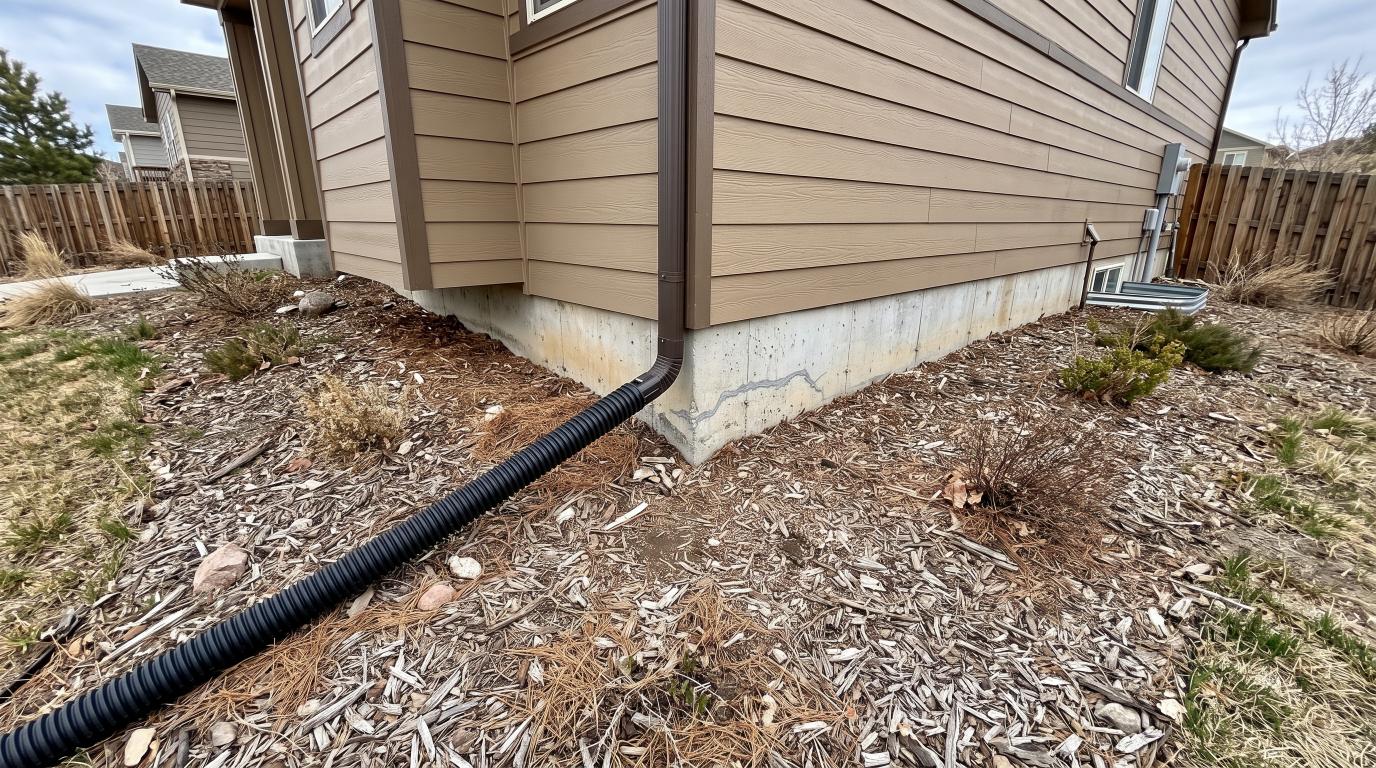
Reduce the risk of future foundation cracking by managing drainage, avoiding major soil moisture changes, and monitoring existing damage. These measures can limit certain causes of foundation stress, although they cannot prevent every crack.
Manage Roof Runoff and Drainage
Keep gutters clean and direct downspout water away from the foundation. Check whether rainwater collects beside walls or flows toward the building. Poor grading and blocked drainage systems can increase moisture around the foundation. Correct drainage problems when water repeatedly pools near the structure.
Maintain Appropriate Soil Moisture
Expansive clay soils can swell as they absorb moisture and shrink during dry conditions. These changes may place stress on foundations. Avoid excessive irrigation beside foundation walls and repair leaking underground pipes. Where expansive soils are present, moisture management should follow local soil conditions rather than a general watering schedule.
Monitor Existing Cracks for Changes
Photograph existing cracks and record their measurements so changes can be identified. Inspect repaired areas after significant rainfall, snowmelt, or visible movement in nearby concrete. If a crack widens, develops displacement, or begins leaking again, arrange a professional assessment before adding more filler.
When Should You Hire a Foundation Repair Professional?
Hire a foundation repair professional when cracks are widening, leaking repeatedly, or appearing with signs of structural movement. Horizontal cracking with wall displacement, bowing walls, uneven floors, and separated concrete sections can indicate problems that require more than sealing.
A qualified foundation contractor can assess repair options. A licensed structural engineer may be needed to determine whether the foundation’s load-bearing performance is affected and specify structural repairs. Commercial foundations and major concrete structures may also require an assessment of construction loads, site conditions, and applicable building requirements.
Conclusion
Learning how to seal cracks in foundation walls begins with identifying the damage and choosing a repair method that matches the crack’s condition. Stable, nonstructural openings may be repaired with flexible sealants or suitable injection systems. Epoxy and polyurethane serve different purposes, while growing cracks and structural movement require further investigation. Clean the concrete properly, follow the repair material’s application and curing instructions, and address drainage problems where necessary. Continue monitoring the foundation after sealing to identify new damage early.
Worried About a Foundation Crack That Keeps Getting Worse?
If a foundation crack keeps widening, leaking, or reopening after sealing, it needs further inspection rather than another layer of sealant. These problems can indicate ongoing movement, water pressure, or damage that requires a different repair method.
Elite Surface Infrastructure handles concrete repair and rehabilitation projects in Colorado Springs. If you’re dealing with persistent concrete cracks or damaged structural concrete, contact us today to discuss your project and request a repair assessment. Share where the cracks appear, whether they are growing, and if water is entering so the condition can be evaluated before choosing a repair method.
Frequently Asked Questions
What Is the Best Way to Seal a Crack in a Foundation?
The best method depends on whether the crack is stable, leaking, or moving. Flexible concrete sealants may work for minor surface cracks, while epoxy or polyurethane injection can treat suitable deeper openings.
Can You Seal Foundation Cracks From the Inside?
Yes, suitable foundation cracks can be sealed from inside using an approved injection system. Exterior waterproofing or drainage repairs may also be necessary when water continues entering.
Can You Use Concrete Caulk on Foundation Cracks?
Yes, concrete-rated flexible caulk can seal certain minor, nonstructural cracks. Check the product’s approved crack width, application depth, and moisture requirements before using it.
Should a Foundation Crack Be Wet or Dry Before Sealing?
The required condition depends on the repair material. Some sealants need dry concrete, while certain polyurethane injection products work in damp or leaking cracks. Follow the manufacturer’s instructions.
How Long Does Foundation Crack Sealant Take to Cure?
Curing time depends on the product, temperature, and moisture conditions. Follow the manufacturer’s specified full curing period because a sealant may become firm before it finishes curing.
Will Sealing a Foundation Crack Stop Water From Coming In?
Yes, properly sealing a suitable foundation crack can stop water passing through that opening. However, damaged waterproofing, poor drainage, or nearby cracks may continue allowing moisture inside.