
Construction management includes planning, budgeting, scheduling, coordinating contractors, managing materials, overseeing safety, controlling quality, handling permits, managing risk, and communicating with clients from the very first idea through the final handover of the finished project. It touches nearly every part of a build, not just the parts that happen on the job site.
A construction manager is the person responsible for pulling all of these pieces together. Property owners and businesses across Colorado Springs, and the wider Front Range often bring in a construction manager to act as the main point of contact between the client, the design team, and everyone working on site, making sure the project moves forward the way it was planned, on time and within budget.
Construction management matters because building projects involve a huge number of moving parts, and even small mistakes can lead to expensive delays. Strong construction management keeps large projects organized and on track from the very first meeting through the final walkthrough.
What Is Construction Management?
Construction management is the process of planning, coordinating, and overseeing a construction project from start to finish. It covers everything from the earliest planning stages to the final walkthrough once the building is complete.
The main purpose of construction management is to make sure a project gets built correctly, safely, on schedule, and within its budget. It brings structure to a process that involves many different people, materials, and moving deadlines all happening at once.
Construction management vs simply supervising a project
Simply supervising a project usually means watching over the day to day work happening on site. Construction management goes much further than that. It includes supervision, but it also covers budgeting, scheduling, risk planning, contract oversight, and communication with everyone involved, starting long before construction even begins.
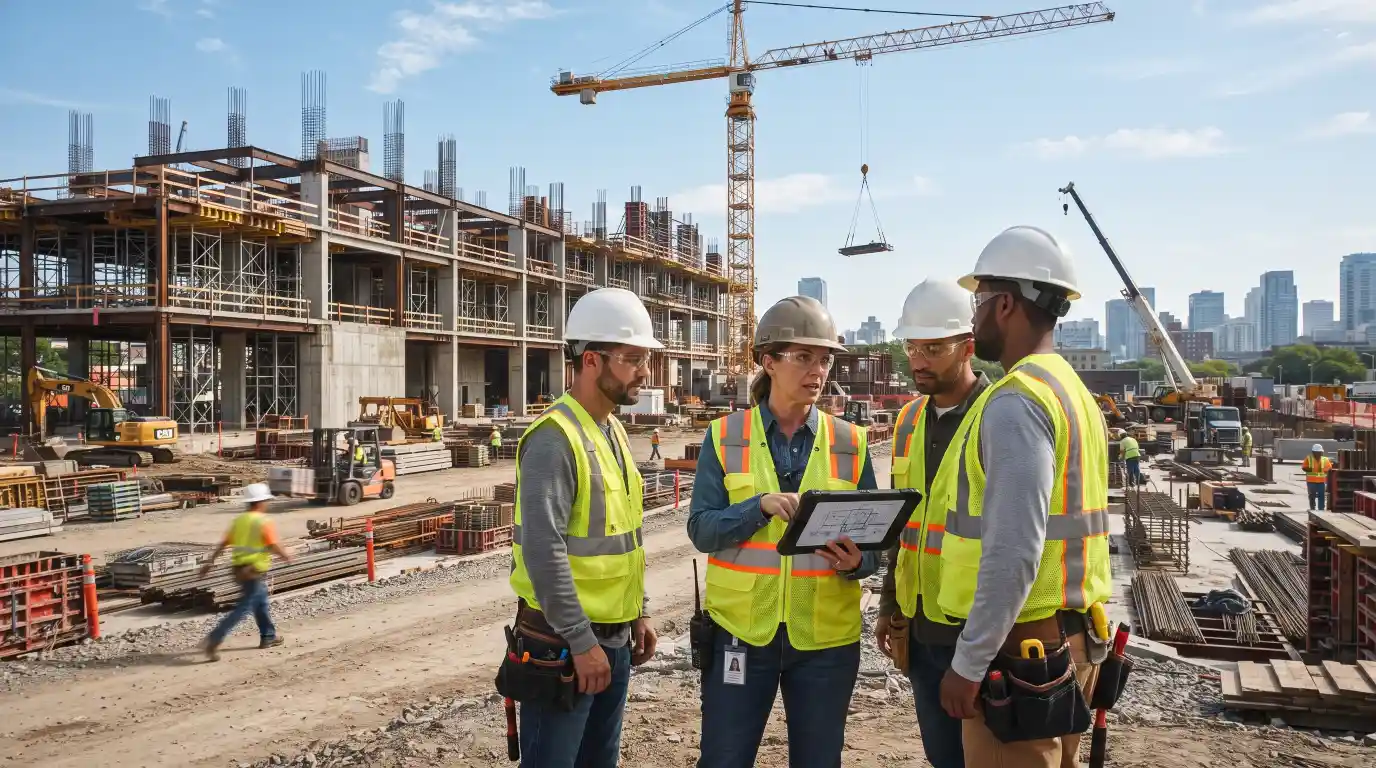
What Does a Construction Manager Do?
Construction managers oversee every stage of a project to keep it on time, within budget, and up to quality standards.
Planning the project
A construction manager creates the overall plan for how a project will be built, including the order of work, the resources needed, and the timeline for each phase. This planning happens well before construction begins, since decisions made early on affect everything from how the budget is structured to how efficiently the site can be used once work starts.
Managing budgets
They track spending throughout the project, compare it against the original budget, and step in early if costs start to drift off track. This means constantly reviewing invoices, labor costs, and material prices, then flagging any red flags to the client before small overspending turns into a much bigger financial problem.
Scheduling work
Construction managers build and maintain the project schedule, making sure each task happens in the right order and that delays in one area do not throw off the entire timeline. Since many tasks depend on others being finished first, like framing needing to happen before electrical work, keeping the schedule accurate is one of the most important parts of the job.
Coordinating contractors and subcontractors
They bring together everyone working on the project, from general contractors to specialized subcontractors, and make sure their work fits together smoothly without conflicts. This often means scheduling different trades so they are not working in the same space at the same time, and resolving any disagreements that come up between crews.
Managing materials and equipment
Construction managers make sure the right materials and equipment show up on site at the right time, avoiding both shortages and unnecessary storage costs. Ordering too early can lead to cluttered job sites and wasted storage space, while ordering too late can bring the entire project to a halt while everyone waits.
Overseeing safety compliance
They enforce safety standards on site, making sure workers follow proper procedures and that the project meets all required safety regulations. This includes regular safety checks, making sure protective equipment is being used correctly, and addressing any hazards before they lead to an accident.
Monitoring quality control
Construction managers check that work meets the required standards at every stage, catching problems early before they become expensive to fix. Catching a mistake while a wall is still open is far cheaper and easier than discovering the same issue after everything has been finished and covered up.
Handling permits and inspections
They manage the paperwork and scheduling needed for permits and inspections, keeping the project compliant with local building codes and regulations. Missing a required inspection or letting a permit lapse can bring an entire project to a stop, so staying on top of this paperwork is a critical part of keeping things moving.
What Does Construction Management Include? (Complete Breakdown)
Construction management begins with setting goals, defining the project scope, and creating a roadmap for the build. This includes site evaluations, feasibility studies, and cost estimates before work starts, plus working with architects and engineers on the design, building the budget, and sourcing materials and vendors.
Once underway, managers oversee contracts, assign labor and equipment efficiently, and follow a detailed schedule to keep the project on track. They supervise daily site work and check that it meets quality standards throughout.
They also handle safety protocols, plan for risks like weather or supply issues, and manage any changes to the original plan. Clients get regular progress updates, environmental rules are followed, and the project ends with final inspections and handover.
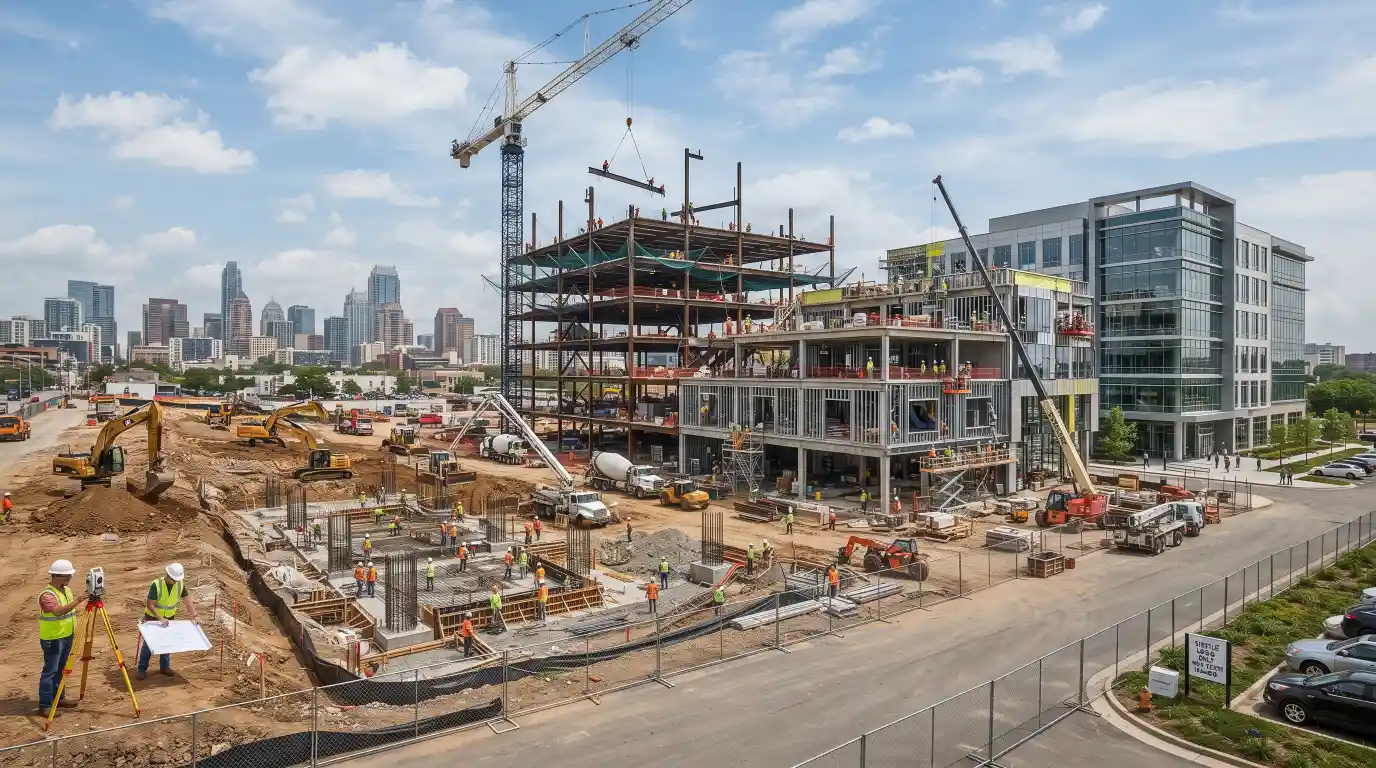
The 5 Main Phases of Construction Management
Every construction project follows five key phases, each with a specific role in keeping the project organized, efficient, and on track. Together, these phases guide the project from the initial idea to successful completion.
Initiation
This is where the project idea takes shape. Goals are defined, feasibility is assessed, and the overall vision for the project is established.
Planning and Design
During this phase, detailed plans, designs, and budgets are developed. This is where the groundwork for the entire project gets laid out.
Procurement
This phase involves sourcing materials, equipment, and labor needed to bring the design to life, along with finalizing contracts with vendors and subcontractors.
Construction Execution
This is the actual building phase, where the plans are put into action on site and the project starts taking physical shape.
Project Closeout
The final phase includes final inspections, addressing any remaining issues, and officially handing over the finished project to the client.
Types of Projects That Use Construction Management
Construction management applies to nearly any building project, from a single home to a multi-mile stretch of highway, though the level of coordination needed grows with the size and complexity of the work.
Residential Construction
This includes single family homes, apartment buildings, and other housing developments that need coordinated planning and supervision. Even a single family home benefits from having someone manage the schedule and budget, but larger developments with dozens of units depend on it even more, since multiple trades and inspections have to line up correctly across many units at once.
Commercial Buildings
Office buildings, retail spaces, and other commercial properties often rely on construction management to keep large scale projects on schedule and within budget. These projects usually involve strict deadlines tied to lease agreements or business openings, so any delay can carry a real financial cost for the property owner, making tight coordination especially important.
Industrial Facilities
Warehouses, manufacturing plants, and other industrial sites require careful coordination due to their scale and specialized equipment needs. These projects often involve heavy machinery, unique structural requirements, and strict safety standards, which means construction managers need to plan around equipment installation and specialized contractors in addition to the usual building work.
Infrastructure Projects
Roads, bridges, and utility systems depend heavily on construction management to handle their complexity, regulatory requirements, and public safety concerns. These projects typically involve multiple government agencies, strict permitting processes, and ongoing public safety considerations, since the work often happens in or near active roadways and public spaces.
Renovation and Remodeling
Even smaller scale renovation projects benefit from construction management to keep timelines, budgets, and contractor coordination on track. Renovations can actually be trickier to manage than new construction in some ways, since work often has to happen around an existing structure or occupied space, requiring extra planning to avoid disrupting daily use of the building.
Construction Management vs. Project Management
|
Construction Management |
Project Management |
|
|
Focus |
Physical building process |
Any type of project, across industries |
|
Key Responsibilities |
Site supervision, safety compliance, contractor coordination, permits |
Budgets, timelines, team coordination |
|
Industry Scope |
Construction only |
Construction, tech, marketing, healthcare, and more |
|
Best Suited For |
Building projects with site-specific demands |
General project oversight, not tied to a physical build |
Essential Skills Every Construction Manager Needs
Construction managers need to guide teams, contractors, and workers toward a shared goal while keeping everyone accountable. Clear communication with clients, contractors, and team members is critical to avoiding misunderstandings and costly mistakes. Understanding how to track and control costs is essential for keeping projects financially on track. Strong scheduling skills help keep every phase of the project moving forward without unnecessary delays. Construction projects rarely go exactly as planned, so the ability to think on your feet and solve problems quickly is crucial.
Construction managers often negotiate with vendors, contractors, and clients, so strong negotiation skills help keep costs down and relationships positive. A solid understanding of construction methods, materials, and building codes helps construction managers make informed decisions. Quick, confident decision-making keeps projects moving forward, especially when unexpected issues come up on site.
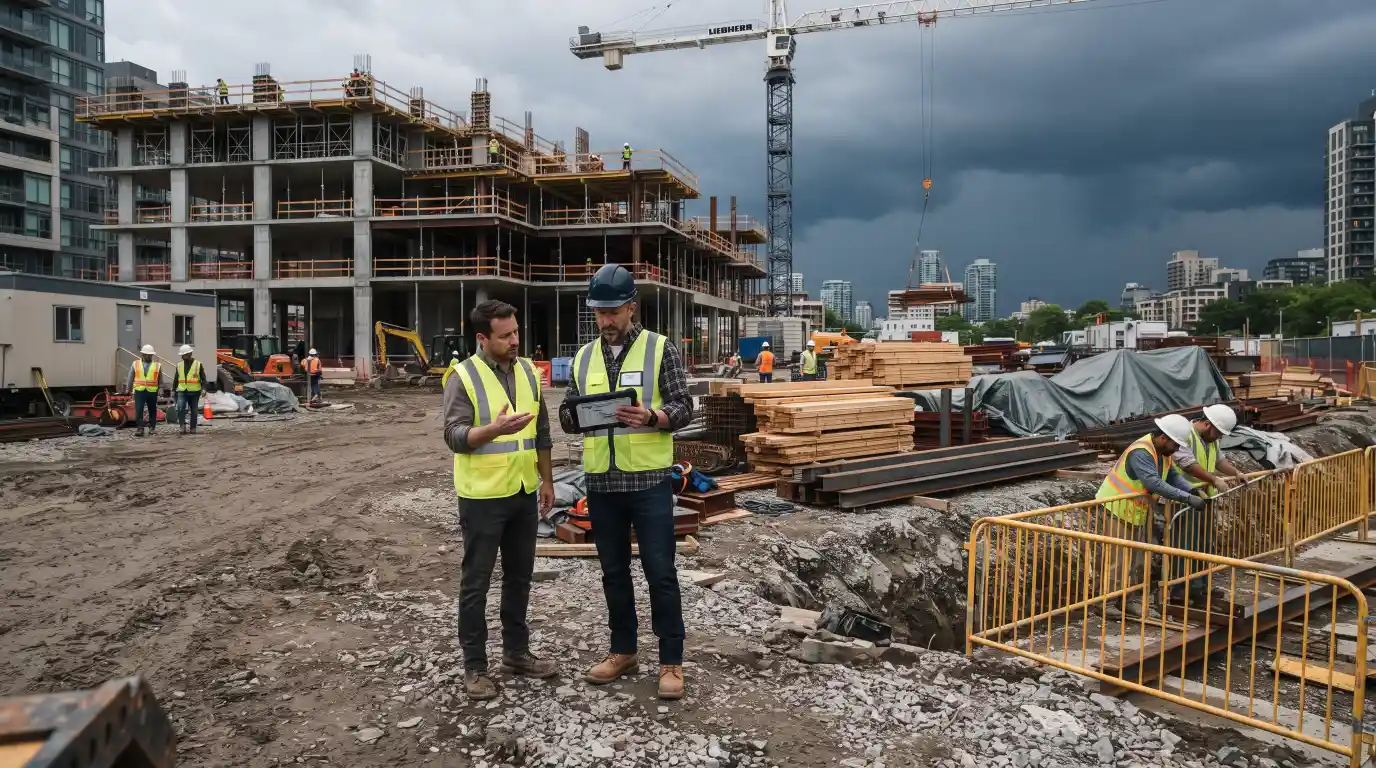
Common Challenges in Construction Management
Even the best-planned construction projects can face unexpected challenges that affect progress and performance. Understanding these common issues helps teams prepare ahead and keep projects running successfully.
Budget overruns: Unexpected costs can quickly add up, making careful budget tracking essential throughout every phase of the project.
Schedule delays: Weather, supply issues, or labor shortages can all cause delays that ripple through the rest of the project timeline.
Labor shortages: Finding enough skilled workers can be a challenge, especially for larger or more specialized projects.
Material price fluctuations : Prices for materials like steel, lumber, and asphalt can shift unexpectedly, affecting overall project costs.
Safety risks: Construction sites carry inherent risks, making strict safety protocols essential to protect workers and avoid costly incidents.
Scope changes: Client requested changes to the original plan can affect both the budget and the schedule if they are not managed carefully.
Weather disruptions: Severe weather can delay outdoor work significantly, especially for projects with tight timelines.
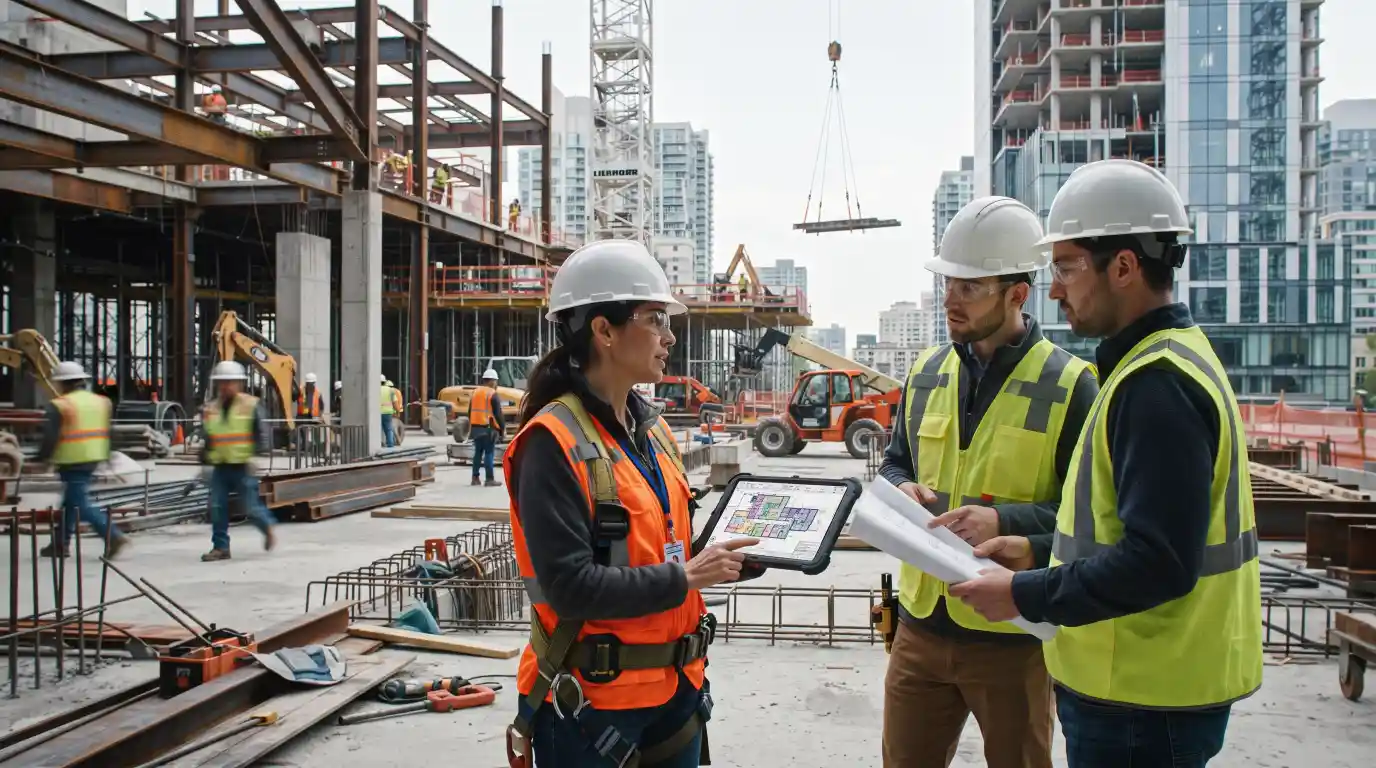
Construction Management Tools and Software
These tools help construction managers create, adjust, and track project timelines in real time. These platforms centralize communication, document sharing, and task tracking for the whole project team. Software in this category helps monitor spending against the budget, flagging potential overruns before they become serious problems.
These tools keep contracts, permits, and other important paperwork organized and easily accessible to everyone who needs them. Building Information Modeling software helps teams visualize the project in detail and catch design conflicts before construction even begins.
Benefits of Effective Construction Management
Effective construction management leads to better cost control, since careful budget tracking helps avoid unnecessary overruns. It also results in faster project completion, because organized scheduling keeps every phase moving smoothly.
Projects with strong construction management also tend to see improved safety, since strict protocols are followed consistently on site. Higher quality work is another benefit, since regular quality checks catch problems early, and clear communication between everyone involved helps prevent misunderstandings that can lead to costly mistakes.
Good construction management also reduces project risks, since potential issues are identified and planned for ahead of time. All of this adds up to greater client satisfaction, since projects are more likely to finish on time, within budget, and to the expected standard.
When Should You Hire a Construction Manager?
Hiring a construction manager is most beneficial for projects that require careful planning, coordination, and oversight from start to finish.
Large residential projects Bigger residential builds, like multi unit housing developments, benefit from the coordination and oversight a construction manager provides.
Commercial developments Commercial projects often involve multiple contractors and strict deadlines, making professional construction management especially valuable.
Multi-contractor projects When a project involves several different contractors working at once, a construction manager helps keep everyone coordinated and on schedule.
Renovations with complex coordination Even renovation projects can benefit from construction management when they involve multiple trades or a tight timeline that requires careful planning.
Ready to Work With Colorado’s Construction Management Experts?
Managing a construction project involves a lot of moving pieces, and having the right team in place can make the difference between a smooth build and a stressful one. Elite Surface Infrastructure has over 140 years of combined experience delivering asphalt paving, concrete, earthwork, and construction management across Denver, Colorado Springs, and the entire Front Range.
Whether you’re planning a commercial development, a municipal infrastructure project, or a large-scale renovation, our team handles the coordination so your project stays on time and on budget. Contact us today to talk through your next project with a team that knows Colorado construction inside and out.
Conclusion
Construction management covers far more than simply watching over work happening on a job site. It includes planning, budgeting, scheduling, contractor coordination, safety oversight, quality control, and communication with clients from the very beginning of a project all the way through final handover.
Understanding what construction management actually includes helps property owners and businesses know what to expect when they bring a construction manager onto their project. The right construction manager keeps a project organized, controls costs, and reduces the risk of costly delays or mistakes along the way.
If you are planning a construction project, big or small, it is worth having your plans reviewed by an experienced construction management team before you break ground. A qualified team can help you avoid common pitfalls and set your project up for a smooth, successful build from start to finish.
Frequently Asked Questions
What does construction management include?
Construction management includes planning, budgeting, scheduling, contractor coordination, quality control, safety oversight, permit handling, risk management, and client communication throughout every phase of a project. It essentially covers the entire lifecycle of a build, not just the work happening on site.
What are the five phases of construction management?
The five phases are initiation, planning and design, procurement, construction execution, and project closeout. Each phase builds on the one before it, so skipping steps early on usually causes problems later in the project.
What is the role of a construction manager?
A construction manager oversees the entire building process, coordinating everyone involved while managing the budget, schedule, and quality of the finished project. They act as the main point of contact, keeping clients, contractors, and workers all on the same page.
What is included in construction project management?
It includes everything from early planning and design coordination to procurement, scheduling, site supervision, and final project handover. This means a construction project manager is involved long before the first shovel hits the ground.
What skills are needed for construction management?
Key skills include leadership, communication, budget management, scheduling, problem-solving, negotiation, technical knowledge, and strong decision-making. Most experienced construction managers develop these skills over years of hands-on project work.
What software is used in construction management?
Common tools include scheduling software, project management platforms, budget tracking tools, document management systems, and BIM collaboration software. Using the right combination of these tools helps teams stay organized and catch problems before they become costly.
Why is construction management important?
It keeps complex projects organized, on schedule, and within budget, while also protecting worker safety and ensuring the finished project meets quality standards. Without it, even a well-designed project can run into delays, cost overruns, or serious safety issues.