
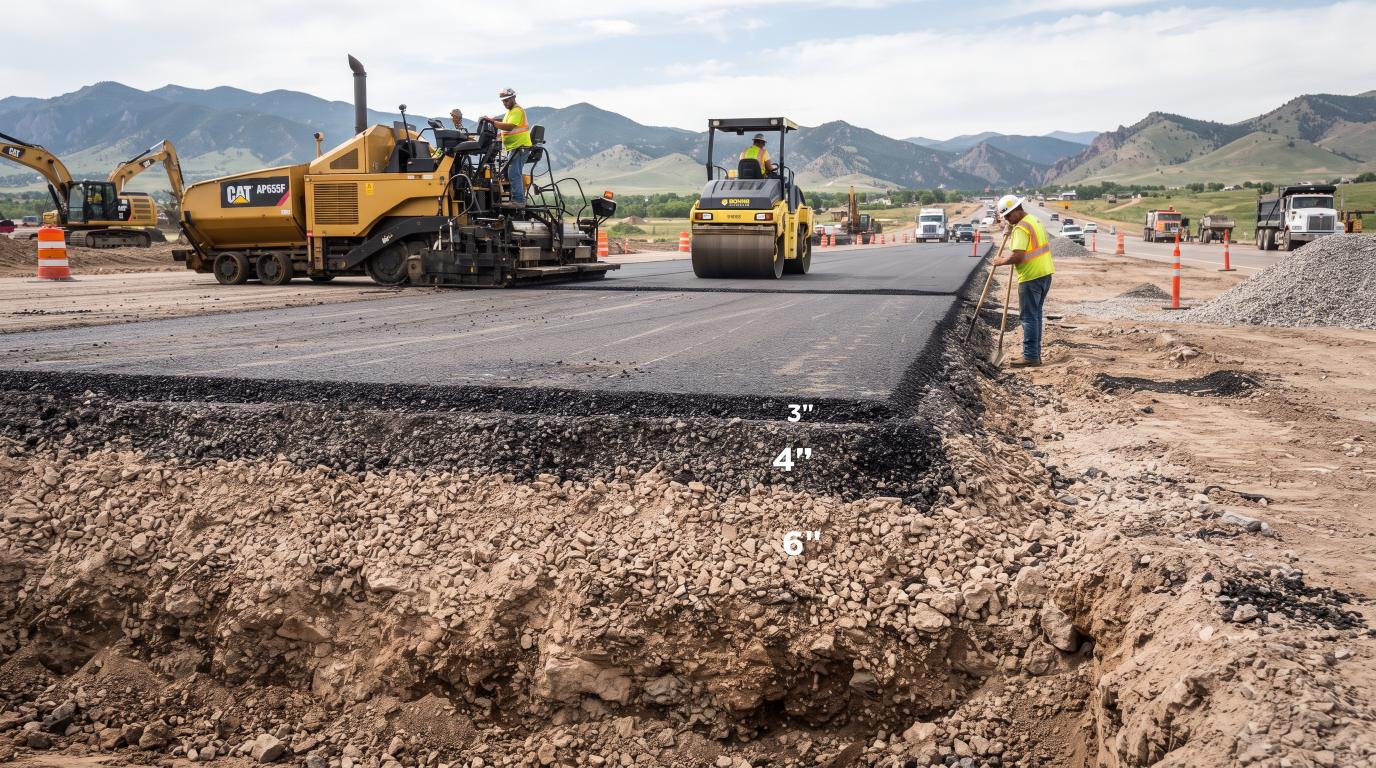
What is pavement? Pavement is an engineered surface built to support vehicles or pedestrians while spreading loads into the ground below. It is not only the asphalt or concrete visible at the surface. A pavement system can include prepared soil, aggregate layers, drainage features, and a finished surface that work together.
For projects in Colorado, pavement design also has to account for traffic, soil conditions, drainage, and changing weather. ESI serves projects throughout Colorado, including Colorado Springs and communities along the Front Range, with asphalt paving, concrete, earthwork, and supporting civil construction services.
The main pavement types are flexible asphalt pavement, rigid concrete pavement, and composite pavement. Most systems are built in layers that may include the subgrade, subbase, base course, and surface course. The right combination depends on how the pavement will be used and what conditions exist below it.
What Does Pavement Mean in Civil Construction?
In civil construction, pavement means much more than a hard top surface. It is a structural system designed to create a stable area for traffic while transferring wheel loads into the soil without causing excessive movement or failure.
The visible surface is only one part of that system. The strength of the soil, thickness of the supporting layers, type of surface material, drainage, compaction, and expected traffic all affect how the pavement performs.
A road may contain pavement, but the words road and pavement do not mean exactly the same thing. A road can include shoulders, curbs, drainage structures, signs, utilities, slopes, markings, and surrounding right-of-way. Pavement refers mainly to the structural layers that create the traveled surface.
What Is the Main Purpose of Pavement?
The main purpose of pavement is to provide a stable surface for traffic while spreading loads over a larger area of the ground. Without a properly built pavement structure, repeated vehicle loads could cause natural soil to rut, shift, settle, or lose strength.
Carry and Distribute Traffic Loads
Vehicle tires place concentrated loads on a relatively small area. Pavement spreads those forces through the supporting layers before they reach the soil below. The amount of support needed changes with traffic. A lightly traveled area does not experience the same loading conditions as a roadway used regularly by buses, tractor-trailers, or heavy construction equipment.
Create a Smooth Travel Surface
The upper pavement layer creates the surface that vehicles and pedestrians actually use. It should be reasonably smooth, stable, and properly graded. Surface texture also matters because tires need enough friction for braking and turning, especially during wet conditions.
Protect the Soil Under the Pavement
The natural or prepared soil underneath a pavement is called the subgrade. That soil may lose strength when it becomes overly wet or poorly compacted. The pavement structure protects it from direct traffic while reducing the stresses reaching the soil.
Help Manage Water
Water is one of the most important factors in pavement performance. Surface slopes, drainage systems, compacted materials, joints, and properly maintained surfaces help keep water from collecting inside pavement layers. When water reaches weak supporting materials, those materials may lose strength and become more likely to move under traffic.
Main Types of Pavement Used for Roads and Sites
Pavement can be classified according to how it carries traffic loads and the materials used in its upper structural layers. The most common categories are flexible pavement, rigid pavement, and composite pavement. Specialized systems such as permeable or unit-paver pavement are also used in certain locations.
Flexible Asphalt Pavement
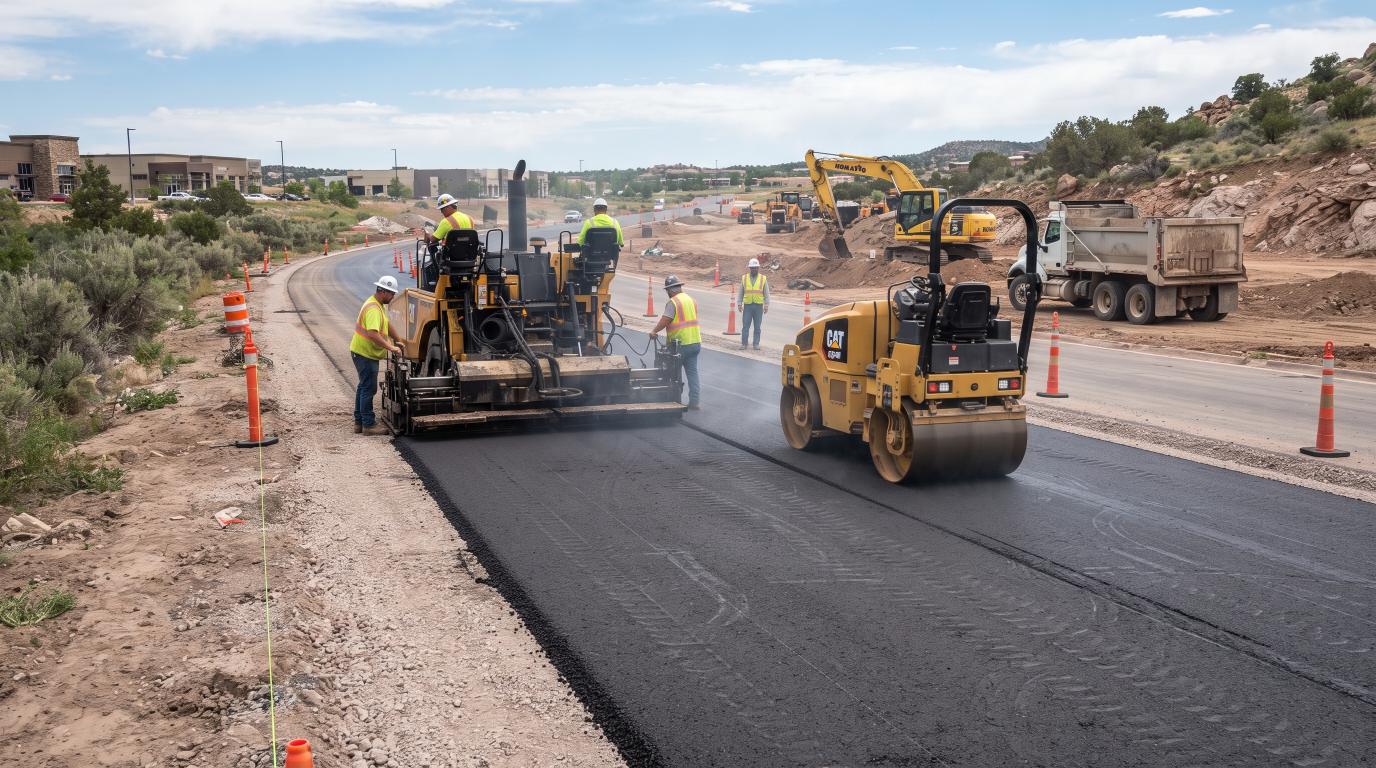
Flexible pavement normally has an asphalt surface placed over one or more supporting aggregate layers. The term “flexible” describes how the structure responds to traffic. Instead of behaving like one stiff slab, the pavement layers experience small amounts of movement and work together to distribute the load.
Flexible pavement performance depends heavily on the strength of the supporting materials underneath the asphalt. Asphalt pavement is commonly used for streets, highways, parking areas, commercial access roads, and many other paved surfaces.
Rigid Concrete Pavement
Rigid pavement normally uses Portland cement concrete as the primary structural layer. Concrete is much stiffer than asphalt pavement. The slab can distribute loads across a wider area because of its rigidity and bending strength.
Concrete pavement often includes joints that allow controlled movement from temperature changes and concrete shrinkage. It may be selected for intersections, industrial areas, loading zones, roadways, and locations where heavy or repeated loads must be considered.
Composite Pavement
Composite pavement uses both asphalt and concrete within the same pavement structure. One common example is an asphalt overlay placed over an existing concrete pavement. This can provide a new riding surface while making use of the structural support of the concrete underneath. Composite pavement may also be designed as part of a planned new pavement system rather than only as a rehabilitation method.
Permeable and Unit-Paver Pavement
Some pavement systems are designed for more specialized purposes. Permeable pavement allows water to pass through openings or pores in the surface and enter a drainage or stone layer below. Depending on the design, the surface may use porous asphalt, previous concrete, or permeable pavers.
Unit-paver systems use individual concrete, brick, or stone units placed over a prepared base. They are commonly seen on plazas, walkways, pedestrian areas, and certain parking or low-speed traffic areas.
Pavement Layers From the Soil to the Surface
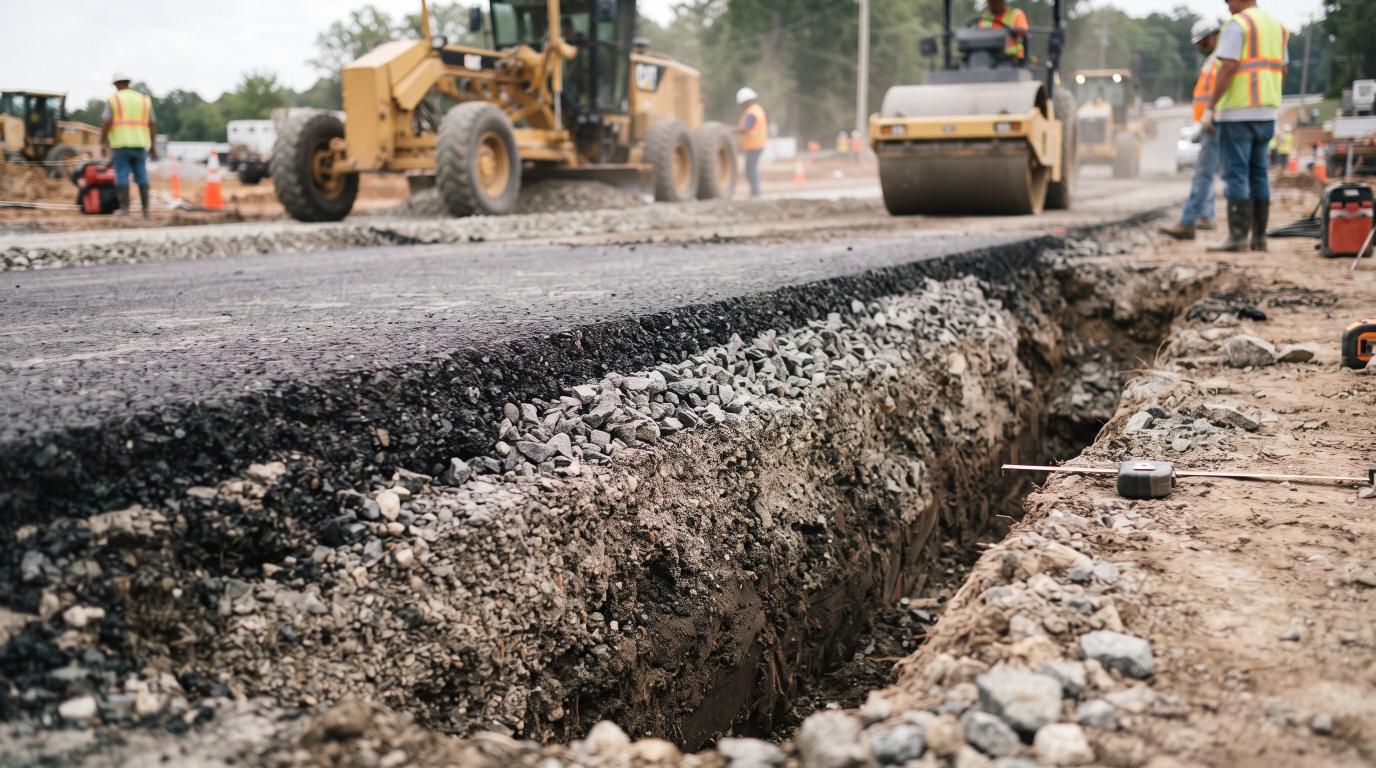
A pavement is normally built from the bottom upward. Each layer has a different purpose. A. T. Papagiannakis of the University of Texas at San Antonio and E. A. Masad of Texas A&M University organize pavement engineering around subgrades and bases, aggregates, asphalt and concrete materials, and the structural analysis of flexible and rigid pavement. This helps show why pavement should be understood as a complete system rather than only its top surface.
Subgrade
The subgrade is the soil that supports the entire pavement structure. Before upper layers are placed, the subgrade usually has to be shaped and compacted. Moisture may also need to be controlled so the soil can reach the required density. If the existing soil does not provide enough support, it may require stabilization, removal, replacement, or another form of improvement.
Subbase
A subbase may be installed between the subgrade and base course. It is commonly made from selected granular material. Depending on the pavement design, the subbase can improve support, help separate pavement materials from weak soil, provide drainage benefits, and create a more stable construction platform. Not every pavement requires a separate subbase.
Base Course
The base course provides structural support directly below the pavement surface or another intermediate layer. It is often built from crushed aggregate or another engineered material that can be placed and compacted to a specified density. A strong, evenly compacted base helps distribute traffic loads and reduces the chance of uneven movement beneath the finished surface.
Surface Course
The surface course is the upper pavement layer. For flexible pavement, this is normally an asphalt mixture. For rigid pavement, it is usually a concrete slab. The surface has to resist traffic wear, turning forces, weather exposure, braking, and repeated loading while providing a stable travel area.
Common Pavement Materials and What They Do
Pavement systems use several types of materials because no single material performs every function. Material selection depends on the pavement design, traffic level, existing soil, climate, drainage, and expected service conditions.
Asphalt Mixtures
Asphalt pavement contains mineral aggregate combined with asphalt binder. The aggregate provides much of the structure of the mixture, while the binder coats and holds the aggregate particles together. Mixture proportions, asphalt properties, aggregate characteristics, pavement thickness, placement temperature, and compaction all influence performance.
Concrete
Concrete pavement is made from cementitious material, water, aggregates, and selected admixtures when required by the design. After placement, concrete hardens into a rigid slab. Concrete pavement performance can depend on slab thickness, strength, joints, curing, supporting layers, drainage, and the conditions under which it is placed.
Crushed Stone and Aggregate
Aggregates are used throughout pavement construction. Crushed stone, gravel, and sand may be used in base layers, subbase layers, asphalt mixtures, and concrete mixtures. The size and distribution of aggregate particles affect how well a material compacts and how stable it becomes after placement.
Asphalt Binder
Asphalt binder is the dark, sticky material that holds the mineral particles together in asphalt pavement. Its behavior changes with temperature and loading conditions. This is one reason asphalt mixtures have to be selected with the expected climate and traffic conditions in mind rather than treating all asphalt pavement as the same material.
How Pavement Is Constructed
Pavement construction is completed in stages so each layer provides suitable support for the next. The exact sequence changes according to the pavement design and site conditions.
Site Preparation and Grading
Construction begins with preparing the site. Existing materials may need to be removed, and the ground is shaped to the required elevations. Grading also establishes slopes needed for drainage and connections to surrounding features. Earthwork at this stage has a direct effect on everything installed afterward.
Preparing the Subgrade
The exposed soil is graded and compacted. Contractors may adjust moisture levels so the soil can compact properly. Unsuitable or unstable soil may require additional treatment before pavement construction can continue. The goal is to provide a uniform foundation rather than placing new pavement over soft or inconsistent areas.
Installing Subbase and Base Materials
When the pavement design includes aggregate layers, materials are placed in controlled thicknesses. Each layer is spread, graded, and compacted before another layer is added.
Proper thickness and density are important. A strong surface placed over a weak or poorly compacted base can still develop settlement, cracking, rutting, or other problems.
Placing Asphalt or Concrete
Asphalt mixture is normally delivered hot, spread using paving equipment, and compacted while it remains within an appropriate temperature range. Concrete pavement follows a different process. Concrete is placed, shaped, finished, jointed when required, and allowed to cure so it can develop strength.
Finishing the Pavement
The final construction stage can include surface checks, joints, edges, transitions, drainage connections, pavement markings, and cleanup. The pavement must also meet the project requirements for grade, thickness, density, smoothness, and other specified conditions before opening to normal use.
What Makes Pavement Perform Well?
A good pavement does not depend on one material or one construction step. Several parts of the system need to work together.
Important pavement performance factors include:
- Suitable structural strength: The pavement section must match the traffic and loads expected at the site.
- Stable subgrade support: Weak or inconsistent soil can allow movement beneath otherwise strong pavement.
- Proper compaction: Pavement layers need enough density to provide stable support and resist movement.
- Effective drainage: Surface and subsurface water should be controlled before it weakens pavement materials.
- Timely maintenance: Small cracks, drainage problems, or localized damage should be addressed before they develop into larger failures.
Climate also matters. In Colorado, pavement may experience large temperature changes, winter freezing, snow, moisture, and strong summer sunlight. The pavement materials and structure should be selected with those conditions in mind.
Asphalt vs. Concrete Pavement
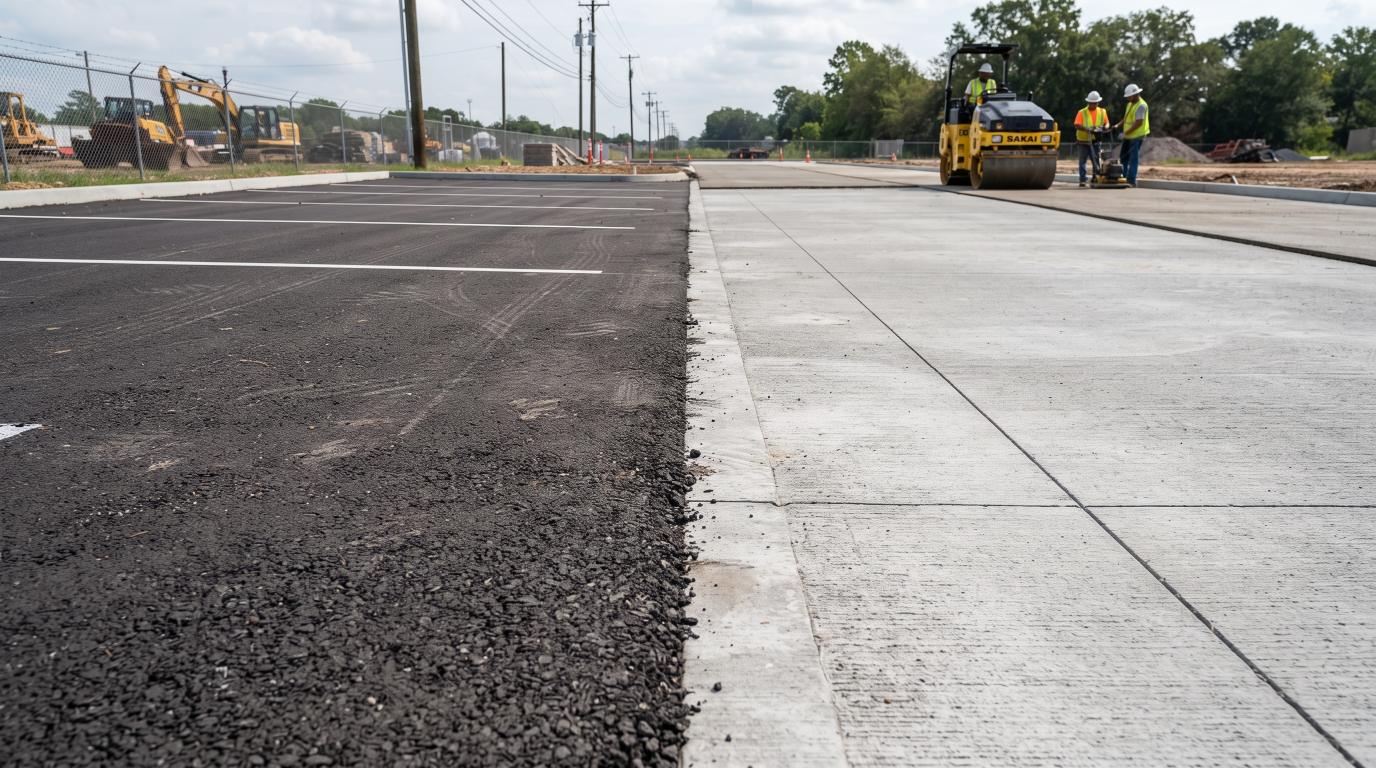
Asphalt and concrete are both widely used pavement materials, but they behave differently. The right choice depends on traffic, loading, site conditions, construction schedule, pavement design, maintenance expectations, and long-term plans.
|
Feature |
Asphalt Pavement |
Concrete Pavement |
|
Primary surface |
Asphalt binder and aggregate mixture |
Portland cement concrete |
|
Structural behavior |
Flexible |
Rigid |
|
Load distribution |
Through multiple pavement layers |
Largely through slab action |
|
Construction |
Placed and compacted | Placed, finished, jointed, and cured |
| Common rehabilitation | Patching, milling, overlays, resurfacing |
Crack, joint, partial-depth, or slab repairs |
|
Appearance |
Usually dark and continuous |
Usually light-colored with visible joints |
Asphalt can often be placed and reopened sooner because it does not require the same curing process as conventional concrete. Concrete provides a stiff slab that can perform well where concentrated or heavy loading is expected.
However, pavement should not be selected from the surface material alone. Soil conditions, base support, drainage, traffic, and maintenance plans are also part of the decision.
Where Pavement Is Commonly Used
Pavement is used anywhere a prepared surface must handle movement, weight, or repeated traffic. Roadways and highways are obvious examples, but pavement is also a major part of commercial and civil infrastructure. Parking lots require surfaces that can withstand parked vehicles, turning traffic, delivery trucks, and repeated loading near entrances and drive lanes.
Industrial and distribution sites may need pavement sections designed for heavy trucks, trailers, loading areas, and equipment movement. Airports use specialized pavement systems for runways, taxiways, aprons, and other areas subjected to aircraft loads. Paved surfaces are also used around public facilities, municipal properties, commercial sites, pedestrian areas, and transportation infrastructure.
Common Pavement Problems and Why They Develop
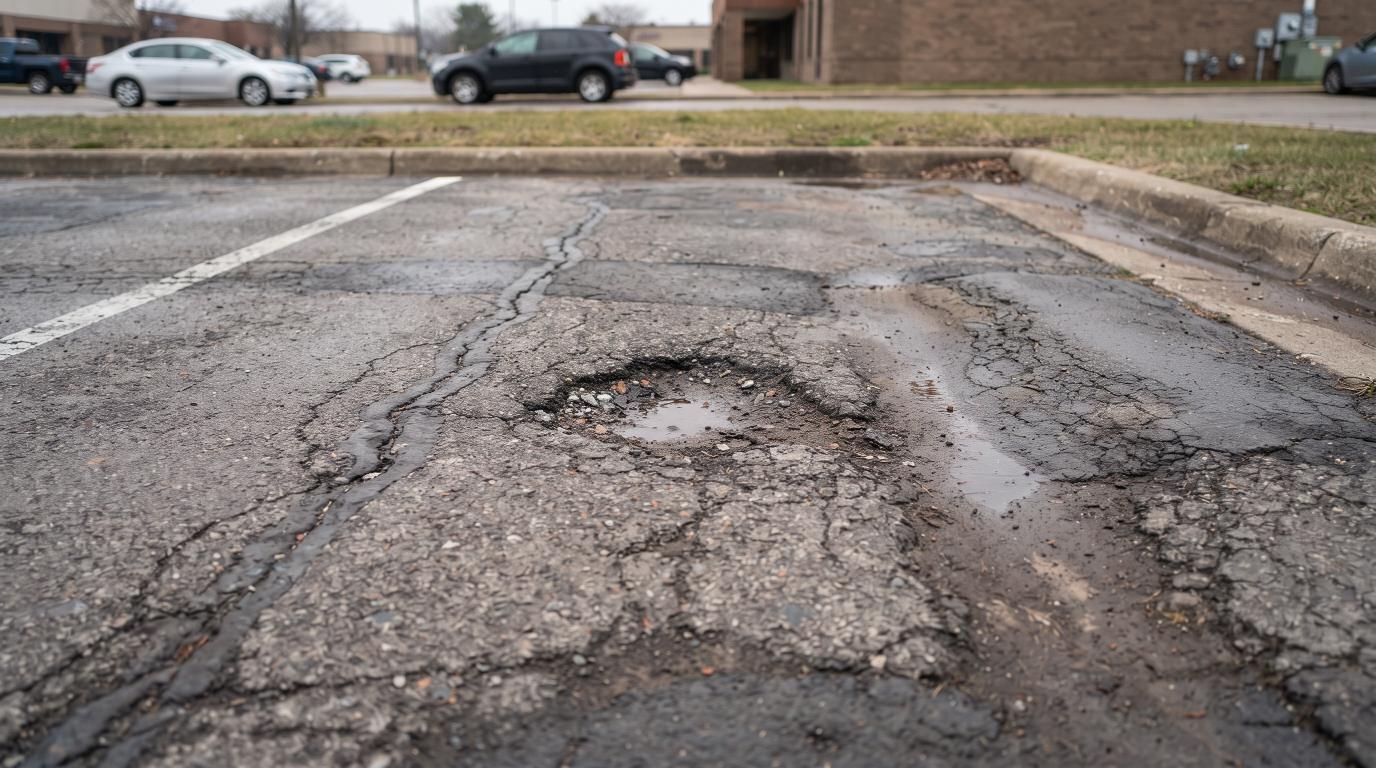
Pavement begins changing as soon as it is exposed to traffic and weather. Some deterioration is expected over time, but the type and speed of damage depend on pavement design, construction quality, drainage, loading, climate, and maintenance.
Cracking
Cracks can develop for several reasons. Some are related to temperature movement, while others may result from repeated traffic, weak support, aging materials, or movement in lower pavement layers. The pattern and location of a crack can help identify what may be happening beneath the surface.
Rutting
Rutting appears as longitudinal depressions in vehicle wheel paths. It may result from permanent deformation in the asphalt mixture, base material, subgrade, or a combination of pavement layers. The cause needs to be identified before selecting a repair method.
Potholes
Potholes form when pavement material breaks apart and pieces are removed by traffic. Water can make the problem worse by entering cracks or damaged areas and weakening material below the surface.
Settlement and Uneven Areas
Settlement may develop where pavement support is inconsistent. Poor compaction, weak soil, utility trench settlement, drainage problems, or changes in supporting materials can create low or uneven areas.
Pavement Maintenance and Service Life
There is no single number for how long all pavement will last. Two pavements made from the same surface material may have very different service lives because of differences in traffic, soil, thickness, drainage, weather, workmanship, and maintenance. Pavement condition should therefore be evaluated based on the type and severity of deterioration rather than age alone. Cracking, rutting, potholes, settlement, and surface wear can point to problems in the surface, supporting layers, drainage, or subgrade.
Maintenance methods may include crack treatment, localized patching, drainage corrections, surface repairs, milling, overlays, or larger rehabilitation work. The important step is identifying why the pavement is deteriorating before choosing a repair. Simply placing a new surface over a deeper structural problem may improve appearance without correcting the weakness underneath.
How Climate Affects Pavement in Colorado
Colorado pavement can experience demanding environmental conditions throughout the year. Temperature changes cause pavement materials to expand, contract, stiffen, and soften. Moisture can enter cracks or surrounding soils. During cold weather, water in pavement or soil may freeze and expand. Repeated freeze and thaw cycles can place additional stress on pavement that already has open cracks or drainage problems.
Strong sunlight and warm summer pavement temperatures can also affect asphalt materials over time. For this reason, Colorado pavement design should consider more than traffic alone. Drainage, material selection, soil preparation, compaction, construction timing, and maintenance all influence long-term performance.
Need Pavement Construction in Colorado?
Planning pavement for a road, parking area, commercial development, municipal site, or infrastructure project? Elite Surface Infrastructure provides asphalt paving, concrete, earthwork, underground utilities, grading, and related heavy civil construction services across Colorado.
ESI works with commercial, municipal, and government projects in Colorado Springs and communities throughout the Front Range. Contact ESI to discuss pavement conditions, construction requirements, site preparation, or the next stage of your project.
Conclusion
Pavement is a layered structural system built to provide a stable surface for traffic while spreading vehicle loads into the ground below. Depending on the design, it may include prepared subgrade soil, a subbase, a base course, and an asphalt or concrete surface.
The two main structural types are flexible pavement and rigid pavement. Flexible pavement normally uses asphalt and depends on several supporting layers to distribute loads. Rigid pavement uses a concrete slab that carries a larger share of the structural load. Composite pavement combines characteristics of both systems.
Pavement performance depends on more than whether asphalt or concrete is visible on top. Traffic, soil support, drainage, layer thickness, materials, compaction, weather, and maintenance all affect how the pavement performs. Understanding these parts makes it easier to evaluate pavement construction, compare pavement types, recognize signs of deterioration, and determine when maintenance or rehabilitation may be needed.
Frequently Asked Questions
Can pavement be installed over existing pavement?
Sometimes. An overlay may be possible when the existing pavement is still structurally sound. If there are deeper problems with the base, drainage, or subgrade, those issues may need repair first.
How thick should pavement be?
Pavement thickness depends on traffic loads, soil strength, material type, drainage, and the intended use of the site. Areas used by heavy trucks usually need a different pavement design than lighter-traffic areas.
What is pavement rehabilitation?
Pavement rehabilitation is work used to restore pavement that has more than minor surface damage. It may involve milling, overlays, structural repairs, drainage improvements, or rebuilding damaged sections.
What is the difference between pavement repair and pavement replacement?
Repair focuses on damaged areas while keeping most of the existing pavement in place. Replacement removes and rebuilds more of the pavement when damage is widespread or the underlying structure is no longer providing enough support.
Why does new pavement sometimes crack?
New pavement can crack because of temperature movement, settlement, weak support, drainage problems, construction conditions, or movement from existing cracks below an overlay. The cause depends on the type and pattern of cracking.
Does pavement need drainage underneath it?
Some pavement designs include subsurface drainage, while others depend mainly on surface grading and surrounding drainage systems. The correct approach depends on soil conditions, water exposure, pavement type, and site design.
Can pavement be built on weak soil?
Yes, but weak soil may need improvement before the pavement layers are installed. Depending on the site, this can involve stabilization, removal and replacement, additional aggregate, or other engineered solutions.