
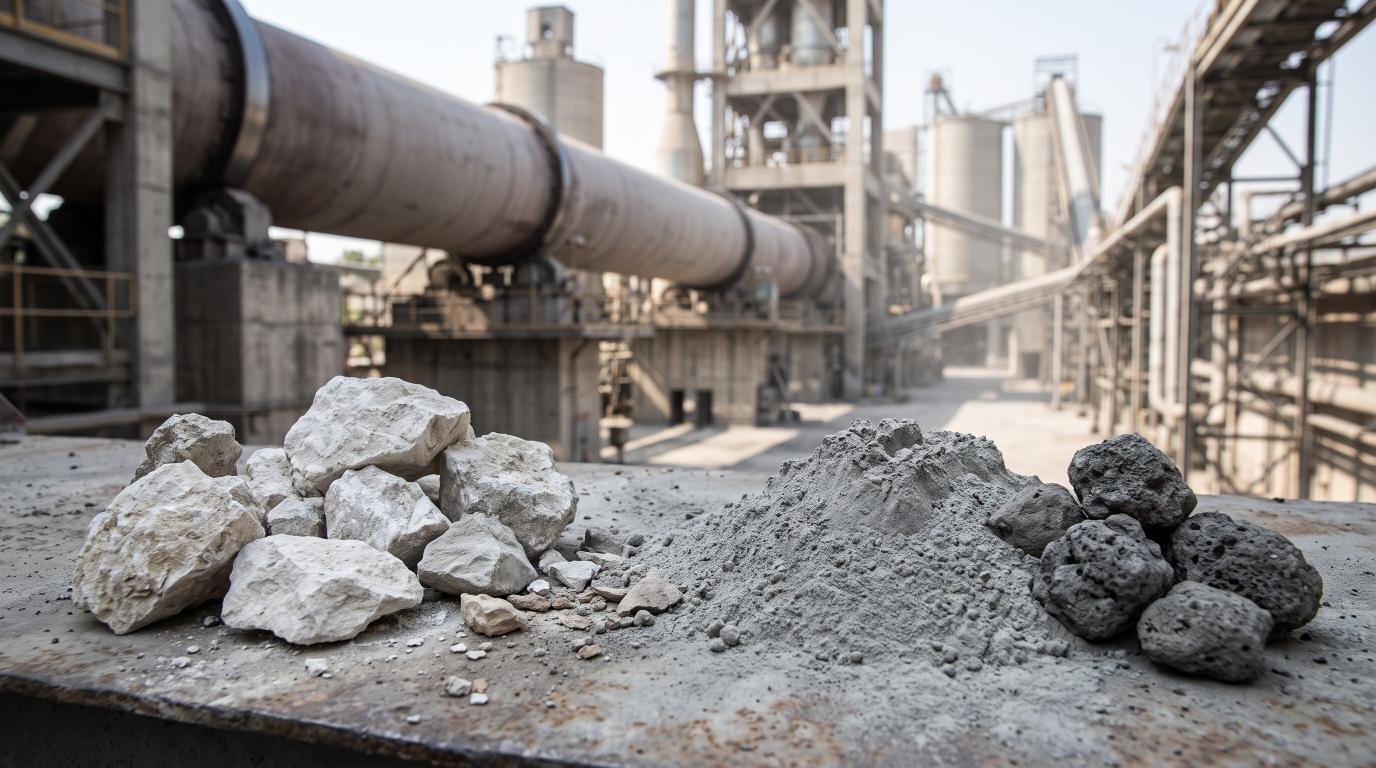
Cement is the binding ingredient that helps concrete become strong and solid. But what is Portland cement? It is a fine powder made mainly from limestone and other minerals that reacts with water to form a hard, durable material. It holds sand, gravel, and crushed stone together in concrete. Portland cement is widely used in foundations, roads, bridges, sidewalks, and other structures because of its strength and long-term performance.
In Colorado Springs, CO, construction projects face changing temperatures, moisture, and heavy traffic. At Elite Surface Infrastructure, we understand how the choice of cement and concrete materials affects the quality of sidewalks, pavements, and other concrete surfaces. Understanding Portland cement helps explain why proper materials, mixing, placement, and curing are important for construction work.
This guide covers the ingredients, manufacturing process, chemical properties, types, applications, and environmental impact of Portland cement. It also explains how to select and handle cement for different projects.
Understanding Portland Cement as a Hydraulic Binder
Portland cement is a hydraulic binder, meaning it hardens through a chemical reaction with water. Unlike materials that harden mainly through drying, cement develops strength as new chemical compounds form inside the mixture. When water is added, cement forms a paste that coats and connects sand and stone particles.
As the paste hardens, these materials become part of a solid mass. This reaction also allows cement to harden in damp conditions and underwater. The American Concrete Institute’s explanation of Portland cement describes its hydraulic calcium silicate composition and how it forms a binding material.
What Is Portland Cement Made Of?
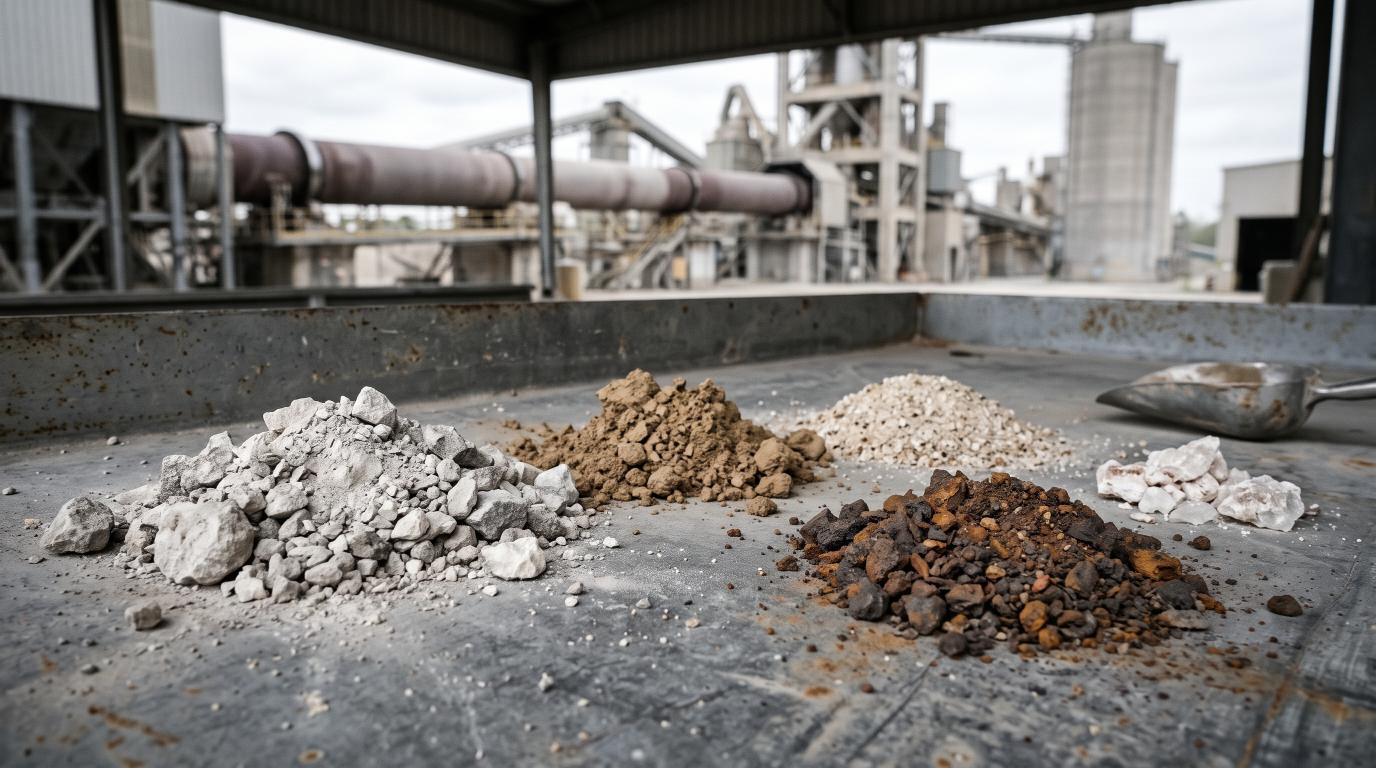
Portland cement is made mainly from limestone, clay, and other materials containing calcium, silica, alumina, and iron. These ingredients are heated and processed to produce cement clinker.
Limestone and Other Raw Materials
Limestone supplies calcium carbonate, the main source of calcium in cement production. Clay, shale, and other materials provide additional minerals needed to make clinker. The proportions depend on the available raw materials and the required cement properties.
Silica, Alumina, and Iron Oxide
Silica helps form compounds that give cement strength. Alumina affects chemical reactions and setting behavior, while iron oxide helps produce clinker during heating. Together, these materials influence cement’s strength development, heat generation, and chemical resistance.
Gypsum and Its Role in Cement Production
Gypsum is added during final grinding to control how quickly cement sets. Without enough gypsum, cement can stiffen too rapidly after water is added. A controlled setting time gives construction workers enough time to mix, place, and finish concrete.
The Main Chemical Compounds in Portland Cement
Portland cement contains four major chemical compounds that determine much of its behavior. Each reacts differently with water and contributes to strength, setting, or heat generation.
Tricalcium Silicate (C3S) : Tricalcium silicate, also called alite, reacts relatively quickly with water. It provides much of the early strength that concrete develops during its first few weeks.
Dicalcium Silicate (C2S) : Dicalcium silicate, known as belite, reacts more slowly. It supports strength development over longer periods and generally produces less heat than tricalcium silicate.
Tricalcium Aluminate (C3A) : Tricalcium aluminate reacts rapidly with water and releases considerable heat. Gypsum controls this reaction. Cement with a high C3A content generally has lower sulfate resistance.
Tetracalcium Aluminoferrite (C4AF) : Tetracalcium aluminoferrite contributes less to concrete strength than the silicate compounds. It also helps clinker form during manufacturing and influences cement color.
|
Compound |
Strength Development | Hydration Behavior |
Heat Generation |
|
C3S |
High early strength | Relatively fast | High |
| C2S | Later-age strength | Slow |
Lower |
|
C3A |
Limited direct contribution | Very fast without gypsum | Very high initially |
| C4AF | Small contribution | Moderate |
Moderate |
How Is Portland Cement Manufactured?
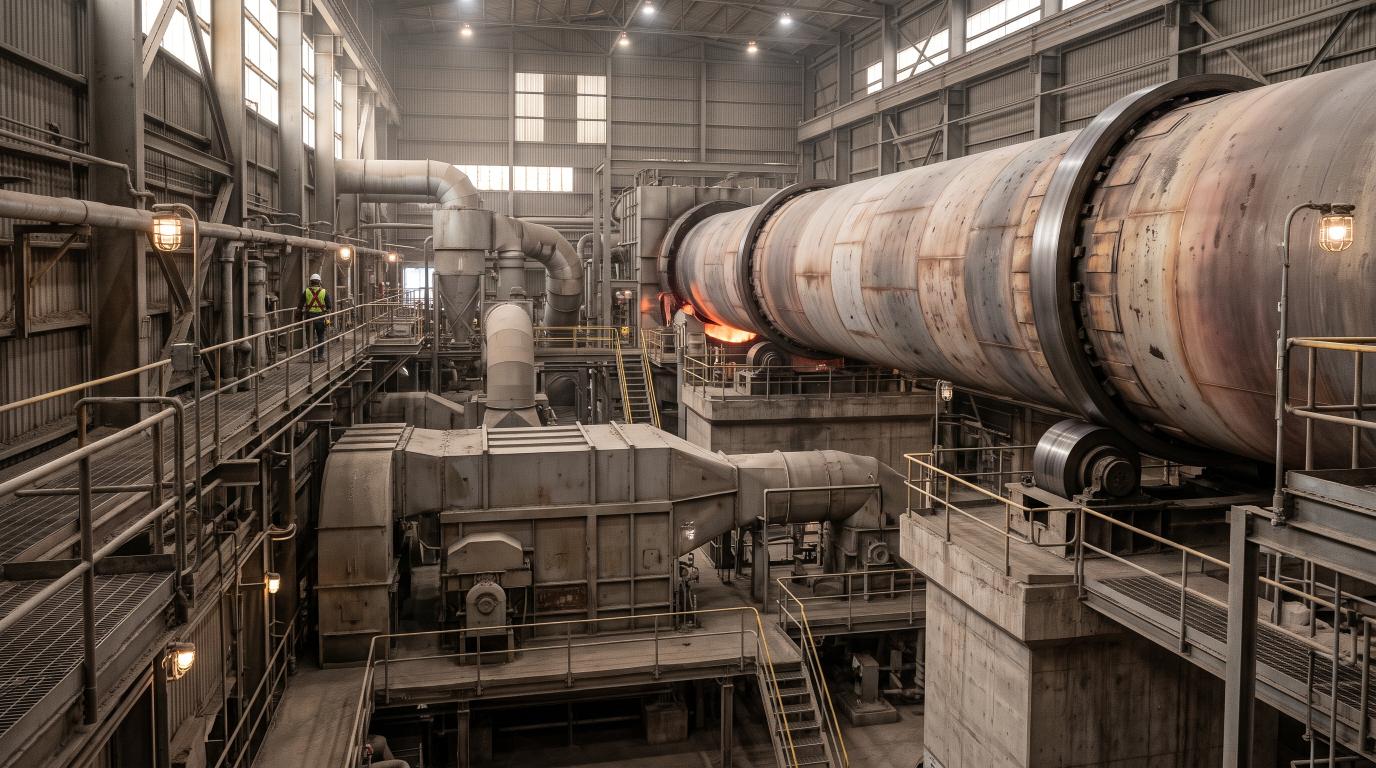
Portland cement is manufactured by crushing, blending, heating, cooling, and grinding raw materials. Each stage helps produce a powder with consistent chemical and physical properties. The American Cement Association’s manufacturing guide explains the main production stages used in cement plants.
1. Raw Material Extraction and Crushing
Limestone, clay, and other materials are extracted from quarries. Large pieces are crushed into smaller particles so they are easier to transport, measure, and process.
2. Raw Material Blending and Grinding
The crushed materials are ground into a fine mixture called raw meal. Manufacturers adjust its composition to obtain the required chemical balance.
3. Heating Materials in the Cement Kiln
The raw meal enters a kiln where temperatures reach approximately 2,700°F (1,450°C). Heat causes chemical reactions that form hard, rounded pieces called clinkers.
4. Clinker Cooling
The hot clinker is cooled using specialized equipment. Cooling helps control clinker properties while allowing some of the recovered heat to be reused.
5. Final Grinding With Gypsum
The cooled clinker is ground into a fine powder with gypsum and permitted additions. The finished cement is stored in protected silos before transportation.
How Is Portland Cement Clinker Examined for Quality?
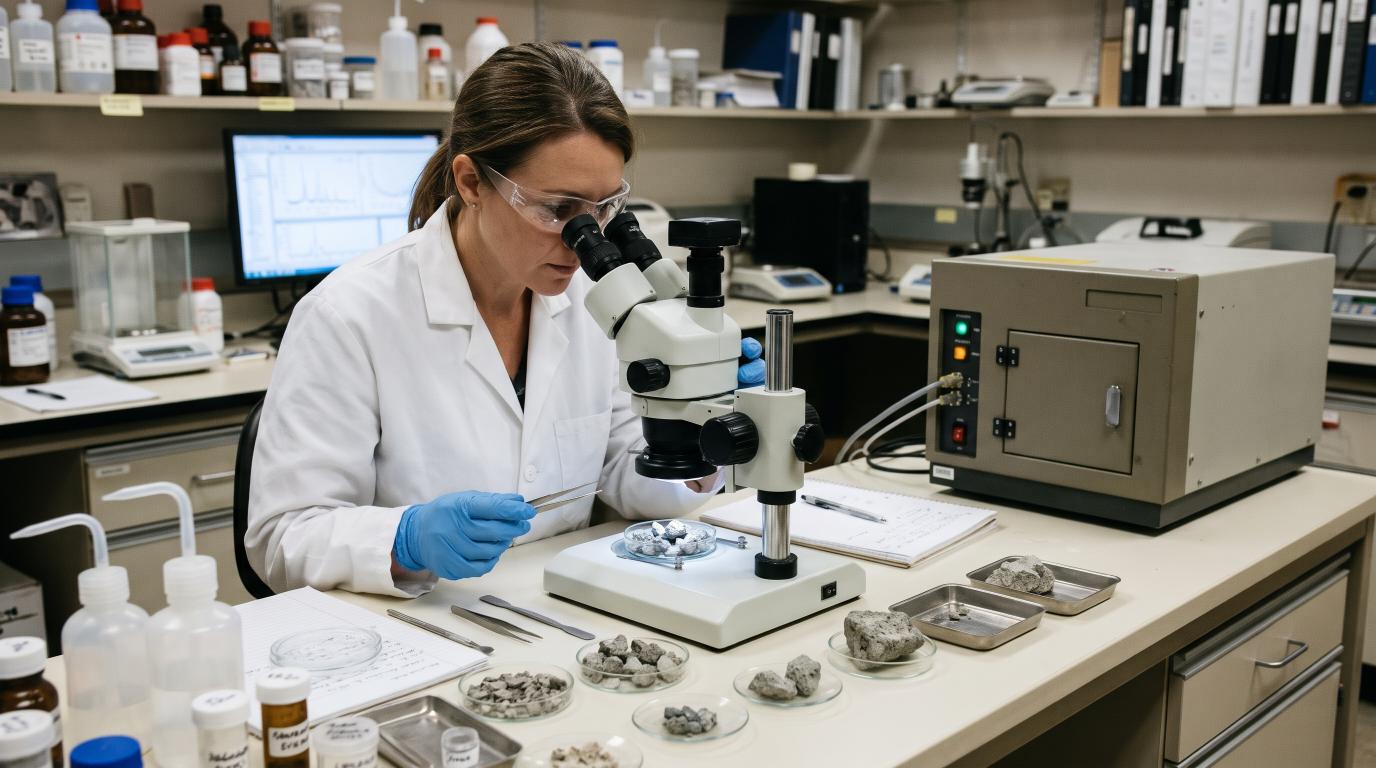
Manufacturers examine the clinker to check whether its mineral composition and structure meet production requirements. Microscopic examination helps identify mineral particles, their distribution, and signs of uneven heating. X-ray diffraction identifies and measures crystalline phases within the clinker.
The National Institute of Standards and Technology’s clinker research discusses how microscopy and X-ray diffraction are used to study cement clinker composition. These methods help manufacturers monitor consistency and identify problems before the cement reaches construction sites.
How Portland Cement Sets and Hardens
Portland cement sets and hardens through hydration, a chemical reaction between cement and water. Setting changes the mixture from workable to stiff, while hardening increases its strength.
What Happens During Cement Hydration?
Water reacts with cement compounds to form new materials, especially calcium silicate hydrate (C-S-H). C-S-H forms much of the hardened structure responsible for strength. This reaction begins shortly after mixing and continues as moisture remains available.
The Difference Between Setting and Hardening
Setting occurs when cement paste loses its plastic, workable condition. Hardening happens as the paste develops strength. Concrete may become firm within hours, but that does not mean it has reached its required structural strength.
How Hydration Affects Strength Development
Concrete normally gains considerable strength during its first 28 days, although hydration continues afterward. Adequate moisture and temperature control support this process. Proper concrete curing prevents early moisture loss and helps reduce cracking and surface weakness.
Physical and Chemical Properties of Portland Cement
Portland cement properties influence how concrete mixes, sets, hardens, and performs under different conditions. Engineers evaluate these properties through standardized laboratory testing.
Fineness and Particle Size
Finer cement particles provide more surface area for hydration. This often improves early strength development but can increase water demand and heat generation.
Consistency and Setting Time
Consistency describes the water needed to produce cement paste of a standard condition. Setting time measures how long cement takes to begin and complete its transition from workable paste to a stiff material.
Compressive Strength
Compressive strength measures a material’s ability to resist crushing loads. Cement strength is evaluated using standard mortar tests. Concrete strength also depends on aggregates, water content, mixture proportions, and curing.
Soundness and Volume Stability
Soundness describes whether hardened cement maintains acceptable volume stability. Excessive expansion from certain compounds can damage concrete and cause cracking after placement.
Heat of Hydration
Hydration releases heat as cement reacts with water. This heat helps concrete gain strength but requires careful control in large concrete structures to reduce temperature differences and cracking.
What Are the Different Types of Portland Cement?
Different Portland cement types are designed for general construction, early strength development, or exposure to sulfate-rich conditions.
Type I – General-Purpose Cement
Type I is suitable for common concrete work where no special cement properties are required. Typical applications include floors, sidewalks, and structural elements.
Type II – Moderate Sulfate Resistance
Type II provides moderate resistance to sulfate exposure. It is useful where soil or groundwater contains moderate sulfate concentrations. Specific heat limits must be requested when needed.
Type III – High Early Strength
Type III develops strength faster than conventional Portland cement. It is commonly selected for precast concrete and projects requiring early form removal.
Type IV – Low Heat of Hydration
Type IV was designed to limit heat generation in massive concrete structures. It is a historical classification and is not currently manufactured in the United States.
Type V – High Sulfate Resistance
Type V provides higher resistance to sulfate attack. It is used where exposure conditions require greater chemical resistance.
White Portland Cement
White Portland cement is manufactured using materials with low iron and other coloring compounds. It is commonly used in decorative concrete, architectural panels, and light-colored finishes.
Portland-Limestone and Other Blended Cements
Portland-limestone cement, designated Type IL, contains additional finely ground limestone. Other blended hydraulic cements use materials such as slag or pozzolans. These are classified under ASTM C595 rather than traditional ASTM C150 Portland cement types.
|
Cement Type |
Distinguishing Feature | Common Application |
| Type I | General-purpose performance |
Standard concrete construction |
|
Type II |
Moderate sulfate resistance | Foundations exposed to moderate sulfates |
| Type III | Faster early strength gain |
Precast and time-sensitive construction |
|
Type IV |
Low heat generation | Historical mass-concrete applications |
| Type V | High sulfate resistance |
Severe sulfate exposure |
|
White Portland |
Light color | Architectural finishes |
| Type IL | Additional limestone |
General concrete with reduced clinker content |
The ASTM C150 Portland cement specification identifies the requirements for traditional Portland cement classifications.
What Is Portland Cement Used For?
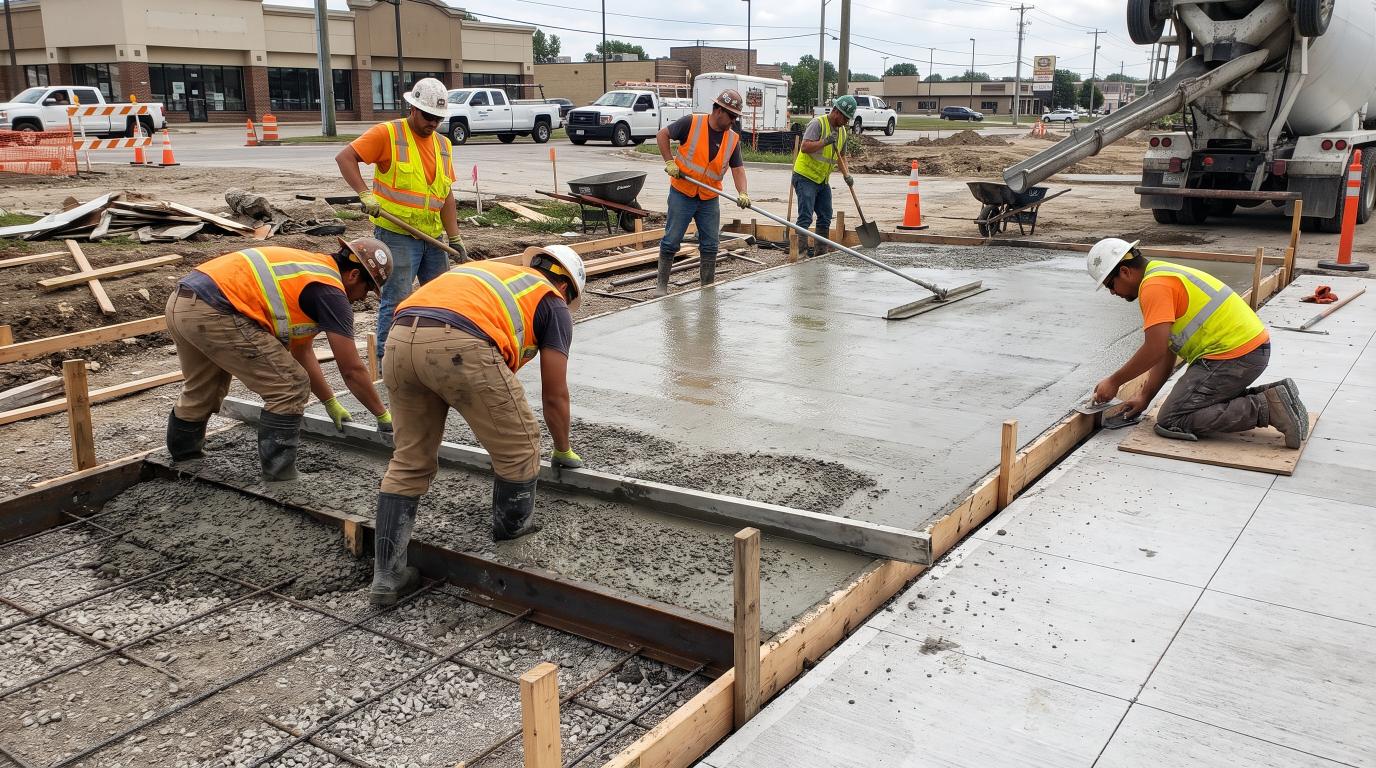
Portland cement is primarily used to produce concrete, mortar, and other cement-based building materials. Its binding properties make it useful in both structural and surface construction.
Concrete Foundations and Structural Construction
Concrete containing Portland cement is used for foundations, columns, beams, floors, and walls. The required mixture depends on structural loads, exposure conditions, and construction specifications.
Roads, Bridges, and Pavements
Portland cement concrete is used in roads, bridges, parking areas, and sidewalks. Correct mixture design, joint placement, and curing help these surfaces withstand traffic and weather exposure.
Mortar, Masonry, and Plastering
Portland cement is an ingredient in some masonry mortars and cement plasters. These mixtures combine cement with suitable sand, water, and other ingredients to achieve the required workability and strength.
Soil Stabilization and Infrastructure Projects
Cement can be mixed with certain soils to improve strength and reduce moisture-related movement. This process is used in road bases, construction platforms, and selected infrastructure projects.
Advantages and Limitations of Portland Cement
Portland cement is used in many construction projects, but its suitability depends on the type of work and the conditions it will face. Factors such as structural requirements, exposure to moisture, and construction methods influence how well the finished material performs.
Major Advantages in Construction
Portland cement offers dependable strength, broad availability, and compatibility with many concrete mixtures. It supports durable construction when the correct materials, water content, and curing methods are used. Specialized types also address certain environmental conditions.
Limitations and Performance Challenges
Cement manufacturing requires considerable energy and releases carbon dioxide. Concrete also has relatively low tensile strength and can crack from shrinkage, temperature changes, or structural loading. Reinforcement, joint design, and curing help manage these problems.
Environmental Impact of Portland Cement Production
Portland cement production creates carbon emissions through chemical reactions and the energy required to heat raw materials.
Carbon Emissions From Limestone Calcination
Heating limestone releases carbon dioxide as calcium carbonate breaks down into calcium oxide. This reaction is called calcination. The U.S. Environmental Protection Agency’s cement emissions guidance explains how these process emissions are calculated.
Energy Consumption in Cement Manufacturing
Cement kilns operate at extremely high temperatures and require substantial energy. Fuel use, grinding, and material transportation also contribute to the manufacturing process’s environmental impact.
Lower-Carbon Alternatives and Blended Cement Options
Portland-limestone cement and other blended cements can reduce the amount of traditional clinker needed. The American Cement Association’s research on blended cements explains that Type IL cement can reduce the cement’s carbon footprint by up to approximately 10% compared with conventional Portland cement.
Material Efficiency in Cement and Concrete Use
Efficient concrete design reduces unnecessary cement consumption. Accurate material quantities, suitable strength specifications, careful placement, and long-lasting construction help limit waste and avoid premature replacement.
Carbon Capture, Storage, and Utilization in Cement Production
Carbon capture systems aim to collect carbon dioxide from cement plant emissions. Captured carbon dioxide can be stored underground or used in suitable industrial processes. Costs, energy requirements, and infrastructure remain challenges for widespread use.
How to Choose the Right Portland Cement for a Project
Choosing cement depends on the project’s strength requirements, exposure conditions, and construction schedule.
Consider these factors before selecting a material:
- Structural needs: Identify the required concrete strength and intended application.
- Environmental exposure: Check sulfate levels, moisture, temperature, and freeze-thaw conditions.
- Construction schedule: Determine whether high early strength is necessary.
- Heat generation: Consider temperature control for large concrete placements.
- Specifications: Review applicable ASTM standards, engineering drawings, and local requirements.
The cement type should be selected alongside the full concrete mix design rather than as an isolated material choice.
How Should Portland Cement Be Stored and Handled?
Portland cement should be stored in a dry, enclosed area to prevent moisture from affecting its quality. Exposure to rain, humidity, or groundwater can start the hydration process before the cement is used, reducing its strength and performance. Cement bags should be kept in sealed packaging and placed on pallets above the ground to prevent direct contact with moisture. For bulk storage, weatherproof silos help protect cement from environmental conditions. Older stock should be used first, and bags should be stacked safely according to the manufacturer’s instructions.
Before using stored cement, check for hard lumps, unusual clumping, or partially solidified material, as these are signs of moisture damage. Cement that has hardened or absorbed significant moisture should not be used without checking its suitability. Proper handling is also important because cement dust can irritate the eyes and respiratory system, while wet cement can damage the skin. Workers should wear protective gloves, safety glasses, and suitable respiratory protection when needed. OSHA’s concrete safety guidance explains that prolonged contact with wet cement can cause chemical burns and other skin injuries.
Conclusion
Understanding what Portland cement is involves knowing its ingredients, chemical reactions, manufacturing process, and construction uses. This hydraulic binder is made mainly from limestone and other minerals that form clinker during high-temperature processing.
Different Portland cement types provide different strength and resistance properties. Selecting suitable materials, following construction specifications, and using proper curing methods help concrete achieve reliable long-term performance.
Explore More About Cement and Concrete Construction
Portland cement is only one part of a successful concrete project. Site preparation, concrete mixture selection, placement, finishing, and curing all affect the finished surface. At Elite Surface Infrastructure in Colorado Springs, CO, our team provides concrete flatwork and construction services for commercial, municipal, and infrastructure projects. Explore our concrete construction services to learn more about our work, or contact Elite Surface Infrastructure to discuss your construction requirements.
Frequently Asked Questions
Is Portland cement the same as concrete?
No. Portland cement is a binding ingredient, while concrete is a mixture of cement, water, sand, and larger aggregates. Cement helps hold these materials together as concrete hardens.
Does Portland cement expire?
Portland cement does not have one universal expiration date. Its usable storage life depends on packaging, moisture exposure, and manufacturer guidance. Cement that has hardened or absorbed significant moisture should not be used.
Is Portland cement waterproof?
Hardened Portland cement is not automatically waterproof. Properly designed concrete can resist water penetration, but additional waterproofing measures may be needed depending on the application.
Can Portland cement be used without sand?
Yes, cement can be mixed with water to form a paste for certain specialized uses. However, cement paste alone is not a suitable replacement for normal concrete or mortar because it can shrink and crack.
What is the difference between Portland cement and masonry cement?
Portland cement is primarily a hydraulic binder used in concrete and other mixtures. Masonry cement is formulated specifically for mortar work, with ingredients that improve workability and handling.
What does the word clinker mean in Portland cement?
Clinker refers to the hard, rounded material formed when raw minerals are heated inside a cement kiln. Manufacturers grind clinker with gypsum and permitted additions to produce Portland cement.