
Yes, you can put asphalt over concrete. It is a popular way to improve a driveway or parking lot without removing the old concrete first. This can save both time and money. However, the concrete underneath must be in good condition and properly prepared before the asphalt is installed. If done correctly, an asphalt overlay can last 15 to 25 years with regular maintenance.
This guide covers everything you need to know before making that decision. Why homeowners choose this option, how the installation is done, what it costs, and how long it lasts. If you are in Colorado Springs and need an honest assessment from a local expert, our team is here to help.
Can You Put Asphalt Over Concrete? (How It Works)
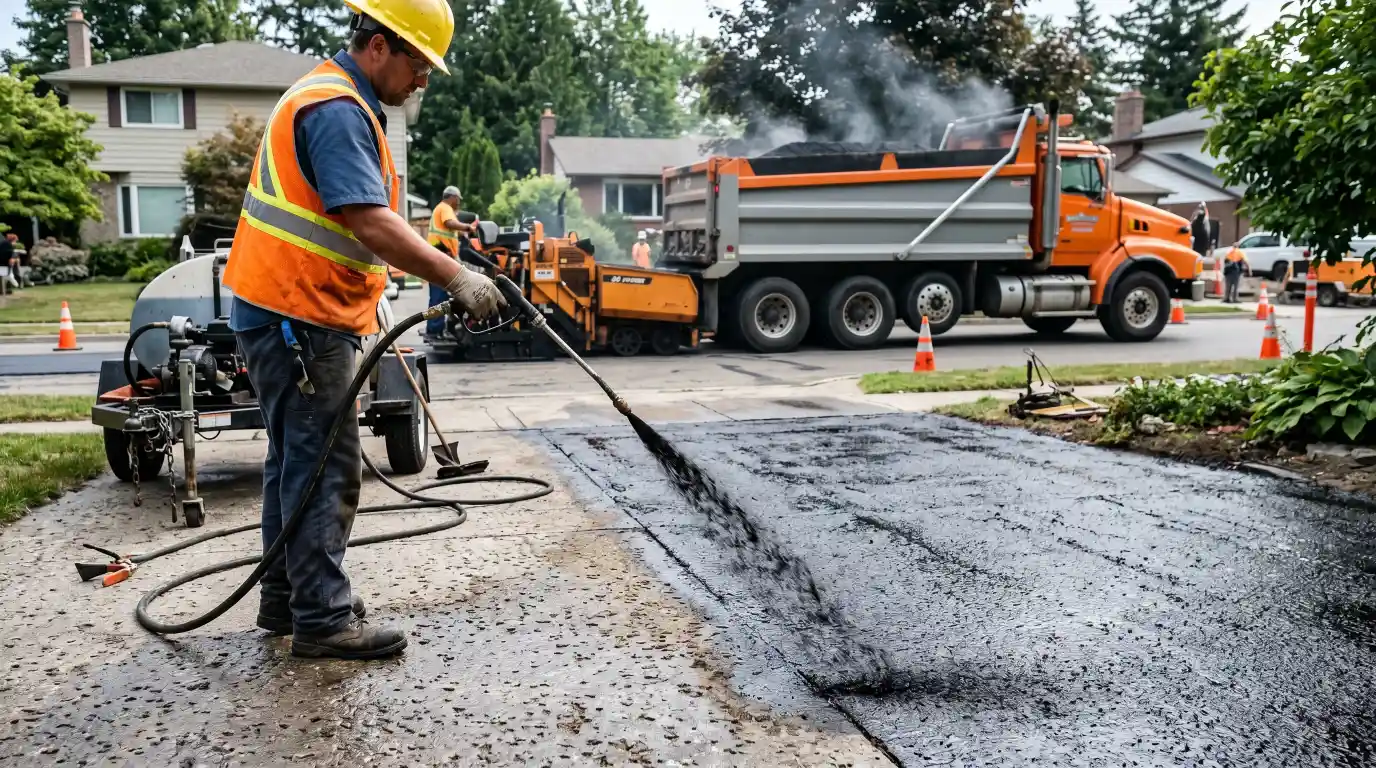
Laying asphalt over an existing concrete surface is a legitimate and widely used method in both residential and commercial paving. It is called an asphalt overlay, and it involves applying a layer of hot-mix asphalt directly on top of the existing concrete.
When done correctly on a suitable surface, an overlay can last 15 to 20 years and cost 30 to 50 percent less than tearing out the concrete and starting fresh.
When Putting Asphalt Over Concrete Is a Good Idea
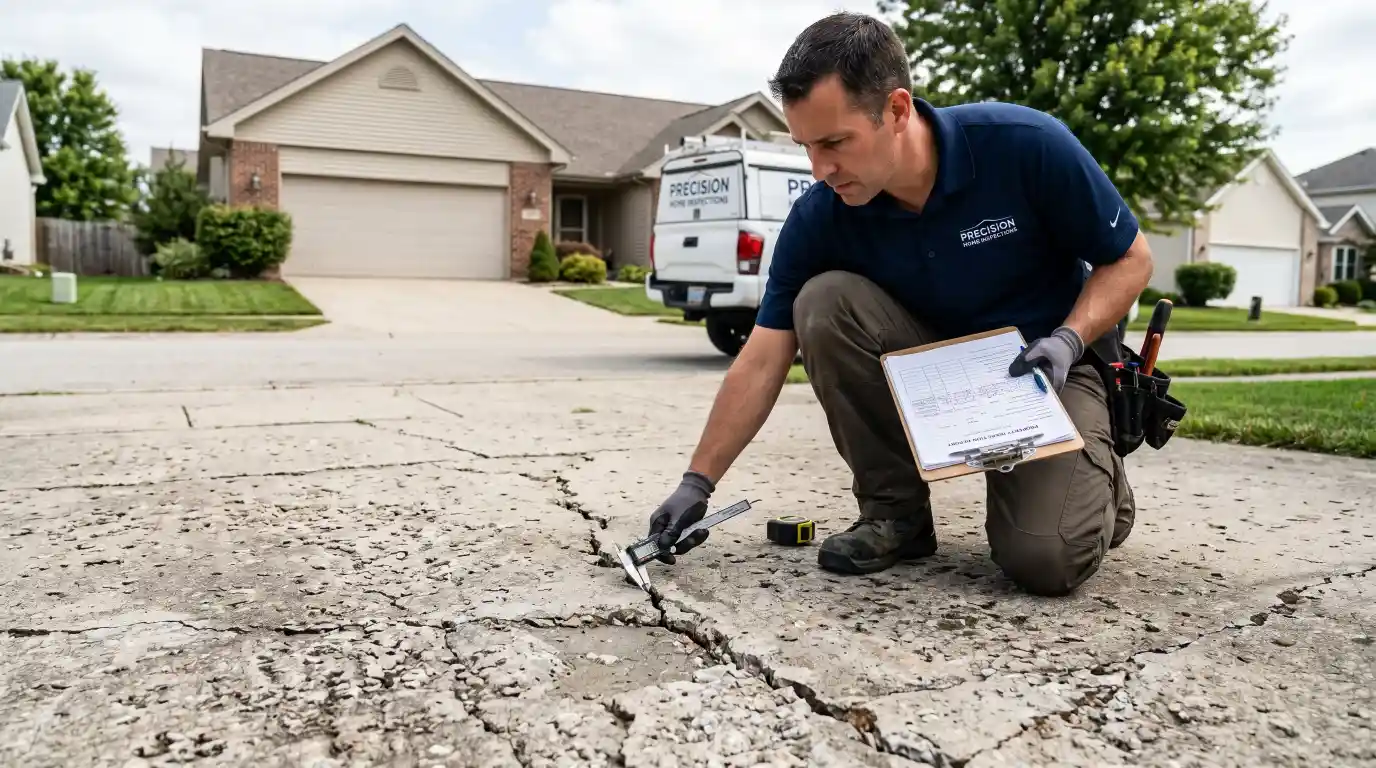
Asphalt over concrete is a good idea when the existing concrete is still structurally solid and has not cracked through completely or started sinking. Minor surface cracks that are less than a quarter inch wide are not a dealbreaker as long as they are sealed before the overlay goes down. The base beneath the concrete also needs to be stable and well-compacted, meaning it has not shifted, eroded, or settled unevenly over time.
If water moves away from the driveway naturally and does not pool on the surface or collect along the edges, an overlay has a much better chance of lasting. When all conditions are met, the existing concrete becomes a strong base for asphalt and can deliver 15–20 years of performance.
When Asphalt Should NOT Be Installed Over Concrete
Asphalt should not be installed over concrete that has major structural damage, severe cracking or an unstable base, as these problems can quickly cause the new surface to fail.
Severe Cracking and Concrete Failure
If your concrete has large, deep cracks running across entire sections or shows signs of structural collapse, an asphalt overlay will not fix the problem. Those cracks will push through the new asphalt surface within a short time. Putting fresh asphalt over badly damaged concrete is like painting over a crumbling wall. It looks fine for a while and then falls apart.
Uneven Settlement or Sinking Sections
If sections of your concrete have sunk or shifted unevenly, the problem lies with the base beneath. Overlaying asphalt on top of an uneven or sunken surface will not correct the grade, and the sinking will continue. You will end up with an uneven asphalt surface that develops cracks and drainage problems quickly.
Major Drainage Problems
If water already pools on your concrete and has nowhere to drain, adding a layer of asphalt on top will not solve that. It may actually make it worse by raising the surface height and changing the flow of water toward garage doors, foundations, or sidewalks. Drainage problems need to be fixed before any overlay is considered.
Extensive Spalling and Surface Damage
Spalling is when the top layer of concrete flakes or chips away, leaving a rough, pitted surface. If that damage is widespread, the asphalt overlay will not have a smooth, uniform surface to bond to. Poor bonding leads to early delamination, where the asphalt peels away from the concrete underneath it.
Weak Base Conditions
If the soil or subgrade beneath your concrete has eroded, shifted, or become saturated with water, the entire structure above it is compromised. No amount of surface work will fix a bad foundation. In this case, full removal and rebuilding from scratch is the only real option.
Benefits of Asphalt Over Concrete
Asphalt over concrete can improve appearance, reduce costs, and create a smoother driving surface.
Lower Cost Than Full Replacement An asphalt overlay costs significantly less than tearing out the old concrete, hauling it away, and pouring a brand new driveway. Many homeowners choose an asphalt over concrete driveway because it improves appearance and reduces cost.
Faster Installation Because there is no demolition phase, an overlay job is much faster. In most cases, the entire project is completed in one day, and the surface is ready for vehicle use within 24 to 48 hours.
Improved Appearance A fresh layer of dark asphalt completely transforms the look of an old, stained, or cracked concrete driveway. It gives the property a clean, well-maintained appearance at a lower cost.
Smoother Driving Surface Asphalt is naturally smoother than concrete and provides a more comfortable surface for driving and walking. It also tends to be quieter under tire noise.
Easier Future Repairs When asphalt eventually develops cracks or potholes, repairs are simpler and less expensive than concrete repairs. Crack filling, patching, and sealcoating are all straightforward maintenance tasks.
Understanding Reflective Cracking in Asphalt Over Concrete
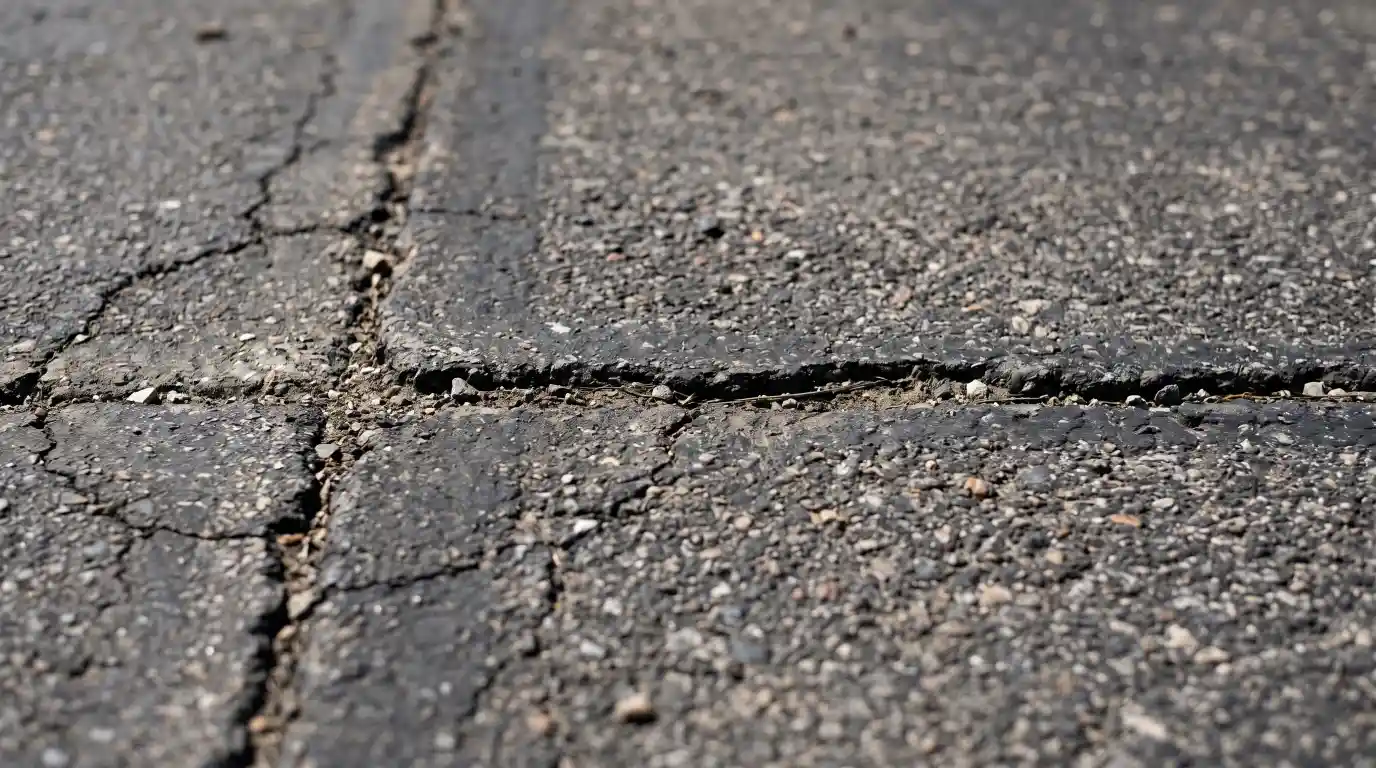
Reflective cracking happens because concrete expands and contracts with temperature changes and has built-in expansion joints to manage that movement. When asphalt is laid on top, it does not have those same joints, so as the concrete below moves, that stress travels upward and causes the asphalt to crack in the same pattern over time.
The good news is that it can be delayed significantly by using a thicker asphalt layer, applying a fiberglass reinforcing mat between the two surfaces, and sealing cracks as soon as they appear. It will not be eliminated completely, but with regular maintenance it can be managed for many years.
How Asphalt Is Installed Over Concrete
Installing asphalt over concrete requires proper preparation, repairs, and paving techniques to ensure a strong and long-lasting surface. The process starts by inspecting the concrete for cracks, damage, or drainage issues and repairing any weak areas. Then the surface is cleaned, a tack coat is applied, and hot-mix asphalt is laid and compacted for a smooth, durable finish.
After installation, proper curing time is essential for long-term performance. The asphalt should be left undisturbed for 24 to 48 hours before light use, while heavy vehicles should be avoided for about a week. Over the following weeks, the surface continues to harden, ensuring better strength and durability when maintained correctly.
How Thick Should Asphalt Be Over Concrete?
For a standard residential driveway, a minimum of two inches of compacted hot-mix asphalt is recommended. If the driveway needs to support heavier loads like trucks or RVs, going up to three inches is the smarter choice. Thicker asphalt absorbs more stress, delays reflective cracking, and simply lasts longer.
Going too thin is one of the most common mistakes homeowners make when choosing an overlay. Anything less than one and a half inches will crack much sooner, especially at concrete expansion joints where movement is greatest.
How Long Does Asphalt Over Concrete Last?
A properly installed asphalt overlay on sound concrete typically lasts 15 to 20 years, and some well-maintained ones reach 25 years. Without maintenance, that drops to 8 to 10 years. Climate, overlay thickness, traffic loads, and the condition of the concrete beneath all play a role in where your driveway lands in that range.
Sealcoating every two to three years, filling cracks promptly, and keeping heavy vehicles off the surface are the key steps to getting the most out of it. When you start seeing widespread reflective cracking, soft spots, or recurring potholes, the overlay is likely nearing the end of its life.
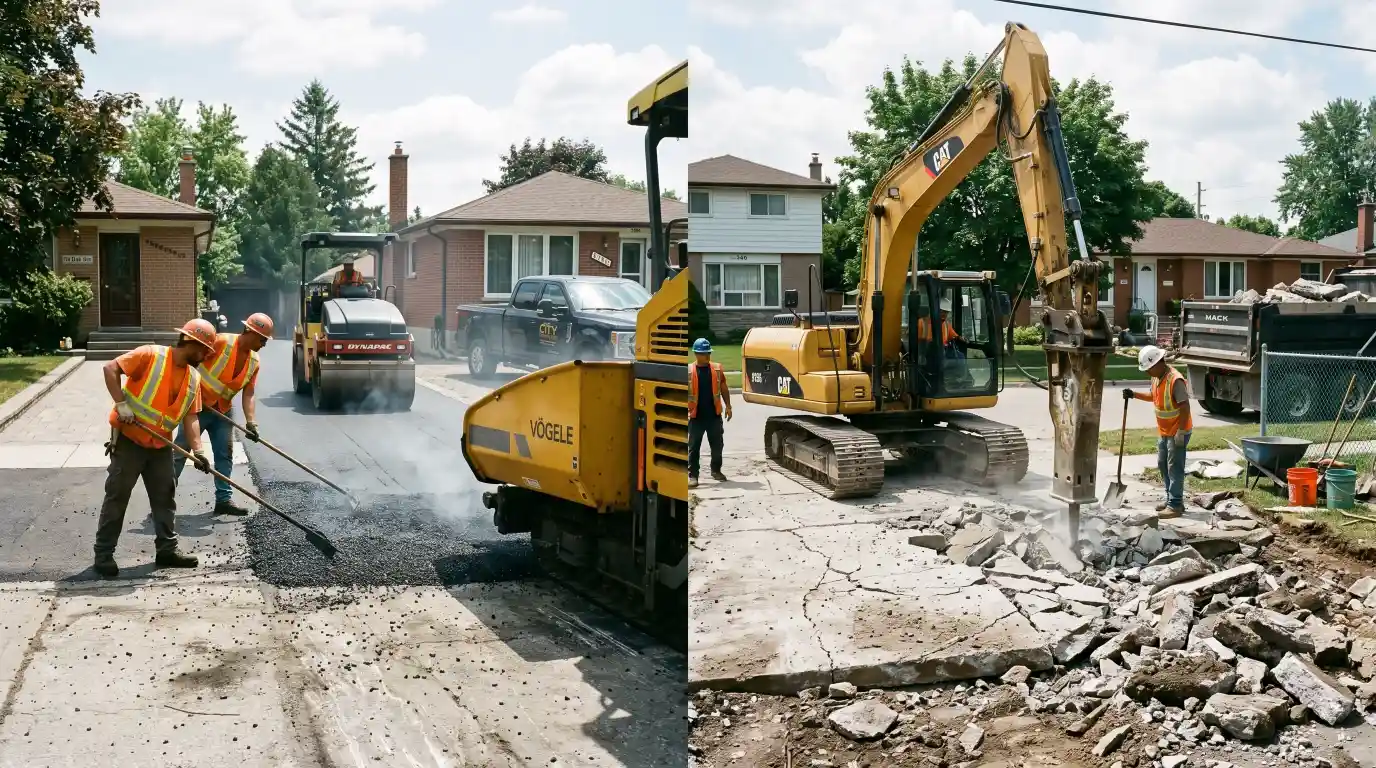
Asphalt Over Concrete vs Removing Concrete First
|
Feature |
Asphalt Over Concrete |
Remove Concrete First |
|
Cost |
30 to 50% cheaper |
Significantly more expensive |
|
Installation Time |
Usually done in one day |
3 to 5 days or more |
|
Demolition Required |
No |
Yes |
|
Long-Term Performance |
Good if base is solid |
Best possible result |
|
Base Quality |
Depends on existing concrete |
Built fresh from scratch |
|
Reflective Cracking Risk |
Yes, over time |
No |
|
Best For |
Sound concrete with surface damage |
Failed base or structural damage |
|
Drainage Correction |
Limited |
Full control |
Common Mistakes That Cause Asphalt Over Concrete Failure
- Skipping proper surface preparation, which is the most common cause of failure
- Not cleaning the concrete properly, leading to poor asphalt bonding and delamination
- Ignoring existing issues like cracks, sinking, or drainage problems before overlaying
- Leaving cracks unsealed, which later show through the new asphalt surface
- Failing to stabilize sunken or uneven concrete sections
- Not fixing drainage issues, causing early surface damage and water pooling
- Using asphalt that is too thin (under 1.5 inches), which reduces lifespan
- Trying to save cost upfront but ending up with faster cracking and failure
How to Maintain an Asphalt Overlay Over Concrete
Apply the first sealcoat six to twelve months after installation, then reseal every two to three years after that. Sealcoating protects the surface from UV damage, water, and oil while slowing the oxidation process that makes asphalt brittle. Fill any cracks as soon as they appear.
Reflective cracks from the concrete joints below are likely to show up eventually, and sealing them early prevents water from getting in and accelerating the damage. Check drainage around the driveway after heavy rain. If water is pooling at the edges or near the garage door, address the grading issue before it leads to base damage.
Ready to Upgrade Your Driveway in Colorado Springs?
Whether your concrete is still solid and just needs a fresh surface or it has reached the point where full replacement makes more sense, Elite Surface Installations will give you a straight answer. We serve homeowners across Colorado Springs with professional asphalt overlays, full driveway replacements, and paving services built to hold up against Colorado’s tough winters and intense summer heat. Do not spend money on the wrong solution. Contact us and know exactly what your driveway needs before any work begins.
Conclusion
So, can you put asphalt over concrete? The answer depends on the condition of the existing driveway. Putting asphalt over concrete is a smart, cost-effective solution when the right conditions are in place. If your concrete is structurally sound, stable, and has proper drainage, an asphalt overlay can create a smooth driveway that lasts 15–20 years at a lower cost than full replacement.
The condition of your existing concrete determines everything. Surface-level damage and minor cracks are manageable. Structural failure, sinking sections, and base problems are not.
Frequently Asked Questions
Can asphalt stick directly to concrete?
Yes, asphalt bonds to concrete when the surface is properly cleaned and a tack coat is applied before installation. The tack coat acts as an adhesive layer that helps the hot-mix asphalt grip the concrete surface. Without it, the risk of the asphalt delaminating or separating from the concrete increases significantly.
Will cracks in concrete show through asphalt?
This is called reflective cracking and it is the most well-known challenge of asphalt overlays on concrete. Wherever the concrete has an expansion joint or a crack, the movement of the concrete below will eventually travel up through the asphalt layer. Thicker overlays, reinforcing fabric mats, and prompt crack sealing can delay this but not eliminate it entirely.
Is asphalt over concrete cheaper than replacement?
An overlay is typically 30 to 50 percent less expensive than full removal and replacement. The savings come from skipping demolition and disposal costs. However, if the concrete beneath is failing, an overlay may cost more in the long run because it will fail earlier and still need to be replaced.
Can you put asphalt over a cracked concrete driveway?
It depends on the type and severity of the cracks. Minor surface cracks that are less than a quarter inch wide and do not indicate base failure can be filled and sealed before the overlay is applied. Severe structural cracking, alligator patterns, or cracks caused by base failure are a different story. Covering those with asphalt will not solve the underlying problem.
How thick should asphalt be over concrete?
For a standard residential driveway, a minimum of two inches of compacted hot-mix asphalt is recommended. Driveways that need to support heavier loads like trucks or RVs should go to three inches. Thinner overlays crack sooner, especially at concrete expansion joints.