
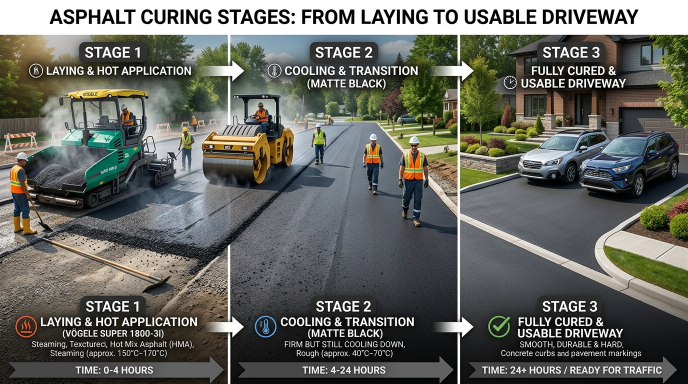
Asphalt typically takes about 24 to 48 hours to dry enough for light foot traffic, while you should wait 3 to 7 days before driving on it. However, it does not fully harden right away; complete curing usually takes up to 30 days, depending on weather, thickness, and installation conditions.
The difference between drying and curing is important: asphalt may feel firm on the surface within a day or two, but it is still soft underneath. In areas like Englewood, CO, it continues to strengthen over several weeks, which is why avoiding heavy loads and taking proper care during the first month is essential for long-term durability.
Can You Use New Asphalt Right Away?
No and this is where most people go wrong. Fresh asphalt comes off the paver at temperatures between 275°F and 325°F. As it cools, it stiffens, but the oils and binders inside remain active and pliable for far longer than the surface looks. Walking on it too soon leaves footprints. Driving on it too soon causes ruts, tire marks, and structural depressions that are difficult and costly to fix.
The general rule of thumb is to stay off new asphalt completely for the first 24 hours. After that, foot traffic is fine, but hold off on vehicles for at least another day or two.
Asphalt Drying vs. Curing Why It Matters
These two terms are often used interchangeably, but they actually describe very different stages of the asphalt lifecycle. Understanding the difference is key to avoiding early damage and extending the life of your pavement.
Drying
Drying refers to the initial surface cooling phase, where the asphalt becomes firm enough for limited use. This usually happens within 24 to 48 hours, depending on weather conditions. At this stage, the surface may feel solid underfoot and no longer appear tacky, but it is still not strong enough for vehicle traffic.
Curing
Curing, on the other hand, is a much slower internal process. During curing, the asphalt binders (the petroleum-based oils that hold the mix together) gradually oxidize and harden throughout the full depth of the pavement. This process develops the long-term structural strength of the surface and can take up to 30 days or more.
Asphalt Usage Timeline (Walk, Drive, and Full Cure)
| Timeframe | What’s Safe |
| 0–24 hours | Nothing — stay completely off |
| 24–48 hours | Foot traffic only |
| 48–72 hours | Passenger vehicles (with caution) |
| 1–2 weeks | Normal daily traffic patterns |
| 30 days | Light sealing window opens |
| 6–12 months | Full structural cure complete |
Keep in mind these are averages. Hot summer days push drying time longer; cool, dry fall days can speed it up. Always defer to your contractor’s specific guidance for your project.
What Affects Asphalt Drying Time?
Several key factors influence how quickly asphalt moves through its drying and curing stages. While the surface may appear ready within a short time, these conditions determine how fast it actually stabilizes underneath.
Weather and Temperature
Temperature is the single biggest factor. Asphalt needs heat to stay workable during installation, but after paving, cooler temperatures actually help it set faster. The sweet spot for installation and curing is between 50°F and 85°F. Below 50°F, the asphalt stiffens before it can properly compact, leading to structural issues. Above 90°F, the surface stays soft and pliable long after it should have set, making it vulnerable to scuffing and rutting.
Thickness and Installation Type
A thicker layer of asphalt retains heat longer, which extends the drying window. A standard residential driveway is typically 2 to 3 inches thick; commercial lots are often 4 inches or more. Thicker pours take longer to cool all the way through, even when the surface feels firm. Multiple-layer installations (a binder course plus a surface course) also introduce additional curing time between layers.
Sunlight and Shade
This one surprises many homeowners. Asphalt in direct sunlight can actually stay soft longer, because the dark surface absorbs heat aggressively. A south-facing driveway in July may still be impressionable in the afternoon heat weeks after installation. Shaded areas, by contrast, cool more steadily and may reach a stable hardness sooner though heavy tree canopy can also introduce problems with moisture and debris.
Drainage and Site Conditions
Good drainage accelerates curing by keeping the surface and sub-base dry. Standing water, poor grading, or a saturated sub-base all interfere with the curing process and can weaken the asphalt’s structural foundation. If your installation site had drainage issues before paving, it’s worth confirming those were addressed properly before the crew arrived.
Weather Conditions and Their Impact on Drying
Weather plays a major role in how quickly asphalt cools, stabilizes, and cures. Even small changes in temperature or moisture levels can significantly affect performance and long-term durability.
Hot Weather
High heat is the enemy of fresh asphalt. In temperatures above 90°F, the surface can remain soft and susceptible to damage for several days longer than normal. Avoid parking in the same spot repeatedly, turning steering wheels while the car is stationary, or placing any heavy equipment on the surface. Consider scheduling paving projects for spring or early fall to avoid peak summer heat.
Cold Weather
Cold weather shortens the window during which asphalt can be properly installed and compacted. Below 50°F, most contractors won’t pave at all, and for good reason cold asphalt sets too quickly, preventing proper compaction and leading to a brittle, crumbly surface. If you’re in a colder climate, late spring through early fall is the ideal window for any asphalt work.
Rain and Humidity
Asphalt should never be installed on a wet surface or during rain. Moisture between the sub-base and the asphalt mat compromises the bond and can cause long-term delamination and cracking. If rain falls on fresh asphalt that’s already been laid and has cooled to near-ambient temperature, it generally isn’t a problem but newly poured, still-warm asphalt and rain is a bad combination. High humidity can also slow the overall curing process.
What Happens If You Use Asphalt Too Soon?
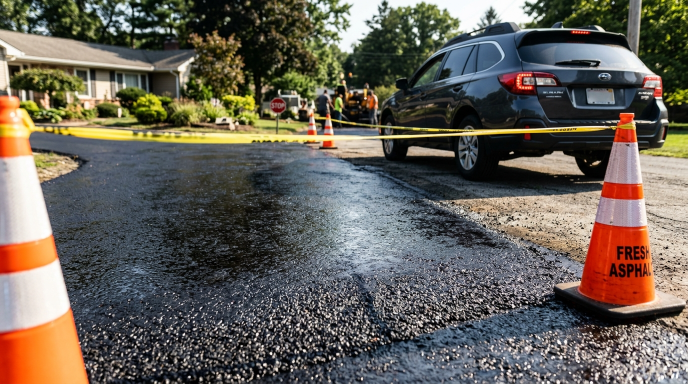
Using asphalt before it has properly cooled and stabilized can lead to both visible surface damage and long-term structural problems. While it may look ready on the outside, the material underneath is still soft and highly vulnerable during the early curing stage.
Surface Impressions and Ruts
Heavy vehicles or even repeated parking in the same spot can create permanent depressions in fresh asphalt. Because the material is still pliable, it can easily deform under pressure, especially during the first few days.
Tire Scuff Marks
Turning your steering wheel while the vehicle is stationary is one of the most common causes of surface damage. On uncured asphalt, this can leave dark swirl marks and scuffs that are extremely difficult, often impossible to fully remove.
Cracking and Edge Damage
Driving too close to the edges of new asphalt before it has gained sufficient strength can cause crumbling and edge breakage. These weak points often become the starting locations for future cracking and deterioration.
Reduced Long-Term Durability
Even when early damage isn’t immediately visible, premature use can weaken the internal structure of the pavement. This can lead to early cracking, potholes, and a significantly reduced overall lifespan of the asphalt surface.
Signs Your Asphalt Is Not Ready Yet
Not sure whether it’s safe to use? Trust these indicators over the clock:
- The surface feels soft or springy underfoot. Press down firmly with your heel. If it gives, it’s not ready.
- You can see or feel indentations from footsteps. Human weight alone shouldn’t leave marks on properly dried asphalt.
- The surface is still shiny or very dark. Fresh asphalt loses some of its gloss as it cures. A mirror-like sheen often means it’s still warm inside.
- It’s a hot afternoon. Even asphalt that seemed fine in the morning can soften again on a hot afternoon, especially in the first few weeks.
- Your contractor told you to wait. When in doubt, follow the professional’s recommendation over any general timeline.
How to Protect New Asphalt During Curing
A little care during the curing period goes a long way toward getting the most out of your investment.
- Keep vehicles off as long as possible. The longer you wait beyond the minimum 48 to 72 hours, the better.
- Don’t park in the same spot repeatedly. Rotate where vehicles are parked during the first 30 days to distribute load evenly.
- Avoid sharp or concentrated loads. Kickstands, trailer jacks, high heels, and lawn furniture legs can all leave marks. Place boards or pads under these contact points.
- Keep the surface clean. Oil, gasoline, and other petroleum-based fluids dissolve asphalt binders. Clean up any spills immediately.
- Water it down on extremely hot days. This sounds counterintuitive, but lightly hosing down new asphalt on very hot days (above 90°F) can temporarily cool and firm the surface enough to prevent unintentional damage.
When Should You Seal New Asphalt?
Sealing new asphalt too early can do more harm than good. If a sealcoat is applied before the surface has properly cured, it can trap oils beneath the surface, interfere with natural oxidation, and prevent the asphalt from fully hardening. Instead of protecting the pavement, this can actually weaken it over time.
For best results, most professionals recommend waiting at least 90 days before applying the first sealcoat. In many cases, waiting 6 to 12 months is even better, as it allows the asphalt to fully cure and stabilize. Once the curing process is complete, the surface is in a stronger condition to properly bond with the sealcoat.
After the first application, the sealcoat typically requires 24 to 48 hours to cure before the surface can be used again. From there, regular resealing every 2 to 3 years helps protect the asphalt from UV damage, moisture penetration, and surface oxidation, significantly extending its lifespan.
Common Mistakes After Asphalt Installation
Even with good intentions, many property owners accidentally reduce the lifespan of new asphalt by handling it too early or incorrectly. Avoiding a few key mistakes during the first weeks can make a major difference in long-term performance.
Sealing Too Soon
One of the most common errors is applying sealcoat before the asphalt has fully cured. Doing this can trap oils inside the pavement, interrupt the natural hardening process, and ultimately weaken the surface instead of protecting it. Allowing proper curing time before sealing is essential.
Driving Too Close to the Edges
The edges of fresh asphalt are the most vulnerable areas because they have less structural support. Repeated traffic near the perimeter can cause crumbling, cracking, and edge breakage. Keeping vehicles toward the center during the early period helps maintain structural integrity.
Ignoring Drainage Problems
Water pooling on or around new asphalt should never be ignored. Poor drainage can quickly weaken the base layers and lead to surface failure. Addressing standing water early helps prevent long-term damage from forming beneath the surface.
Using Chemical De-Icers Too Early
During the first winter after installation, avoid harsh chemical de-icing products. Many of these can penetrate young asphalt and cause deterioration over time. Sand is a safer alternative, providing traction without damaging the surface.
Assuming the Surface Is Fully Cured
One of the biggest misconceptions is judging asphalt only by appearance. Even if it looks solid and feels firm, the internal structure may still be curing. Treating it as fully hardened too early can undo a significant portion of the investment in your pavement.
Asphalt Maintenance for Long-Term Durability
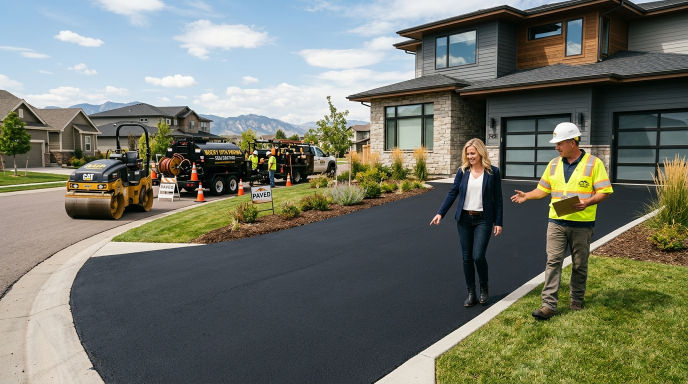
Once your asphalt has fully cured, simple regular maintenance can help it last 20 to 30 years or more. One of the most important steps is sealcoating every 2 to 3 years, which protects the surface from UV rays and moisture damage. It’s also important to fill small cracks as soon as they appear, since water entering cracks can freeze, expand, and eventually turn minor damage into potholes.
Keeping the surface clean also plays a big role in extending asphalt life. Oil, fuel, and other spills should be cleaned quickly because they can break down the binder in asphalt. Regular inspections and early repairs are equally important, as small issues like cracks or drainage problems can quickly become expensive if ignored.
Need Professional Asphalt Installation in Englewood, CO?
Don’t risk early damage from improper installation or curing mistakes. Our experts at Elite Surface Infrastructure ensure your asphalt is installed, compacted, and finished correctly for long-lasting durability. We follow industry best practices to help prevent cracks, ruts, and premature wear. From proper grading to final finishing, every step is handled with precision to maximize the lifespan of your asphalt surface. Get your free estimate today and discover the right asphalt solution for your property in Englewood, CO.
Conclusion
Asphalt may seem ready shortly after installation, but it continues to change and strengthen for weeks after it is laid. While light use is usually possible within 24 to 48 hours, full curing can take up to 30 days or more depending on weather and site conditions. Understanding this difference between drying and curing is key to preventing early damage.
By following proper waiting times, avoiding heavy loads too soon, and maintaining the surface correctly, you can significantly extend the lifespan of your asphalt. A little patience in the beginning leads to a stronger, more durable surface for years to come.
Frequently Asked Questions
How long does it take for asphalt to dry completely?
Asphalt is usually dry enough for light foot traffic within 24 to 48 hours, but it continues curing for several weeks before reaching full strength.
When can you drive on new asphalt?
You can typically drive on new asphalt after 3 to 7 days, depending on weather conditions, thickness, and installation quality.
What happens if you drive on asphalt too soon?
Driving too early can cause ruts, tire marks, edge damage, and long-term structural weakening, which may shorten the pavement’s lifespan.
Does asphalt fully cure in 30 days?
Yes, most asphalt reaches full curing strength within 30 days, although in some cases it may continue to harden slightly for up to several months.
Can rain damage new asphalt?
Light rain after the asphalt has cooled usually does not cause damage. However, rain during installation or before proper cooling can weaken the surface and affect durability.