
Concrete typically takes 28 days to fully cure and reach maximum strength, but the curing process happens in stages. Most concrete is safe for light foot traffic after 24 to 48 hours, can usually support passenger vehicles after 7 days, and continues gaining strength throughout the 28-day curing timeline. Unlike drying, concrete hardens through a chemical process called hydration, where water and cement bond together to create strength.
The exact concrete curing time depends on several factors including temperature, humidity, slab thickness, and the type of concrete mix used. Hot weather can dry concrete too quickly and weaken it, while cold weather slows curing and may even stop the process if temperatures drop below freezing. Proper moisture retention and weather protection are critical to achieving strong, long-lasting concrete.
Whether you are pouring a driveway, patio, sidewalk, slab, or foundation, understanding how long concrete takes to cure helps prevent cracking, surface damage, and premature failure. Following the proper curing timeline is one of the most important steps in ensuring durable concrete that lasts for decades.
What Does It Mean for Concrete to Cure?
When concrete cures, it goes through a chemical reaction called hydration. This is where water and cement combine at a molecular level to form the bonds that give concrete its strength. The concrete is not getting hard because it is losing water. It is getting hard because a chemical reaction is happening inside it. In fact, concrete that dries out too quickly actually becomes weaker, not stronger, because the hydration process gets cut short before it finishes.
Concrete Hardening Time vs. Concrete Curing Time
Concrete hardening and concrete curing are often confused, but they are not the same thing.
Concrete hardening refers to the process where the surface becomes firm enough to walk on or handle light use. This happens relatively quickly, usually within the first 24 to 48 hours after pouring.
Concrete curing is the longer chemical hydration process where the material gradually develops its full strength. Proper curing continues for about 28 days and directly affects durability, crack resistance, and long-term performance.
A concrete surface may feel hard within a day or two, but internally it is still gaining strength. Using the slab too heavily before curing is complete can permanently weaken the concrete
How Long Does Concrete Take to Cure?
Concrete cures over time, and knowing the typical curing timeline helps ensure a strong and durable finished surface.
First 24 to 48 Hours: Initial Set
Within the first 24 to 48 hours, concrete goes through its initial set and transitions from a wet, workable material to something that feels solid to the touch. Light foot traffic is generally safe at this point, but the concrete is still fragile internally. Pressure, heavy foot traffic, or harsh weather during this window can cause surface marks and weak spots that will not fully recover.
After 7 Days: Partial Strength
By the end of the first week, concrete has typically reached around 70 percent of its design strength, which is known as the 70 in 7 rule. Passenger vehicles can usually begin using the surface at this stage, but heavy trucks and construction equipment should stay off. This is also when forms can be safely removed from walls and columns.
After 28 Days: Full Cure and Maximum Strength
Twenty-eight days is the industry standard for full concrete cure. At this point the concrete has reached its maximum design strength and is ready for full use, including driveways, loading docks, commercial slabs, and foundations. Concrete does continue to gain small amounts of strength beyond 28 days, but the gains are minimal and the 28-day mark is when it can reliably handle the loads it was designed for.
Concrete Curing Timeline at a Glance
|
Time Period |
Strength Level |
What Is Allowed |
| 0 to 24 Hours |
Very Low |
No traffic, no pressure, surface finishing only |
|
24 to 48 Hours |
Initial Set |
Light foot traffic, careful walking only |
|
3 to 7 Days |
50 to 70% Strength | Continued foot traffic, forms can be removed |
|
7 Days |
70% Strength |
Passenger vehicles, light equipment |
|
14 Days |
85% Strength |
Heavier equipment with caution |
|
28 Days |
100% Full Cure |
Full use, heavy vehicles, maximum load bearing |
4-Inch Concrete Slab Curing Time
A standard 4-inch concrete slab typically takes about 28 days to fully cure.
This thickness is common for:
- Driveways
- Sidewalks
- Patios
- Garage floors
Under normal conditions:
- Walking is usually safe after 24–48 hours
- Passenger vehicles after 7 days
- Full structural performance after 28 days
Weather and moisture control significantly affect curing quality.
6-Inch Concrete Curing Time
A 6-inch concrete slab generally follows the same 28-day curing timeline as thinner slabs, but thicker concrete retains more internal moisture and heat during hydration. Because of this, proper curing becomes even more important to prevent uneven strength development and thermal cracking.
Most 6-inch slabs can support light foot traffic after 24 to 48 hours and light vehicles after about 7 days, depending on the mix design and weather conditions. Heavy structural loads should wait until the slab reaches full curing strength.
Six-inch slabs are commonly used for commercial floors, heavy-duty driveways, equipment pads, and foundations where greater load capacity is required.
Portland Cement Drying Time vs. Concrete Curing Time
Portland cement itself does not simply “dry” to become strong. When mixed with water, it reacts chemically through a process called hydration, which is what allows concrete to harden and gain strength over time.
Many people use the terms drying and curing interchangeably, but curing refers specifically to the strength-building process inside concrete. Concrete may appear dry on the surface within a few hours, yet it continues curing internally for several weeks.
Under normal conditions, concrete made with standard Portland cement reaches most of its usable strength within 7 days and reaches full design strength at approximately 28 days.
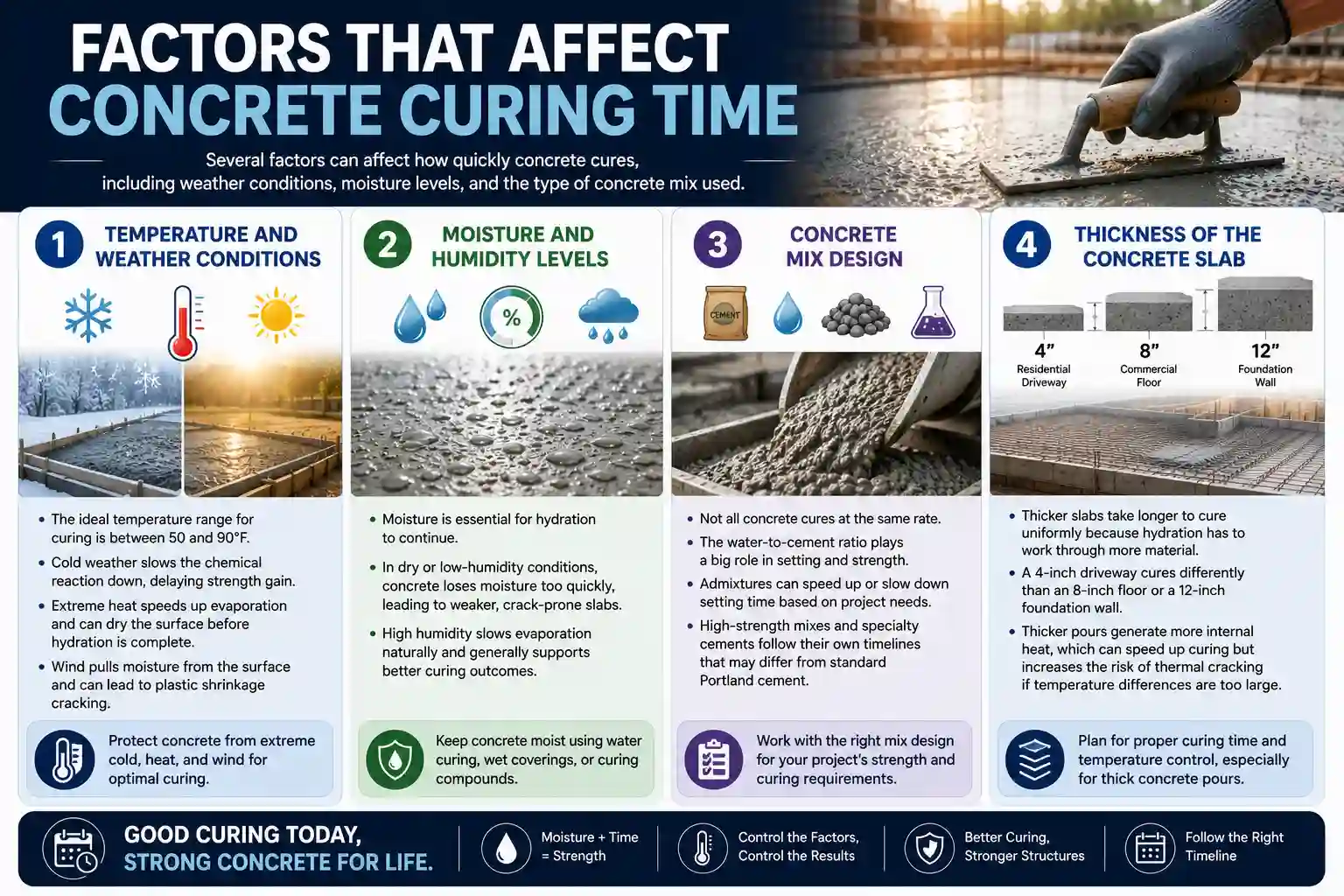
Factors That Affect Concrete Curing Time
Several factors can affect how quickly concrete cures, including weather conditions, moisture levels, and the type of concrete mix used.
Temperature and Weather Conditions
Temperature is one of the most significant factors in concrete curing. The ideal range is between 50 and 90 degrees Fahrenheit. Cold slows the chemical reaction down, while extreme heat speeds up evaporation and can dry the surface before hydration is complete. Wind makes things worse by pulling moisture from the surface even when temperatures seem fine.
Moisture and Humidity Levels
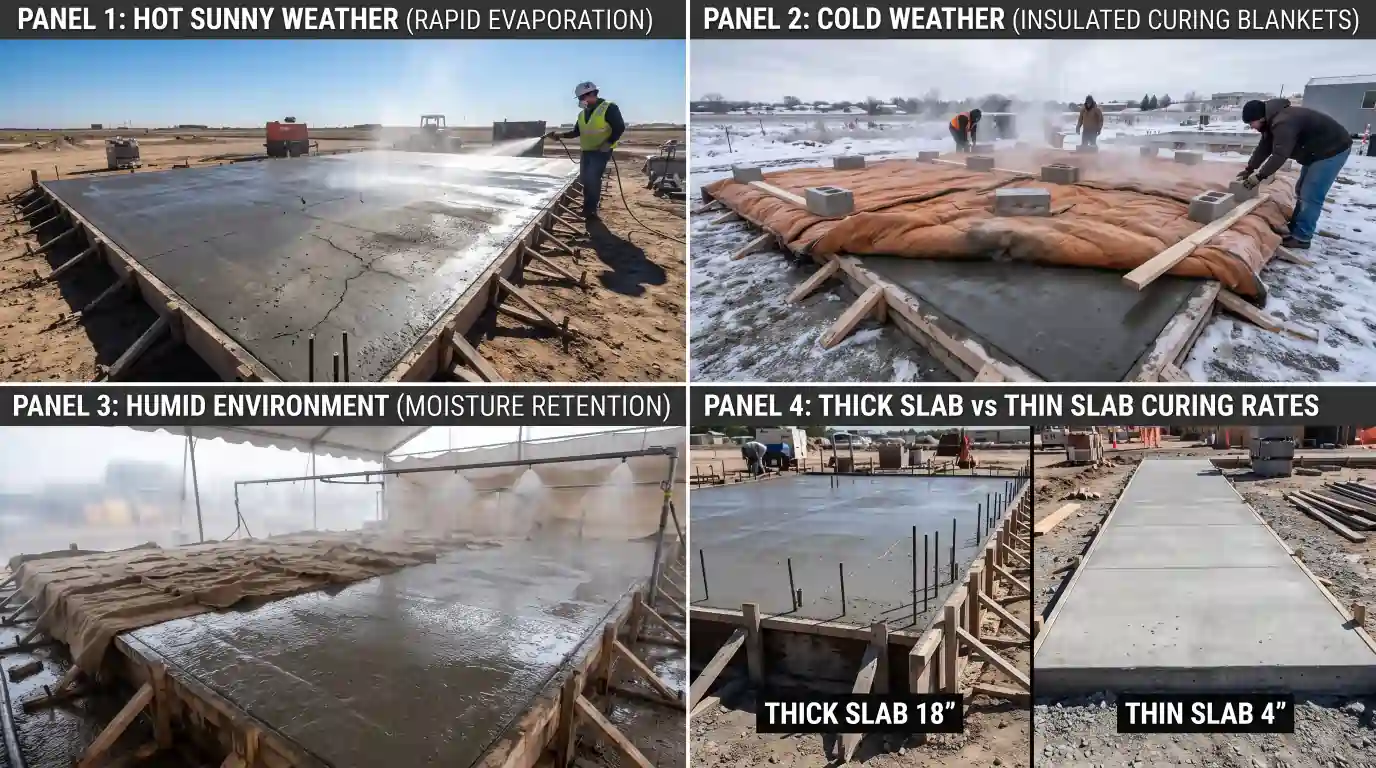
Moisture is essential for hydration to continue. In dry or low-humidity conditions, fresh concrete can lose moisture too quickly, resulting in a weaker and more crack-prone slab. High humidity slows evaporation naturally and generally supports better curing outcomes.
Concrete Mix Design
Not all concrete cures at the same rate. The water-to-cement ratio plays a big role, and admixtures can be added to speed up or slow down setting time depending on project needs. High-strength mixes and specialty cements follow their own timelines that may differ from standard Portland cement.
Thickness of the Concrete Slab
Thicker slabs take longer to cure uniformly because hydration has to work through more material. A 4-inch residential driveway cures differently than an 8-inch commercial floor or a 12-inch foundation wall. Thicker pours also generate more internal heat, which can accelerate curing but also raises the risk of thermal cracking if temperature differences between the interior and exterior become too large.
How Long Should Concrete Cure Before Rain?
Concrete should ideally cure for at least 24 to 48 hours before heavy rain exposure.
Light rain after the initial set usually does not cause major problems. However, strong rain during the first few hours after pouring can:
- Wash away cement paste
- Weaken the surface
- Create uneven texture
- Increase surface dusting
If rain is expected, cover fresh concrete with plastic sheeting or temporary protection without allowing the material to touch the wet surface directly.
How Long Does Concrete Take to Cure in Different Conditions?
Concrete curing time can vary depending on weather and environmental conditions, which may speed up or slow down the process.
Curing in Hot Weather
Hot weather accelerates evaporation, which can dry out the surface before the interior has had enough time to hydrate properly. Best practices include pouring in the early morning, using chilled mixing water, shading the slab from direct sunlight, and misting the surface regularly to replace lost moisture.
Curing in Cold Weather
Cold weather slows hydration significantly, and below 40 degrees Fahrenheit it essentially stops. If fresh concrete freezes before developing enough strength, internal cracking occurs and permanently weakens the slab. Protect cold-weather pours with insulating curing blankets, heated enclosures, or warmed mixing water until the concrete reaches a minimum strength of 500 psi.
Curing During Rainy Conditions
Light rain after the initial set is generally not a problem. Heavy rain on fresh, unset concrete is a serious issue as it can wash away cement paste and leave a weak, uneven surface. If rain is forecast, cover the slab immediately with plastic sheeting weighted at the edges to keep moisture in without resting directly on the wet surface.
Indoor vs. Outdoor Concrete Curing
Indoor concrete cures in a more controlled environment with fewer temperature swings, no direct sun, and no wind pulling moisture from the surface. Outdoor concrete is exposed to all of these variables and requires more active monitoring and protection to ensure the curing process stays on track.
How to Speed Up and Support Proper Concrete Curing
Using the right curing methods can help concrete gain strength properly and reduce the risk of cracks or damage.
Keep the Surface Moist
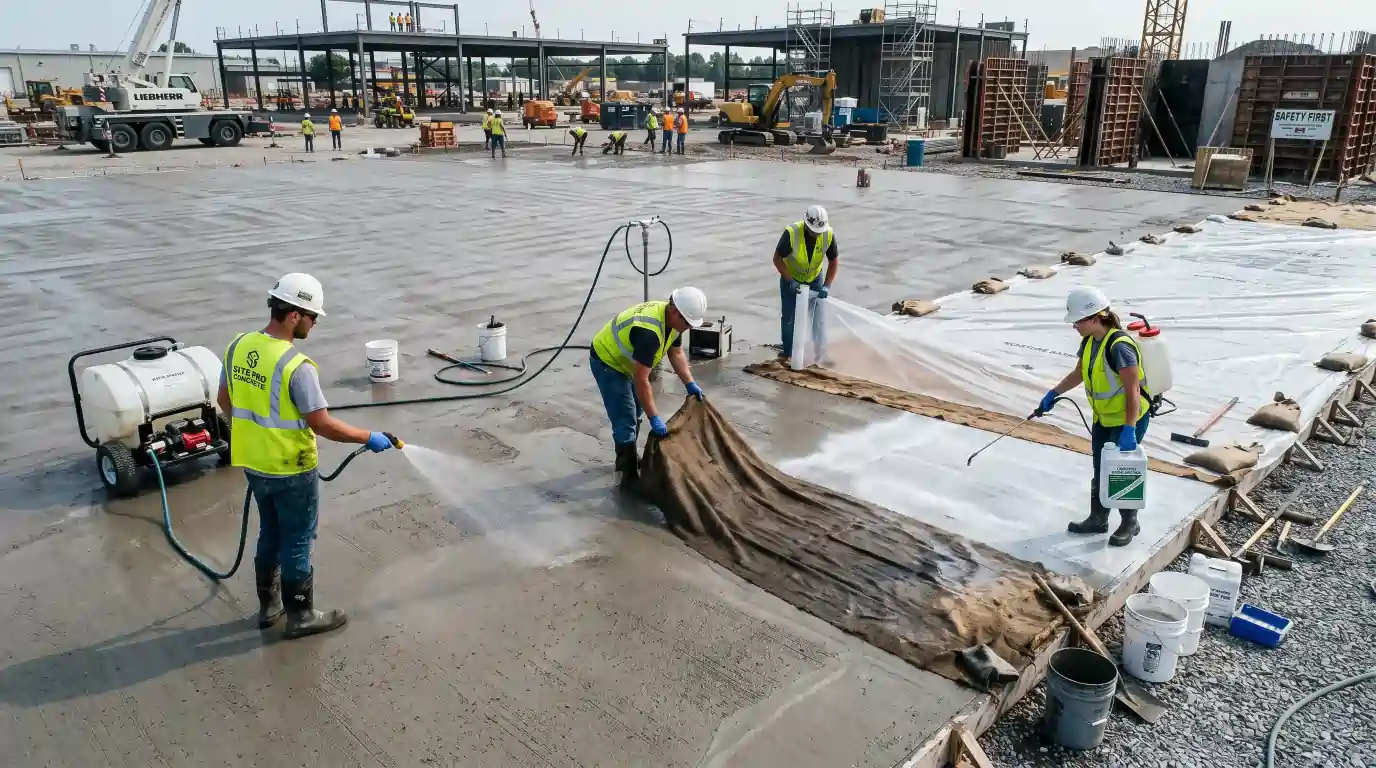
Moist curing is the most reliable method for supporting proper concrete strength development. This involves keeping the surface of the concrete continuously wet for the first seven days using water misting, wet burlap, or plastic sheeting to trap moisture. This prevents premature evaporation and keeps the hydration process running at full capacity.
Protect Concrete from Extreme Weather
Shading concrete from direct sun in hot weather and covering it with insulating blankets in cold weather both help maintain the temperature conditions that support proper curing. Protecting the surface from wind is also important in dry conditions, as wind dramatically increases the rate of surface evaporation.
Use Curing Compounds When Needed
Curing compounds are chemical sealers sprayed onto the surface of fresh concrete immediately after finishing. They form a membrane that slows evaporation and keeps moisture in the slab. Curing compounds are particularly useful on large commercial slabs where keeping the surface wet through traditional methods is not practical. They are also a good option when weather conditions make manual moisture retention difficult.
Follow Recommended Cure Times
The simplest and most effective thing anyone can do is respect the timeline. Do not walk on concrete before 24 hours. Do not drive on it before 7 days. Do not subject it to heavy loads before 28 days. These timelines exist because they reflect the actual rate of strength development in the material, not arbitrary rules. Respecting them is the easiest way to get the strongest, longest-lasting result.
The 4 Main Stages of Concrete Curing
Concrete cures in stages as hydration gradually increases the material’s strength over time. Understanding these stages helps prevent damage caused by using the surface too early.
1. Initial Setting Stage (0 to 24 Hours)
Fresh concrete begins transitioning from a liquid state into a solid surface. During this stage, finishing work is completed and the concrete remains highly vulnerable to rain, pressure, and rapid moisture loss.
2. Early Strength Gain Stage (1 to 7 Days)
Concrete rapidly gains strength during the first week of curing. By day 7, most mixes reach approximately 70% of their design strength. Light traffic and form removal may be possible during this phase.
3. Mid-Stage Curing (7 to 14 Days)
Hydration continues deeper within the slab as the concrete becomes increasingly durable. The surface can typically handle heavier use, although full structural capacity has not yet been reached.
4. Full Cure Stage (Around 28 Days)
At approximately 28 days, concrete reaches its full design strength under normal curing conditions. At this point, it is considered fully cured and ready for heavy loads, commercial traffic, and long-term service.
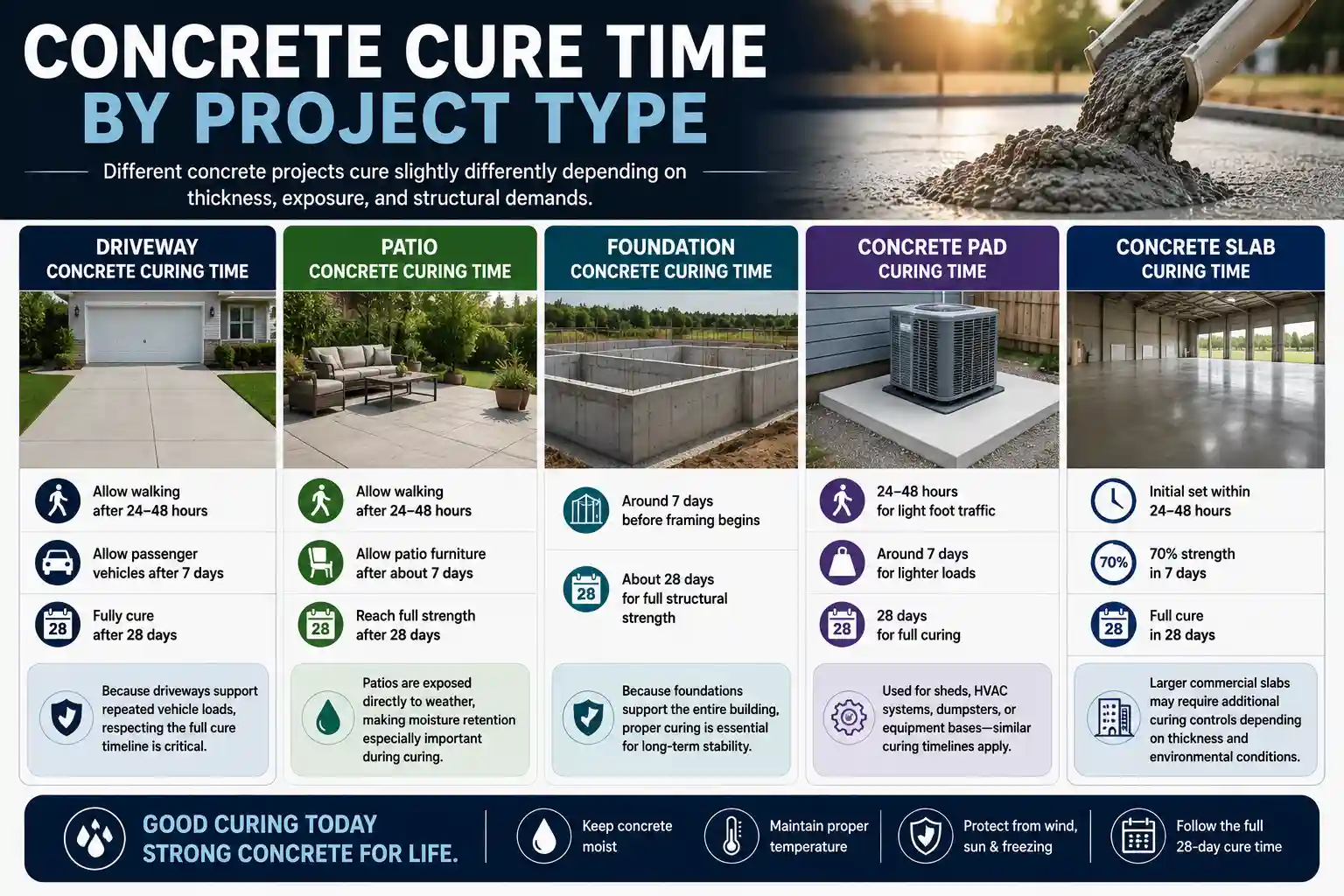
Concrete Cure Time by Project Type
Different concrete projects cure slightly differently depending on thickness, exposure, and structural demands.
Driveway Concrete Curing Time
Most concrete driveways:
- Allow walking after 24–48 hours
- Allow passenger vehicles after 7 days
- Fully cure after 28 days
Because driveways support repeated vehicle loads, respecting the full cure timeline is critical.
Concrete Patio Curing Time
Concrete patios generally:
- Allow walking after 24–48 hours
- Allow patio furniture after about 7 days
- Reach full strength after 28 days
Patios are exposed directly to weather, making moisture retention especially important during curing.
Foundation Concrete Curing Time
Concrete foundations typically need:
- Around 7 days before framing begins
- About 28 days for full structural strength
Because foundations support the entire building, proper curing is essential for long-term stability.
Concrete Pad Curing Time
Concrete pads used for sheds, HVAC systems, dumpsters, or equipment bases follow similar timelines:
- 24–48 hours for light foot traffic
- Around 7 days for lighter loads
- 28 days for full curing
Concrete Slab Curing Time
Standard residential slabs usually reach:
- Initial set within 24–48 hours
- 70% strength in 7 days
- Full cure in 28 days
Larger commercial slabs may require additional curing controls depending on thickness and environmental conditions.
How Long Before You Can Drive on Concrete?
Passenger vehicles can usually drive on concrete after about 7 days.
However:
- Heavy trucks
- RVs
- Commercial vehicles
- Construction equipment
should stay off the slab until the full 28-day curing period is complete.
Early vehicle traffic can cause cracking and internal stress before the slab reaches sufficient strength.
How Long Should Concrete Cure Before Building on It?
Concrete should typically cure for:
- About 7 days before light framing or building begins
- Approximately 28 days before carrying full structural loads
Many contractors wait until concrete reaches roughly 70% of its design strength before continuing construction.
Rushing this process increases the risk of:
- Settlement
- Structural cracks
- Long-term foundation problems
Common Mistakes That Slow Concrete Curing
The most common mistake is assuming dry concrete is strong concrete. When the surface loses moisture too quickly, hydration gets cut short and the slab ends up weaker than intended. Walking or driving on it too soon adds stress the internal structure is not yet ready to handle, which leads to cracking and premature surface wear.
Unexpected heat, frost, or rain after a pour can disrupt curing in ways that cannot be reversed. And leaving fresh concrete completely unprotected, without sheeting, wet burlap, or a curing compound, gives the slab no defense against the environment at its most vulnerable stage
Why Proper Concrete Curing Matters
Proper curing is what separates concrete that lasts decades from concrete that cracks and deteriorates within a few years. A fully cured slab reaches its maximum design strength, resists water penetration, handles freeze-thaw cycles, and holds up under heavy loads without breaking down prematurely. Skipping or rushing the curing process might not cause visible damage right away, but the long-term consequences show up in cracking and a significantly shorter lifespan for the entire structure.
Need Expert Concrete Work in Colorado Springs, CO?
Knowing the curing timeline is one thing. Making sure every pour is done right from the start is another. Elite Surface Infrastructure delivers structural and flatwork concrete services for commercial, municipal, and government projects across Colorado Springs, CO and the entire Front Range.
From concrete slabs and curb and gutter to bridge decks and parking structures, our self-performing crews handle every phase with precision, the right equipment, and a commitment to quality that does not cut corners. Contact us today for an estimate on your next concrete project. We do not subcontract the critical work. Every pour is managed and executed by our own experienced teams.
Conclusion
Concrete curing is a gradual chemical process that directly determines the strength, durability, and lifespan of the finished surface. While concrete may appear hard within a day or two, true structural strength develops over time, with most concrete reaching full design strength after 28 days. Respecting this timeline is essential for preventing cracks, surface wear, and long-term structural problems.
Proper curing involves much more than simply waiting. Temperature, moisture levels, slab thickness, weather conditions, and mix design all influence how quickly and effectively concrete gains strength. Keeping the surface moist, protecting it from extreme weather, and avoiding traffic too early are some of the most important steps for achieving a durable result.
Whether you are managing a residential driveway or a large commercial concrete project, understanding the concrete curing timeline helps protect your investment and ensures long-term performance. Rushing the process may save time initially, but properly cured concrete is what delivers decades of reliable strength and durability.
Frequently Asked Questions
How Long Before You Can Walk on Concrete?
Light foot traffic is safe after 24 to 48 hours. During this window, walk carefully and avoid dragging anything across the surface. The concrete is firm enough to hold your weight but still developing strength internally.
How Long Before You Can Drive on Concrete?
Passenger vehicles can typically drive on concrete after 7 days. For heavy vehicles, commercial traffic, or construction equipment, waiting the full 28 days is the safe and recommended approach.
Does Concrete Cure Faster in Hot Weather?
Hot weather speeds up evaporation, which can actually work against curing by drying out the surface before hydration is complete. While warmer temperatures do accelerate the initial set, extreme heat without moisture management results in weaker concrete. Ideal curing temperatures are between 50 and 90 degrees Fahrenheit.
Can Rain Damage Fresh Concrete?
Heavy rain on fresh, unfinished concrete can wash away cement paste and weaken the surface layer. Once the concrete has completed its initial set, light rain is generally not a serious problem. The best protection is covering the surface with plastic sheeting before rain arrives.
Does Thicker Concrete Take Longer to Cure?
Yes. Thicker slabs take longer to cure uniformly because the hydration process has to work through more material. Always follow the specific cure time recommendations for the mix and thickness being used, and do not assume standard timelines apply to every application.
How Long Does a Concrete Foundation Take to Cure?
Most foundations gain enough strength for framing after about 7 days and fully cure in around 28 days.