
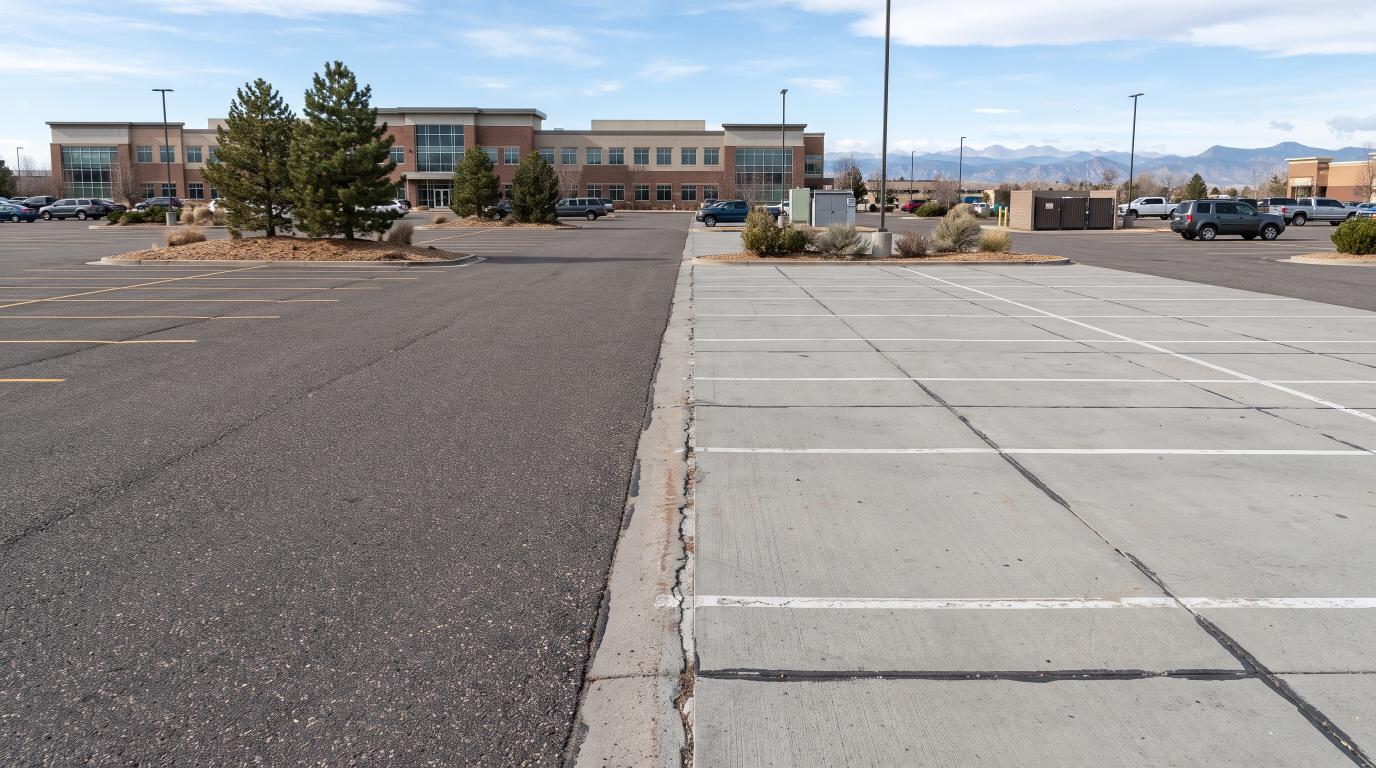
For most commercial paving projects, asphalt costs less to install than concrete. But is asphalt cheaper than concrete over the full life of a parking lot or access road? Not always. Asphalt may need more frequent surface repairs, while concrete often has a higher starting cost but may serve longer under suitable conditions. Traffic, drainage, and maintenance all affect that decision.
In Colorado Springs, those differences matter for properties exposed to warm summers, winter freezing, and snow removal. Elite Surface Infrastructure (ESI) handles asphalt and concrete paving projects, and understanding the options can help you plan the right surface for your property.
Is Asphalt Cheaper Than Concrete to Install and Maintain?
Yes, asphalt is usually the more affordable option at installation, especially for large, standard paved areas. Concrete commonly costs more to place, but it may require less routine surface treatment.
|
Cost Consideration |
Asphalt |
Concrete |
|
Initial installation |
Usually lower | Usually higher |
| Routine care | Crack repairs and other surface treatments may be needed more often |
Joint care and targeted repairs are common |
|
Larger repairs |
Milling and resurfacing may be possible if lower layers are sound | Failed panels may need partial or full replacement |
| Heavy-use areas | May need a stronger design to resist rutting |
Often considered for concentrated loads and turning areas |
|
Overall value |
Often attractive for larger areas |
Can justify higher upfront costs in suitable applications |
Typical Asphalt and Concrete Installation Costs
Basic asphalt paving generally has a lower starting cost because of differences in materials, placement, and construction time. Concrete installation involves placing, finishing, jointing, and curing the slab. A fair estimate should also include the required base and pavement thickness, rather than comparing two surfaces that are not designed for the same traffic.
What Makes One Paving Project More Expensive?
Removing failed pavement, repairing weak soil, improving drainage, or working around utilities adds labor and equipment time. Commercial sites may also need traffic control, phased access, or nighttime work. Ask contractors to list these items separately so it is clear what each proposal includes.
Which Material Costs Less Over Its Service Life?
Neither material is always cheaper over its entire life. Asphalt may need crack sealing and resurfacing. Concrete may need fewer routine treatments, but joint problems or failed slabs can require costly repairs. The Federal Highway Administration’s life-cycle cost guidance recommends comparing future work as well as initial construction.
What Is the Difference Between Asphalt and Concrete?
Asphalt is a flexible pavement made with stone and a petroleum-based binder. Concrete is a rigid material that hardens through a reaction between cement and water. These differences influence installation, surface repairs, and performance under traffic.
What Is Asphalt Made Of?
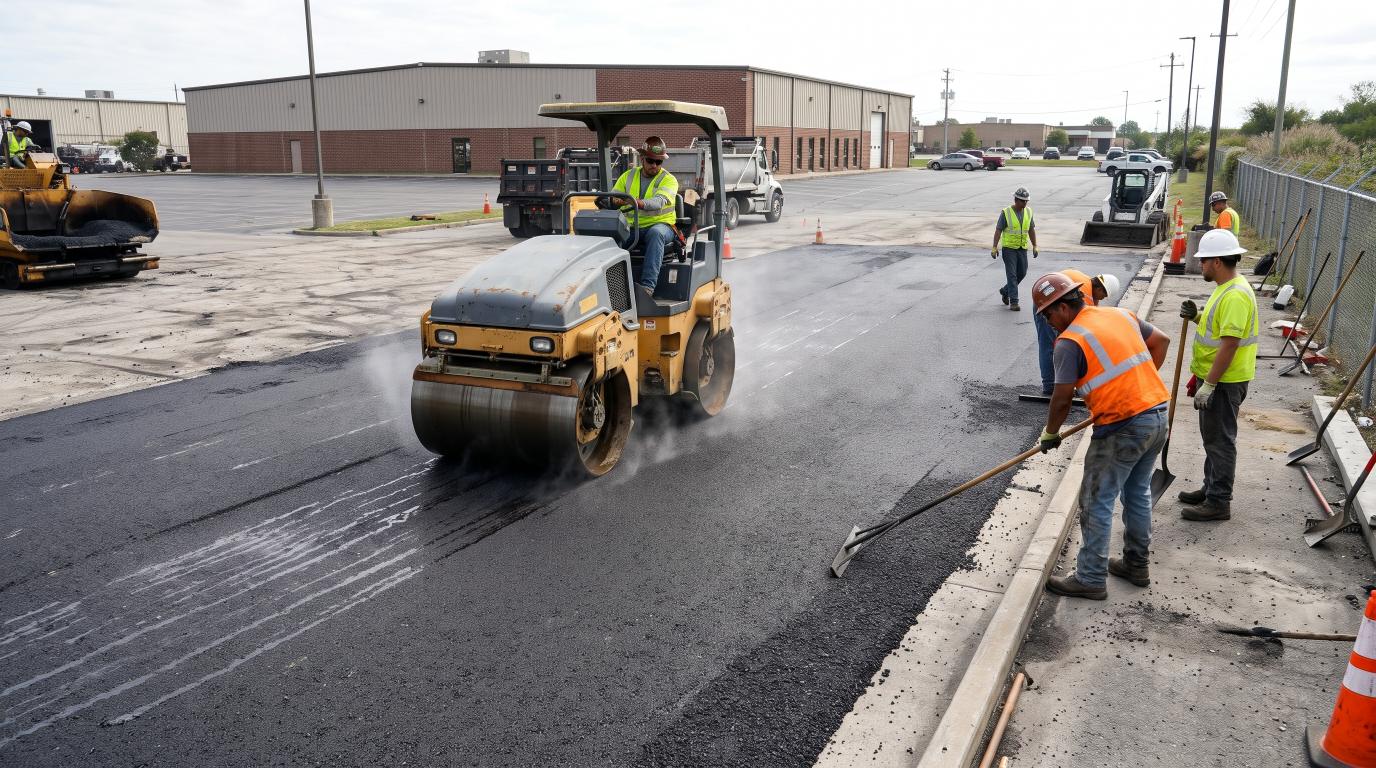
Asphalt typically combines crushed stone, sand, and bitumen, also called asphalt binder. Hot-mix asphalt is produced at a plant, then placed and compacted while warm. The mix and pavement structure must match the traffic and temperatures at the site.
What Is Concrete Made Of?
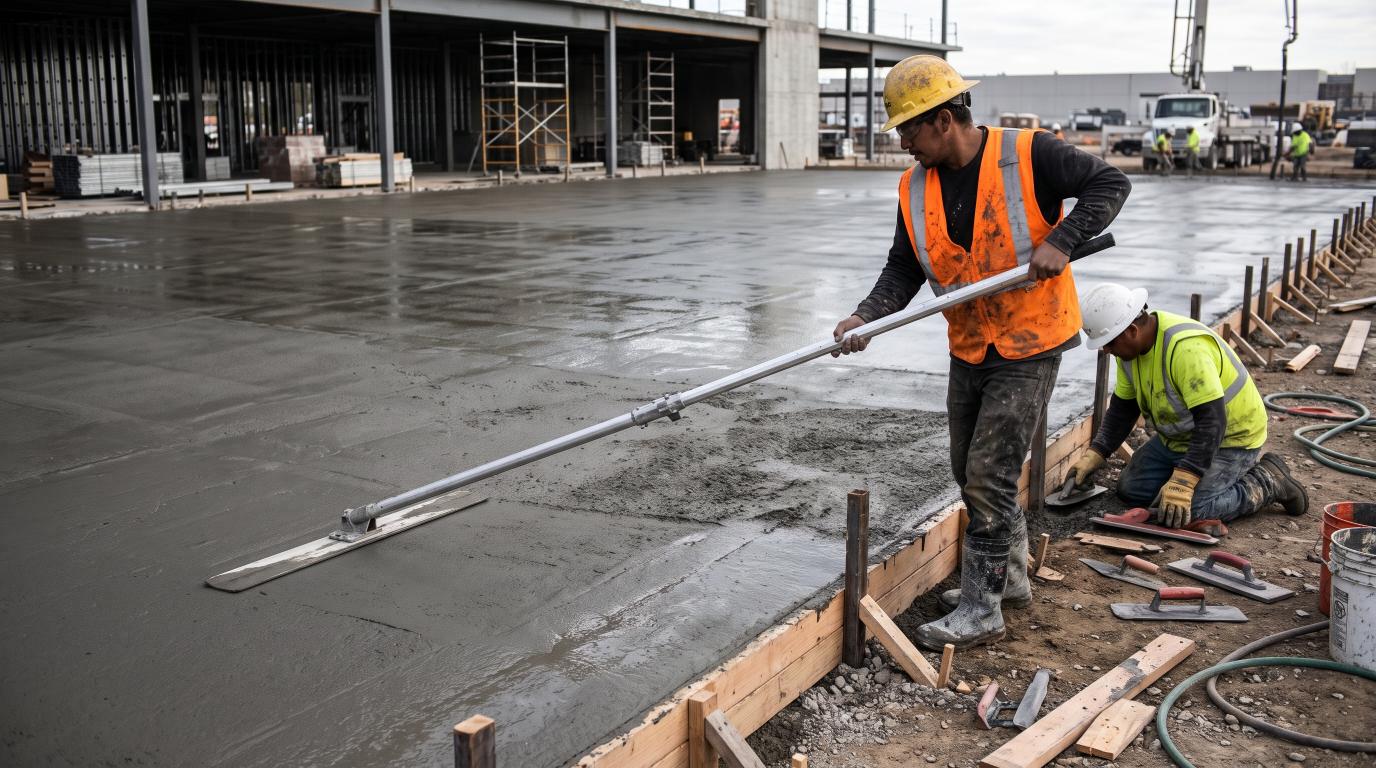
Concrete combines cement, water, sand, and coarse aggregate. As the cement reacts with water, the mixture gains strength. The finished slab is rigid, so joints help manage movement and cracking. Additives or reinforcement may be specified for certain projects.
How Asphalt and Concrete Are Installed
Both need a stable, graded foundation. Asphalt crews spread and compact the mix with rollers. Concrete crews place and finish the slab, create joints, and protect it as it cures. Poor base preparation can shorten the life of either pavement.
How Do Asphalt and Concrete Compare in Durability?
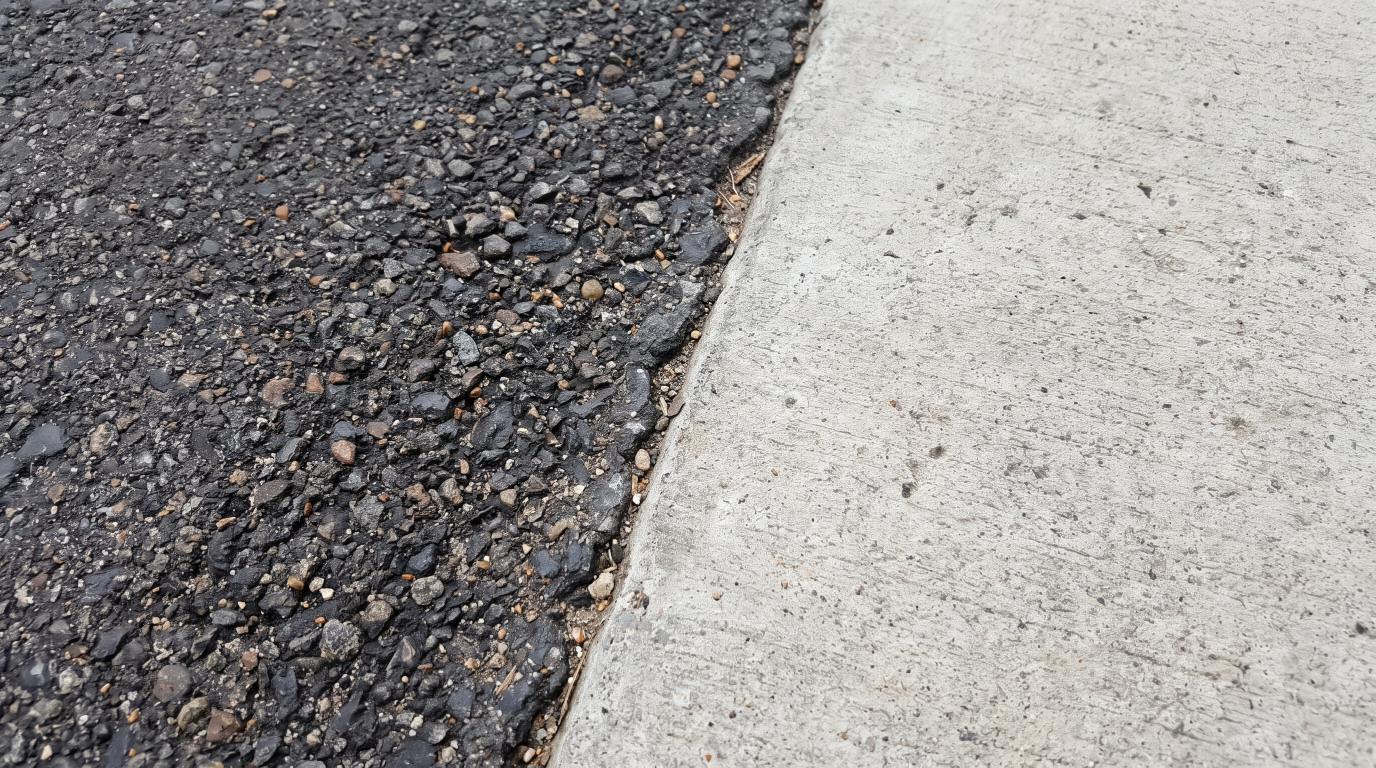
Both materials can support years of traffic when they are designed and built correctly. Concrete spreads loads through a rigid slab, while asphalt relies on a flexible system of pavement layers.
How Asphalt Handles Daily Traffic and Heavy Loads
Asphalt is used for parking lots, commercial roads, and routes carrying trucks. Problems can develop when repeated loads exceed the pavement’s design, especially where heavy vehicles stop or turn slowly. Wheel-path ruts, cracks, and depressions may point to issues with the mix, thickness, or base.
How Concrete Performs Under Heavy Loads
Concrete is often considered for loading docks, dumpster pads, and bus or truck stopping areas. Its rigid structure can resist deformation from concentrated loads, provided the slab and its support are designed for the job. It is not immune to damage: unsupported corners, failed joints, and ground settlement can still lead to cracked panels.
What Factors Affect the Durability of Each Material?
Subgrade strength, drainage, pavement thickness, construction quality, and traffic all affect durability. Subgrade means the prepared soil beneath the pavement structure. Before choosing a material, ask whether the design includes testing or treatment for weak soil and poor drainage.
How Do Asphalt and Concrete Perform in Colorado Springs Weather?
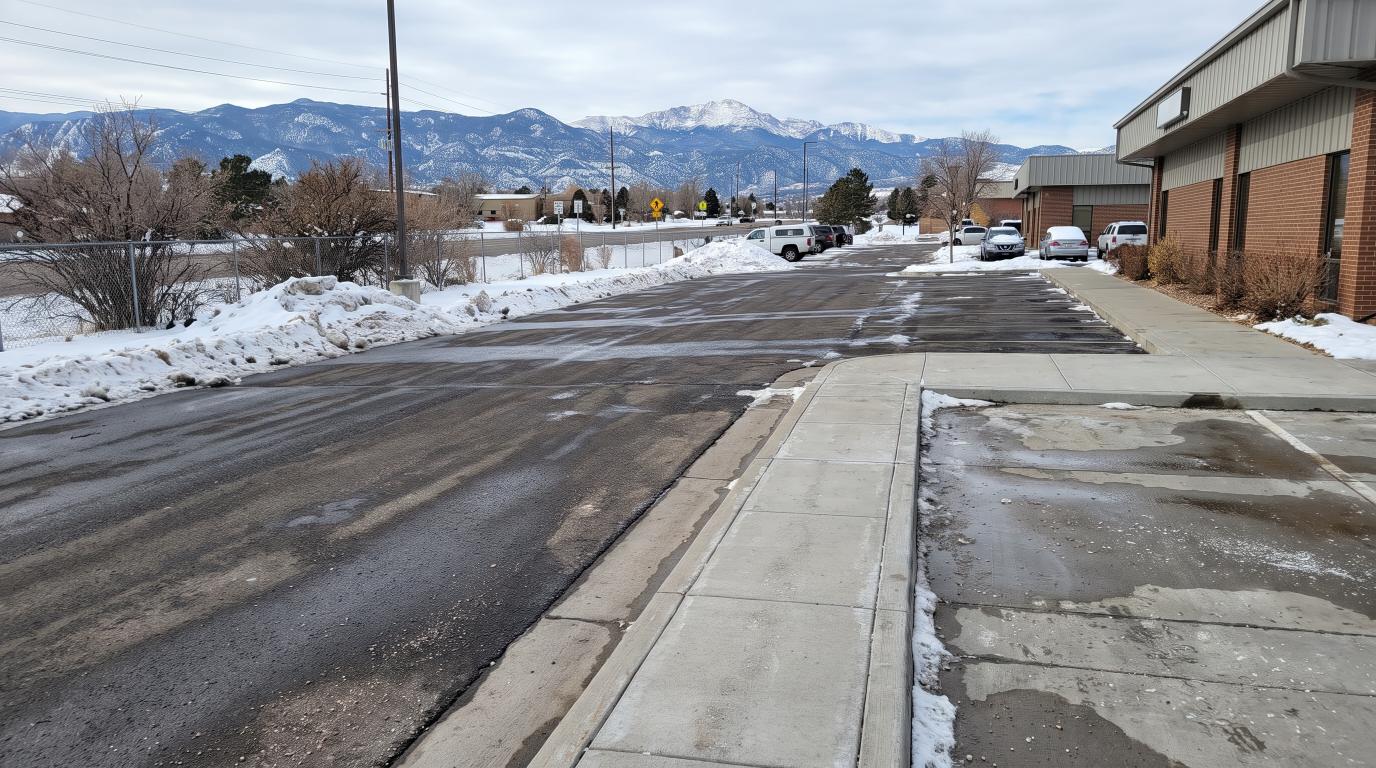
Both materials can handle Colorado Springs conditions when the design fits the site. The main differences show up in summer heat, winter freezing, and drainage.
Summer heat: Asphalt becomes less stiff as pavement temperatures rise, so areas where heavy trucks stop or turn slowly need a mix and thickness designed for that load. Concrete generally keeps its shape in heat.
Winter freezing and deicing: Water that enters concrete can freeze and contribute to scaling or cracking, especially when deicing products are used. The FHWA’s concrete pavement guidance explains why proper mixtures, curing, and air entrainment matter in freeze-thaw conditions. Asphalt can also crack as water enters and freezes below the surface, so sealing cracks early helps.
Drainage: Standing water weakens the base and adds movement during freezing weather. Asphalt may develop potholes or low spots; concrete may crack or settle at joints. Good grading and drainage deserve as much attention as the choice of surface.
What Maintenance Do Asphalt and Concrete Require?
Asphalt generally needs more regular surface attention, while concrete maintenance focuses on joints, cracks, and damaged panels. Both benefit from early repairs and proper drainage.
Common Asphalt Maintenance Practices
Asphalt maintenance can include crack sealing, patching, cleaning, and sealcoating when suitable for the surface. If the pavement base remains sound, milling and an asphalt overlay may renew the driving surface without complete reconstruction. Sealcoating cannot fix major rutting, unstable soil, or a failing base.
What Does Asphalt Rehabilitation Look Like on a Real Project?
One documented ESI milling and overlay project involved removing worn surface asphalt and installing an overlay, with full-depth reclamation in selected areas. The project shows why contractors assess existing pavement before deciding between resurfacing and deeper repairs. It is an example of ESI’s previous work, not a substitute for assessing the conditions of a new project.
Common Concrete Maintenance Practices
Concrete care may involve sealing or repairing joints, fixing cracks, and replacing broken sections. A chipped edge needs different treatment from a slab that has lost support. Contractors should find the cause before choosing a patch, partial-depth repair, or full-depth replacement.
How to Recognize Signs of Surface Damage
Look for new cracks, standing water, loose material, uneven surfaces, and areas that shift under traffic. Deep wheel ruts can signal asphalt distress, while broken concrete corners may point to joint or support problems. If the damage spreads quickly or creates a trip or vehicle hazard, arrange an inspection before planning cosmetic repairs.
What Are the Main Advantages and Disadvantages of Asphalt and Concrete?
Asphalt’s main advantages are lower typical installation costs and practical resurfacing options. Concrete offers a rigid surface and can be useful where vehicles place concentrated pressure on the pavement.
Advantages and Limitations of Asphalt
Asphalt often suits long access roads and large parking areas where initial budget and future resurfacing matter. It can also be repaired in sections. Its limitations include possible rutting under slow heavy loads, temperature-related movement, and the need to manage cracks before water reaches the lower layers.
Advantages and Limitations of Concrete
Concrete provides a firm surface for loading zones, sidewalks, and other areas with specific load or finish needs. Its higher initial installation cost and longer curing requirements may affect project planning. Replacing a failed slab can disrupt access and leave visible repair joints.
How Do Asphalt and Concrete Differ in Appearance?
Asphalt usually provides a uniform dark surface, while concrete offers more choices in color and texture. Appearance matters most where visitors walk, park, or enter a building.
Color and Finish Options for Asphalt
New asphalt is typically dark and becomes lighter as it ages. Striping, pavement markings, and clean edges help organize parking and travel lanes. For most commercial lots, visibility matters more than decorative color.
Concrete Finishes, Patterns, and Decorative Options
Concrete can have broom finishes, exposed aggregate, color, or stamped patterns. A textured finish is often more practical for outdoor walking areas because traction matters in wet or icy conditions.
What Is the Environmental Impact of Asphalt and Concrete?
Both materials use natural resources and energy during production, and both can be reused after removal. Asphalt recycling can recover stone and some existing binder; concrete can be crushed for aggregate.
Recycled Asphalt and Material Reuse
Removed asphalt can become reclaimed asphalt pavement, or RAP. When specifications allow, producers can use RAP in new asphalt mixes, reducing demand for fresh materials. The FHWA’s asphalt recycling guidance discusses using recycled asphalt while maintaining pavement performance.
Concrete Production and Environmental Considerations
Cement production releases carbon dioxide through fuel use and the chemical process used to make cement. At the end of a slab’s service life, crushing and reusing suitable concrete as aggregate can reduce waste. A longer-lasting surface may also limit future reconstruction needs.
How Should You Choose Between Asphalt and Concrete?
Choose the pavement that fits the traffic, site conditions, and maintenance budget rather than assuming one material is best everywhere. Start with what the area must carry, how the business uses it, and when construction can occur.
|
Area of a Commercial Property |
Material Worth Considering | Reason |
| General parking lanes | Asphalt |
Often a lower initial investment for large areas |
|
Access roads |
Asphalt | Repair and resurfacing options |
| Loading pads | Concrete |
Often suitable for concentrated heavy loads |
|
Dumpster areas |
Concrete | Resists repeated stationary pressure when properly designed |
| Property with several traffic needs | Asphalt and concrete |
Different materials can serve different parts of the site |
Factors to Consider Before Selecting a Material
Review the area’s size, existing surface, soil stability, drainage, and expected use. Budget for future maintenance and ask whether excavation, base repair, marking, and disposal are included in the quote. A low starting estimate may leave out work the site needs.
Choosing Based on Climate, Traffic, and Intended Use
A customer parking area has different demands from a warehouse entrance used by loaded trucks. Concrete may be worth considering where heavy vehicles stop or turn, while asphalt may suit the surrounding driving lanes. Use the same expected vehicle loads when comparing designs.
Questions to Ask a Paving Professional
Ask what thickness and base preparation each proposal includes, how runoff will be managed, and when each area can reopen. Confirm whether traffic control, removal, disposal, striping, and site repairs are included. Finally, ask what routine care and future rehabilitation the contractor expects for the proposed design.
Conclusion
So, is asphalt cheaper than concrete? Asphalt is usually the more affordable option to install, particularly across large paved areas. Concrete may be worth a higher starting investment where heavy loads, frequent turning, or a particular finish call for it. For properties in Colorado Springs, a fair comparison starts with traffic, soil, drainage, and a complete scope of work.
Get Professional Guidance for Your Project
Planning a commercial parking lot, access road, or loading area in Colorado Springs? Elite Surface Infrastructure provides asphalt paving services and concrete services for commercial paving projects.
Call Elite Surface Infrastructure at 303-841-0292 or request a project estimate. Share your project location, approximate area, vehicle traffic, and target construction schedule. That information gives the team a starting point for discussing the paving approach and work your site may require.
Frequently Asked Questions
Is Asphalt Cheaper Than Concrete for Commercial Parking Lots?
Yes, asphalt generally has a lower initial installation cost for a standard commercial parking lot. The difference depends on the ground conditions, planned thickness, drainage, and traffic. A lot used by heavy delivery trucks may need a stronger design, so compare complete project scopes rather than material prices alone.
Is Asphalt Stronger Than Concrete?
Neither is automatically stronger for every pavement use. Concrete forms a rigid slab, while asphalt carries loads through flexible pavement layers. Proper thickness, base support, construction, and traffic design determine how well the finished pavement performs.
Which Material Lasts Longer, Asphalt or Concrete?
Concrete often has a longer potential service life, but neither material has one fixed lifespan. Traffic, drainage, and maintenance affect durability. Compare expected repairs and rehabilitation needs for the proposed pavement design rather than relying on a general lifespan estimate.
Does Asphalt Require More Maintenance Than Concrete?
Yes, asphalt usually needs more routine surface maintenance, such as crack repairs and periodic treatments when appropriate. Concrete tends to need more attention at joints and damaged slabs. The repair cost of either material depends on whether problems are superficial or involve the underlying structure.
Which Material Performs Better in Hot Weather?
Concrete is generally less likely to soften or rut in extreme surface heat. Asphalt can still perform well when the mix and pavement structure are designed for the temperature and expected traffic. Heavy vehicles that stop or turn slowly create more demanding conditions than ordinary parking.
Can Asphalt Be Placed Over Existing Concrete?
Yes, if the existing concrete is structurally suitable. Contractors should inspect joints, movement, cracks, and drainage first. Existing cracks can reflect through the asphalt, and damaged slabs may need repair or removal.